

If you’ve been on the fence about swapping your traditional bulbs for LED wheel lights, you’re not alone. Many drivers assume the difference is mostly cosmetic. It isn’t. Understanding why LED wheel lights outperform bulbs comes down to real technical and practical advantages: longer lifespan, better brightness control, lower power draw, and the ability to hold up under the punishment your wheel wells dish out every single day. This guide covers all of it, so you can make a confident, informed decision.
Table of Contents
- Key takeaways
- Why LED wheel lights outperform bulbs: the core technology
- Durability and lifespan: the numbers tell the story
- Brightness, light quality, and beam control
- Energy and heat: protecting your vehicle’s system
- Practical considerations before you buy
- My take on LEDs after years of watching them in the field
- Upgrade your wheel lighting with Wheellightexpress
- FAQ
Key takeaways
| Point | Details |
|---|---|
| Massive lifespan advantage | LED wheel lights last 30,000 to 50,000 hours versus only 800 to 1,500 hours for traditional bulbs. |
| Superior energy efficiency | LEDs use 75 to 90% less power than incandescent bulbs while delivering brighter, more consistent light. |
| Built for road conditions | Solid-state LED construction resists vibration and shock that routinely destroys fragile incandescent filaments. |
| Focused, high-quality light | LEDs emit light directionally, creating crisp, uniform rings around wheel rims without wasting output. |
| Lower long-term cost | Fewer replacements and reduced electrical load mean LEDs save money well beyond their higher upfront price. |
Why LED wheel lights outperform bulbs: the core technology
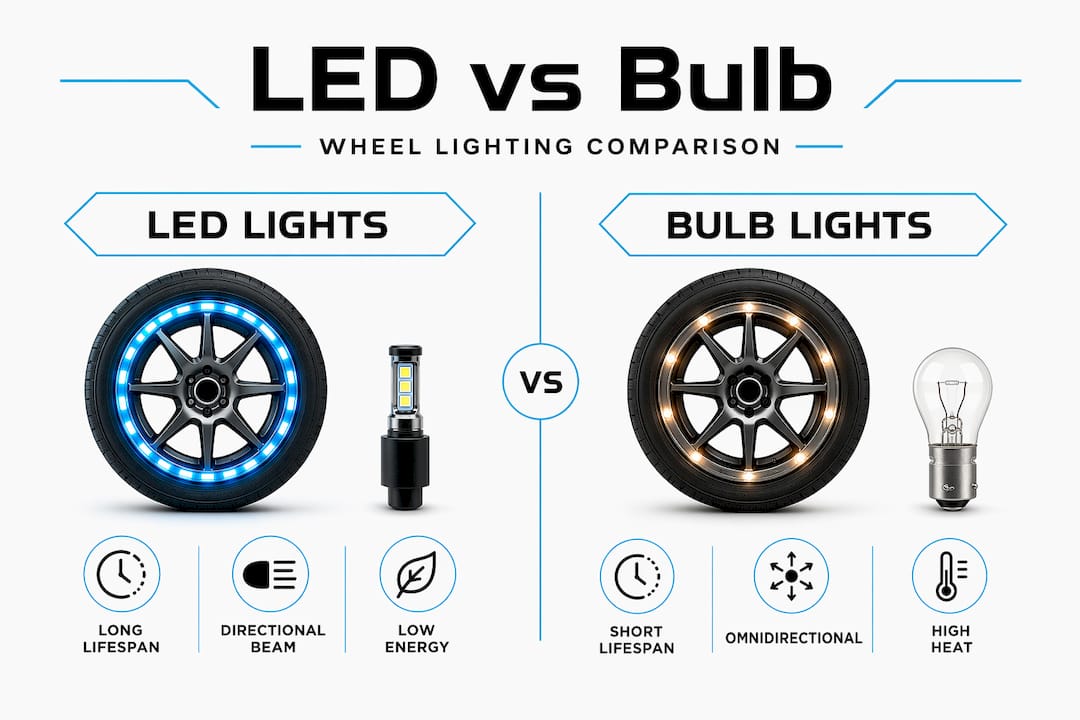
To understand the performance gap, start with how each light source actually works. Traditional incandescent and halogen bulbs produce light by running electricity through a tungsten filament until it glows white-hot. That process is wasteful by design. The filament gets incredibly hot, the glass housing absorbs much of that heat, and only a fraction of the energy input becomes visible light.
LEDs operate on an entirely different principle. They emit photons through a semiconductor diode. Electricity excites electrons within the semiconductor material, and those electrons release energy as light rather than heat. There’s no filament to burn, no glass envelope holding pressure, and no thermal runaway.
The efficiency gap is significant:
- Incandescent bulbs convert roughly 10% of energy into visible light; the rest becomes heat.
- LEDs convert approximately 75% of energy into light, according to LED efficiency data.
- Traditional bulbs can exceed 250°C at the source, while LEDs with proper heatsinks stay well below that threshold, as thermal output research confirms.
For wheel lighting specifically, this matters a lot. Your wheel wells are tight spaces with plastic liners, wiring, and suspension components nearby. Dropping a heat-generating bulb into that environment creates risk over time. An LED in the same position produces dramatically less radiant heat, protecting everything around it.
The solid-state nature of LEDs also makes them inherently more reliable in automotive environments where vibration, moisture, and temperature swings are constant. There’s simply no fragile internal component to fail.
Durability and lifespan: the numbers tell the story
This is where the advantages of LED wheel lights become undeniable in real-world terms. Traditional incandescent bulbs carry a tungsten filament suspended inside a glass envelope. Every bump in the road sends a vibration through that filament. Over time, those micro-stresses cause the filament to weaken and eventually snap. It’s not a question of if. It’s a question of when.
LEDs don’t have filaments. Their solid-state construction means they absorb road shocks and vibration without any internal mechanical failure point. This is why they’re used in demanding environments far beyond automotive lighting.
The lifespan numbers reflect this directly:
| Light Type | Typical Lifespan | Replacements per 10,000 Hours |
|---|---|---|
| Traditional incandescent bulb | 800 to 1,500 hours | 7 to 12 replacements |
| Halogen bulb | 1,000 to 2,000 hours | 5 to 10 replacements |
| LED wheel light | 30,000 to 50,000 hours | 0 to 1 replacements |
LED wheel light lifespan runs between 30,000 and 50,000 hours. That’s up to 50 times longer than a standard bulb. For a driver who runs their wheel lights regularly, that translates to years of use without touching a replacement.
The cost math adds up quickly. Even if an LED kit costs more upfront, you eliminate the repeat purchase cycle of incandescent bulbs entirely. Add in the labor of pulling wheels or accessing tight housings every few months, and the value proposition becomes clear.
Pro Tip: When purchasing LED wheel lights, check for a replacement strip option from the manufacturer. Wheellightexpress offers a replacement wheel light strip so you’re covered in the rare event a section needs refreshing, without replacing the whole kit.
Brightness, light quality, and beam control
Here’s a distinction that often gets overlooked in LED vs bulb lighting conversations: raw brightness isn’t the full picture. Where the light goes matters just as much as how much light there is.
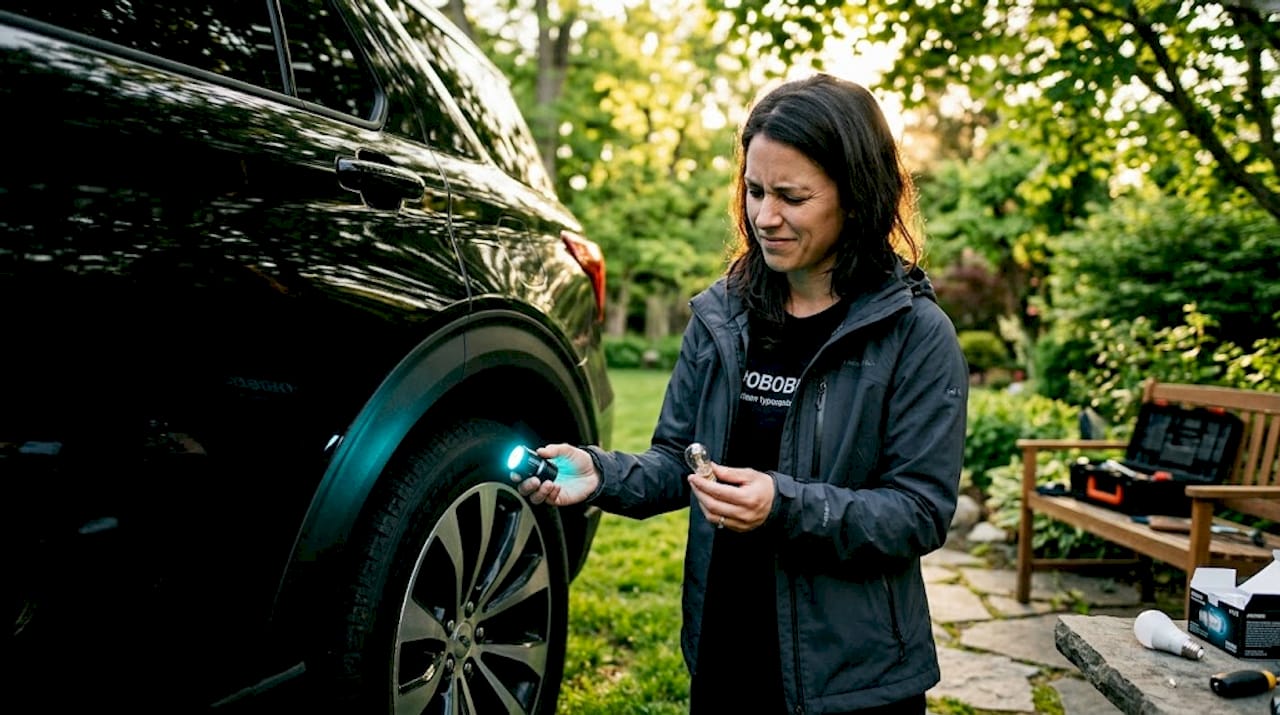
Traditional bulbs emit light in every direction at once. To aim that output usefully, they rely on reflectors and housings that redirect the light. In practice, a significant portion of the light gets absorbed, scattered, or wasted. What reaches your target surface is a fraction of the bulb’s actual output.
LEDs emit light directionally by design. That means the light goes where you aim it without requiring complex reflector setups. For wheel rim illumination, this creates the crisp, uniform glow that enthusiasts want, without hot spots or uneven coverage around the ring.
The color quality advantage is just as real:
- LED color temperatures typically range from 5000 to 6000 Kelvin, simulating natural daylight appearance and producing a clean white output.
- Traditional bulbs lean toward yellow-orange tones, which look noticeably warmer and less precise by comparison.
- LEDs also illuminate in 1 to 5 milliseconds, compared to 200 to 250 milliseconds for incandescent bulbs. That instant response matters for safety when other drivers are reading your position.
For customization, the benefits of LED wheel lights are equally strong. Because LEDs can be tuned for specific color outputs and combined with controllers, you have far more flexibility in creating a look that matches your build. Bulbs simply can’t match that range. Check out the automotive LED lighting guide for a detailed breakdown of the available options.
Pro Tip: Look for LED wheel light products that specify color temperature in Kelvin. A rating between 5000K and 6000K gives you the sharpest, cleanest white light. Anything under 4000K will appear noticeably yellow next to modern LED headlights.
Energy and heat: protecting your vehicle’s system
Running traditional bulbs in your wheel wells puts consistent strain on your vehicle’s electrical system. The draw isn’t huge for a single bulb, but it adds up across multiple wheels, especially when combined with other aftermarket accessories.
Here’s how the power numbers compare in practical terms:
- A standard incandescent wheel light bulb draws between 21W and 27W per unit.
- An LED equivalent draws only 3W to 8W, a reduction of 75 to 90% in power consumption.
- Running four wheel positions, you drop from potentially 108W combined draw (incandescent) down to under 32W (LED). That’s real headroom freed up for your audio system, dash lighting, or other accessories.
- Lower wattage also means less current through your wiring harness, which directly reduces heat buildup in the loom over time.
The thermal benefits go beyond just the electrical load. Excess heat from incandescent bulbs can soften plastic wheel arch liners and stress the insulation on nearby wiring over thousands of hours of cumulative exposure. Quality LED assemblies include integrated heat sinks that pull thermal energy away from the diodes, keeping operating temperatures well within safe ranges for everything around them.
Proper LED kits with IP67-rated weatherproofing add another layer of protection, keeping moisture and road grime out of the housing. That level of protection simply doesn’t exist in traditional bulb formats for wheel well use.
Practical considerations before you buy
Knowing why you should choose LED wheel lights is one thing. Making the right purchase decision is another. A few factors are worth understanding before you spend money.
-
Complete kits versus drop-in replacements. A purpose-built LED wheel light kit includes weatherproofed strips, a wiring harness, and often a controller. Drop-in LED bulbs that replace individual incandescent sockets are cheaper but don’t deliver the same focused light ring effect and may not be rated for the vibration exposure of wheel wells.
-
CANBUS compatibility. Some modern vehicles have CANBUS electrical systems that monitor bulb resistance to detect failures. Standard LEDs draw so little power that the system registers them as a failed bulb and triggers a warning light. CANBUS-compatible LED kits include resistors to prevent this. Check your vehicle’s system before purchasing.
-
Weather and ingress protection. Look for an IP rating of at least IP65 for wheel well use. IP67 is better. Anything without a rating shouldn’t be trusted in a splash-prone, grime-heavy environment like a wheel arch. The double row ultra high density wheel lights from Wheellightexpress are specifically designed for this kind of durability.
-
Warranty and sourcing. Products designed and built domestically with a satisfaction guarantee are worth the slight premium. Off-brand LED strips with no warranty can fail within months, eliminating the long-term cost advantage entirely.
Pro Tip: Always pair your LED wheel lights with a quality wiring harness designed for the kit. A mismatched or undersized harness is the most common cause of early LED failure in aftermarket installations, and it’s completely avoidable.
My take on LEDs after years of watching them in the field
I’ve watched a lot of enthusiasts make the switch from bulbs to LEDs, and I’ve seen the same pattern repeat. The ones who went with quality, purpose-built LED kits never looked back. The ones who bought the cheapest drop-in option from a general retailer ended up frustrated within a season.
What I find most underrated about LED wheel lights isn’t the brightness. It’s the consistency. A bulb that’s been vibrated for a year looks tired. The output softens, the color shifts, and the housing may start showing heat stress. A quality LED kit on the same vehicle looks exactly the same at year three as it did at installation.
I’ve also seen firsthand how much of an aesthetic difference focused, directional LED light makes compared to omnidirectional bulbs bouncing off reflectors. The wheel ring looks intentional and sharp instead of scattered and dull. That matters when the point of the install is to make your build look considered.
The pitfall I’d warn you about most strongly is confusing “LED” as a label with actual LED performance. Not every product sold as an LED wheel light meets a meaningful quality threshold. Look for rated IP protection, integrated thermal management, and a brand that designs their products with automotive environments in mind rather than just repurposing generic LED strips.
The performance gap between quality LEDs and traditional bulbs is real and significant. Don’t close that gap with a substandard product.
— Christopher
Upgrade your wheel lighting with Wheellightexpress
If the performance case for LED wheel lights is clear, the next step is finding products built to deliver on that promise. Wheellightexpress designs all of its LED lighting solutions in Louisiana, with automotive enthusiasts in mind from the start.
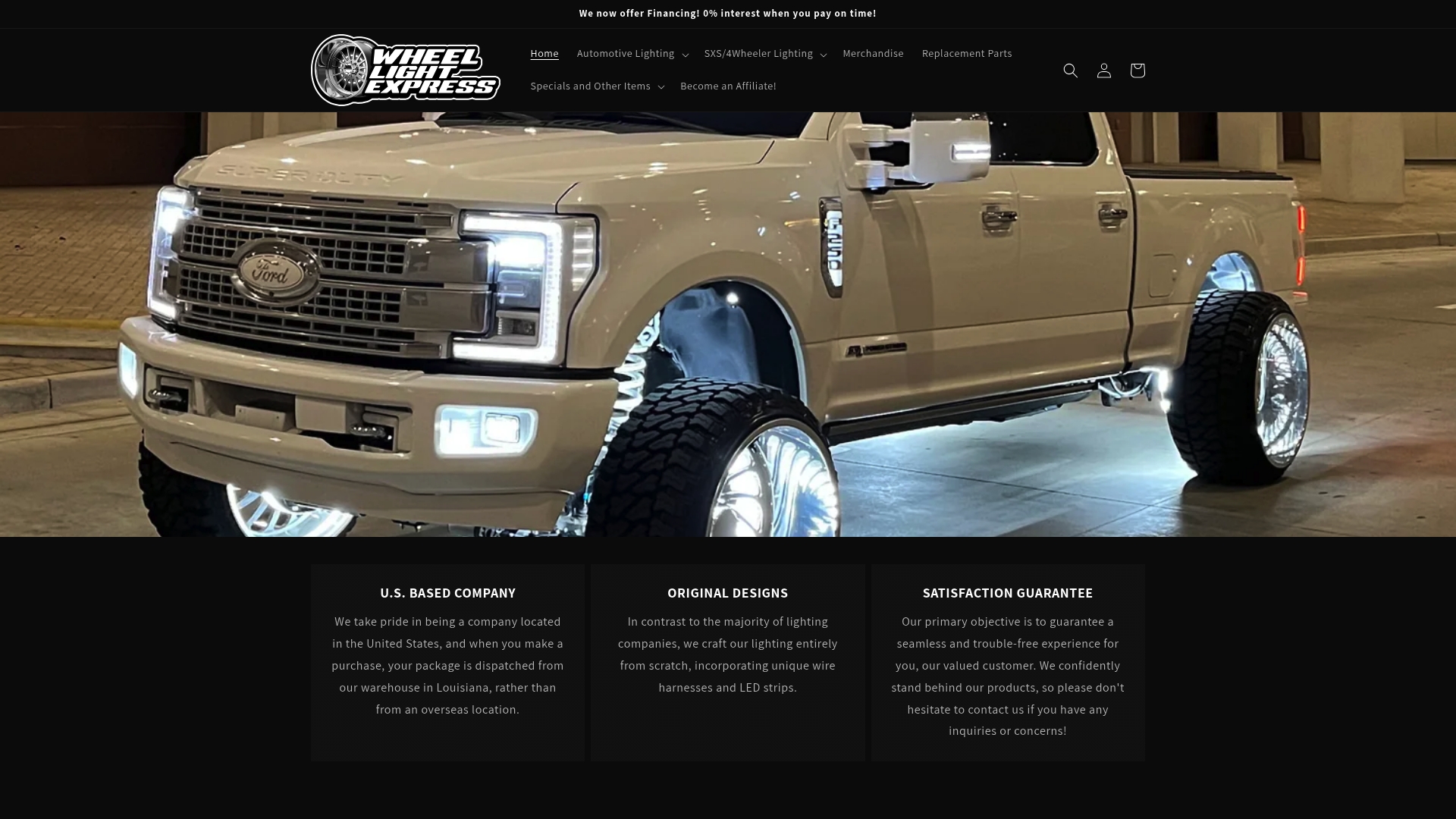
The full aftermarket LED lighting collection covers everything from high-density wheel light strips to complete ring kits, all engineered for the vibration, moisture, and heat that wheel wells produce. For builds that need reliable wiring to match, the replacement wire harness is designed to work with Wheellightexpress products and takes the guesswork out of installation. Every product comes with a satisfaction guarantee, and financing options make upgrading accessible without the upfront hit. If you’re ready to stop replacing bulbs and start enjoying a lighting setup that holds up, we’re here to help you get there.
FAQ
Do LED lights last longer than bulbs for wheel use?
Yes. LED wheel lights last between 30,000 and 50,000 hours compared to just 800 to 1,500 hours for traditional incandescent bulbs, making them far more practical for long-term wheel lighting.
How much less power do LED wheel lights use?
LED wheel lights draw 3W to 8W per unit compared to 21W to 27W for standard incandescent bulbs, a savings of 75 to 90% in power consumption per position.
Why do LED wheel lights look brighter than traditional bulbs?
LEDs emit light directionally toward the target surface without relying on reflectors, which means more of the actual output reaches the wheel rim instead of being absorbed or scattered.
Can traditional bulb vibration failures be prevented?
No. Incandescent filaments are mechanically fragile and will fail under sustained road vibration over time. Solid-state LED construction eliminates this failure mode entirely because there is no filament to break.
Are LED wheel lights safe for the wheel well environment?
Yes, when the product carries a proper IP rating. High-quality LED kits rated IP67 are sealed against moisture and dust. They also run far cooler than incandescent bulbs, protecting nearby plastic liners and wiring from heat stress.