
Rock lights win for trail visibility because they aim light straight down at the ground where your tires meet obstacles. Underglow wins for continuous show presence because it wraps the whole chassis in a steady glow. Plenty of enthusiasts run both. If you plan to drive on public roads with either, check your state’s rules on flashing and color before you flip the switch.
TL;DR:
- Rock lights specifically improve trail visibility by casting a focused flood pattern onto the ground, with white or amber colors preferred for clarity.
- Waterproofing quality varies, and multiple pods increase wiring complexity and potential points of failure, especially in harsh environments.
- Underglow provides aesthetic enhancement with continuous RGB strips but is ineffective for ground detail and has higher road-use legal risks.
- Choose a setup based on vehicle use: trail rigs prioritize white rock lights, while show vehicles favor underglow, and daily drivers should minimize light color modes.
- Proper wiring, placement, and regular connector maintenance are essential to ensure durability, especially when driving through winter conditions or dusty environments.
Table of Contents
- Rock Lights vs Underglow: What Rock Lights Actually Do
- Rock Lights vs Underglow: How Underglow Changes the Look
- How Do Rock Lights and Underglow Compare Head to Head?
- How to Choose Between Rock Lights and Underglow
- What Should You Know About Installing and Maintaining These Lights?
- Why Wheel Light Express Builds Around This Exact Trade-Off
- What I’ve Learned Installing These Systems on Dusty Trails
- Ready to Build a Kit That Fits Your Rig?
- Sources
Rock Lights vs Underglow: What Rock Lights Actually Do
Rock lights are small, rugged LED pods you mount near the wheel wells, rocker panels, or undercarriage. Their job is narrow and specific: throw a tight flood pattern onto the ground so you can see ruts, rocks, and drop-offs your headlights miss entirely. White output gives you the most usable detail on the trail, while amber cuts glare when you’re kicking up dust. That distinction comes straight from real-world testing in KC Cyclone install guides, where builders found white pods simply showed more ground detail after dark.
Coverage depends on how serious you are about night wheeling:
- Four pods (one per wheel well) covers the basics.
- Six to eight pods gives fuller, shadow-free coverage around the rig.
- Eight to twelve pods leans into show territory, especially with RGB rock light setups that sacrifice some white brightness for color range.
Waterproofing matters more than most buyers expect. Some pod designs let in water more easily than older sealed units, according to the 4Runner rock light install breakdown, though wiring pods in parallel means one failed pod usually won’t take the whole system down with it.
Rock Lights vs Underglow: How Underglow Changes the Look
Underglow uses continuous LED strips or neon-style bars mounted along the rocker panels or chassis rails instead of individual pods. Where rock lights create discrete pools of light, underglow produces one unbroken ribbon of color that outlines your vehicle’s silhouette from bumper to bumper. That’s the whole point: silhouette and show presence, not ground detail.
Most underglow kits lean on RGB strips with a few standard features:
- Wireless remotes for quick color changes.
- App control for custom color mixing and scheduling.
- Music-sync modes that pulse the strip to a beat.
Underglow rarely does double duty as trail lighting. The strip mounts too high and too flush against the frame to throw a focused beam at the ground, so it’s a poor substitute for rock lights if you’re actually trying to see terrain, according to comparisons from Kingshowlight.
How Do Rock Lights and Underglow Compare Head to Head?
Once you line the two up on the criteria that actually matter for a build, the trade-offs get clear fast.
| Factor | Rock Lights | Underglow |
|---|---|---|
| Primary purpose | Trail visibility, ground detail | Aesthetic silhouette, show presence |
| Placement/coverage | Wheel wells, rockers, undercarriage points | Continuous strip along chassis/rockers |
| Brightness/beam pattern | Tight flood, aimed at ground | Diffuse glow, no focused beam |
| Color/modes | White or amber for function; RGB for show | Almost always RGB with remote/app control |
| Wiring complexity | Multiple pods, harness and relay per zone | Single strip run, simpler splice points |
| Legal/road-use risk | Lower if kept white/amber, no flash | Higher, especially with red/blue or flashing modes |
Brightness and beam pattern separate the two categories more than raw lumen count does. A dedicated white or amber rock light pod throws a controlled pattern that shows texture and depth on rocky ground, while an RGB strip spreads light evenly but without the directional punch needed to spot a hidden ledge. Builders who want both often step up to RGB plus white rock light kits, which keep a dedicated white channel for trail use alongside color modes for the campsite.
Wiring complexity runs higher with rock lights simply because you’re managing more individual points: relays, a fused harness, and careful routing to each pod. Underglow strips usually run as one continuous circuit, which simplifies the splice count but still needs a proper fuse and switch.
Legal risk is where things get serious. Common state rules restrict flashing effects and ban red or blue output that could be mistaken for emergency vehicles, a pattern confirmed across multiple rock light resources. Most enthusiasts who drive on public roads stick to white or amber and save RGB shows for parking lots or camp.
Pro Tip: If you want both function and flash, wire your white rock lights on a separate switch from your RGB or underglow circuit. That way you can kill the show lights instantly before pulling onto pavement.
How to Choose Between Rock Lights and Underglow
Work through these questions before you buy anything:
- What’s the vehicle’s main job? A dedicated trail rig needs rock lights first; a driveway show truck can prioritize underglow.
- What color modes do you actually want? If you need functional white light for driving, don’t settle for an RGB-only kit.
- How much debris and water will the lights face? Rock crawling and mud demand a higher IP rating than a daily driver parked most nights.
- What’s your budget? Four rock light pods cost less than a full underglow kit with a controller, but expanding later costs more than buying a complete system up front.
- How comfortable are you with wiring? Multiple rock light zones take longer to run than a single underglow strip.
Match the scenario to the setup: trail rigs lean hard on white or amber rock lights, show rigs lean on underglow, daily drivers usually skip both or stick to subtle white accents, and work trucks rarely need either beyond basic wheel-well lighting for backing up at night.
Before checkout, confirm the IP rating, the harness type included, the warranty or return window, and whether the system can expand later without buying a whole new controller, points echoed in the 2026 buyer’s guide from Freedom Lighting Supply.
What Should You Know About Installing and Maintaining These Lights?
Mounting location determines how long your lights survive. Pods tucked behind the front bumper or inside the wheel well take fewer direct hits than ones bolted onto exposed rocker edges.
Wiring practices matter just as much as placement:
- Run a fused harness with a relay sized for your total pod or strip amp draw.
- Route wires away from the exhaust and any suspension pivot points.
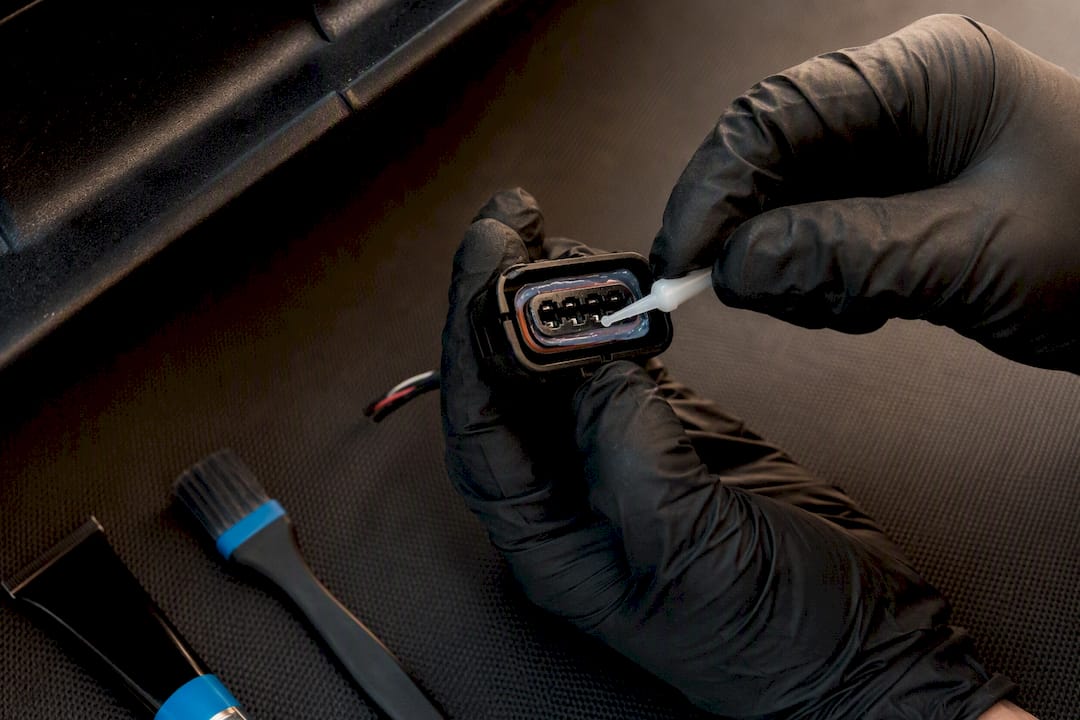
- Seal every connector, ideally with dielectric grease or heat-shrink, before the first wash.
Corrosion from road salt and moisture is a slower killer than rocks are. If you’re driving through winter conditions regularly, it’s worth reading up on protecting your vehicle’s underside from road salt, since the same exposure that eats at your frame will eat at your connectors.
Pro Tip: Check your connectors every few months, not just after a big trail run. Dielectric grease breaks down over time, and a corroded pin is the number one reason a rock light “just stops working.”
Why Wheel Light Express Builds Around This Exact Trade-Off
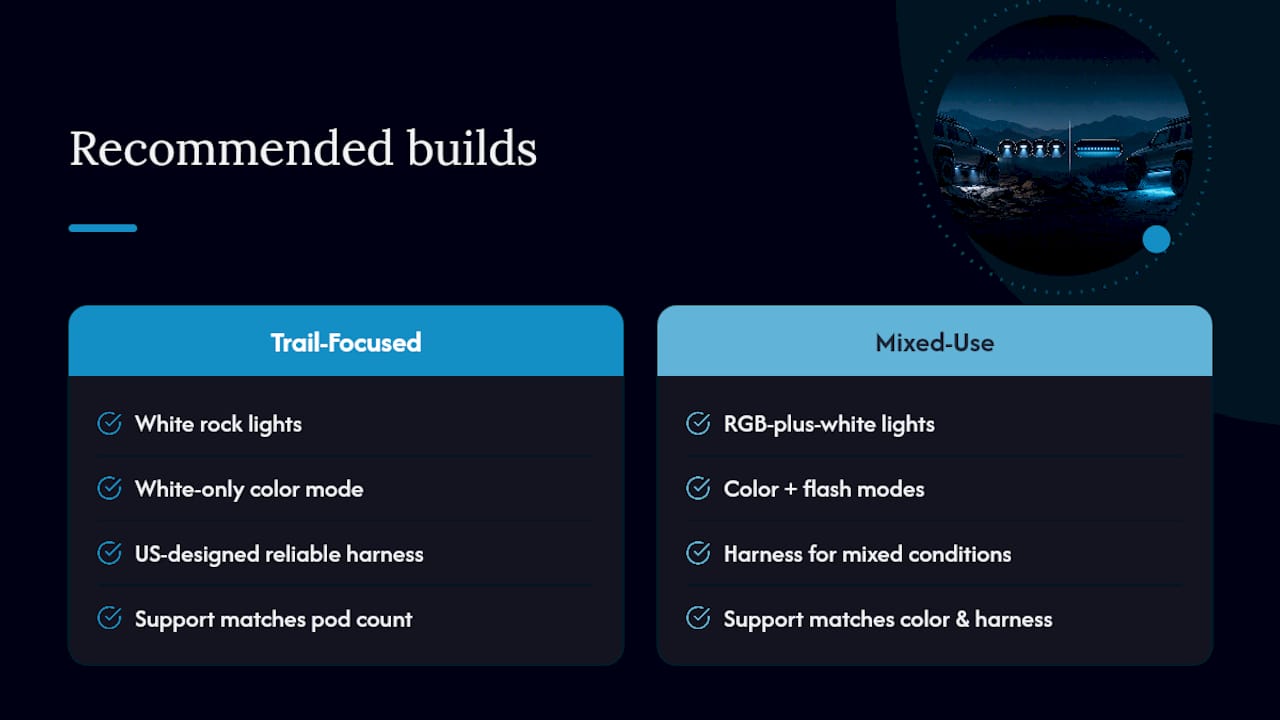
Our lighting kits and harnesses are designed in the U.S. based on feedback that some overseas harnesses failed too often in real conditions. That feedback shaped how we approach the rock lights vs underglow decision: we lean toward white rock light setups for trail-focused builds and RGB-plus-white combinations for mixed-use rigs that need both function and flash.
Every kit ships with a satisfaction guarantee, and financing options may be available to help with the cost of a complete lighting upgrade. If you’re not sure which combination fits your vehicle, our support team helps you match pod count, color mode, and harness type to your actual use case instead of guessing from a spec sheet.
What I’ve Learned Installing These Systems on Dusty Trails
White rock lights consistently outperform RGB on dusty desert runs. Color modes wash out fast in airborne dust, while a clean white beam still shows the ground. Mount your harness connectors above the splash zone. Water finds every low point eventually.
— Christopher
Ready to Build a Kit That Fits Your Rig?
Wheel Light Express gives you a direct path to a durable, U.S.-designed lighting setup instead of piecing together mismatched parts from overseas sellers. Every harness we build is engineered for the wiring headaches this article just covered, including fused connections and weatherproofing for real trail use.
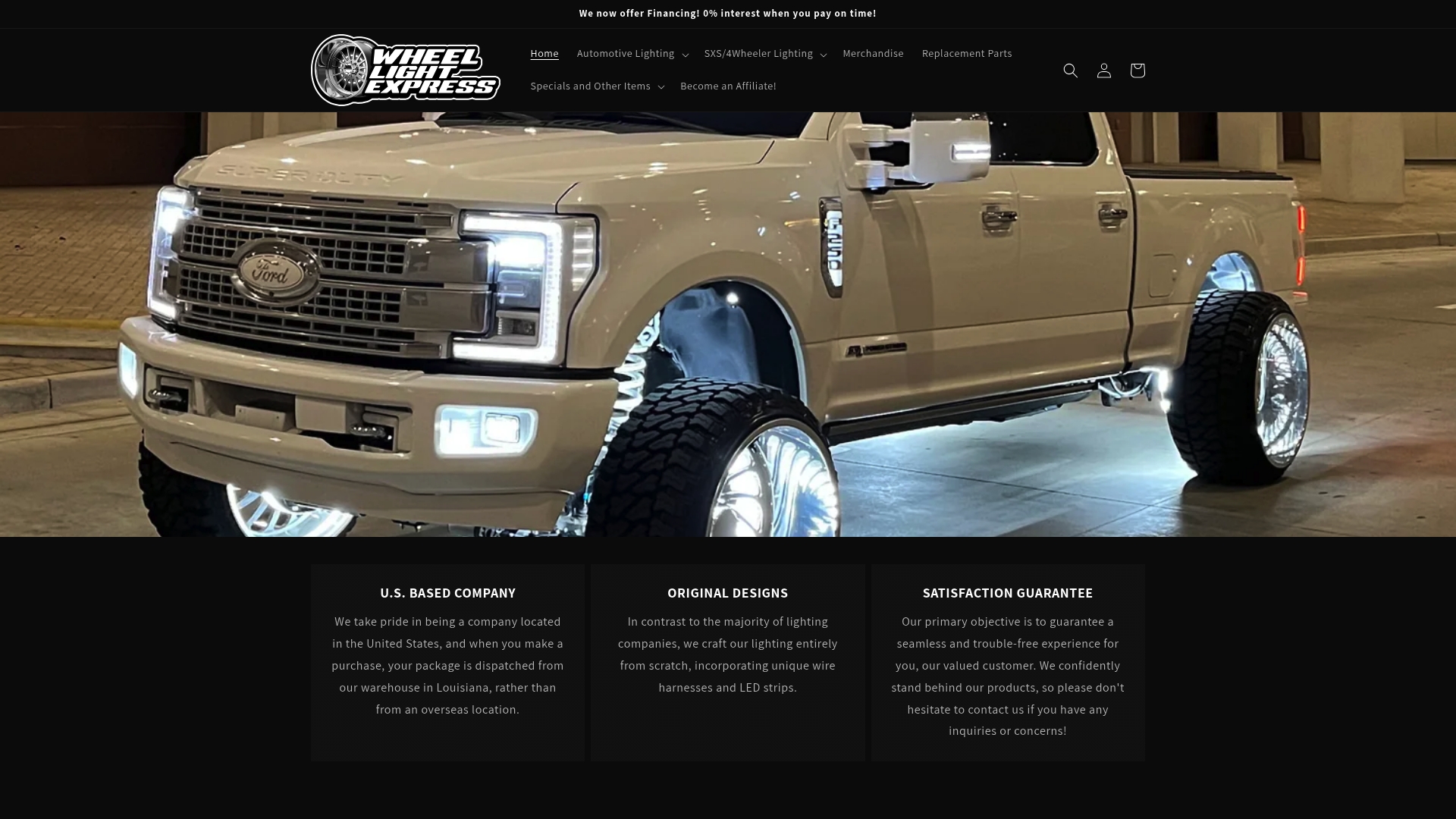
If you’re leaning toward a mixed-use build, our wheel light ring and strip kits combine show-ready color with the functional output serious wheelers actually need. Need a harness upgrade instead? Our replacement wire harness is built for enthusiasts who’ve already had a cheap harness fail on them once. Every purchase comes backed by a satisfaction guarantee and financing options, so start by browsing kits that match your use case.
Sources
For hands-on install steps, see the Jeep rock lights installation guide and the step-by-step LED rock light guide. Always verify your state’s vehicle code before driving with colored or flashing underbody lighting.