

One side marker looking dimmer than the other almost always comes down to two things: a bulb, lens, or reflector difference on the lamp itself, or an electrical problem like voltage drop, a bad ground, or reversed polarity on an LED. Before buying anything, swap the bulbs (or the whole assembly) between sides and see if the dim spot moves with the part or stays put on the vehicle.
TL;DR:
- Brightness differences are often caused by lens condition, reflector shape, or mounting angle, which affect off-axis visibility and light diffusion.
- Electrical issues like voltage drop, corroded connectors, and reversed polarity can make side marker lights appear dim, especially under load.
- Swapping bulbs or assemblies can help diagnose whether the problem lies in the hardware or wiring, but persistent issues may require professional inspection.
- Upgrading to purpose-built LED assemblies with documented photometry, polarity protection, and correct reflectors ensures compliance and optimal visibility.
- Maintaining connectors, cleaning lenses, and verifying proper circuit function are crucial before considering replacements or upgrades.
Table of Contents
- What Causes Side Marker Brightness To Vary From Side To Side
- How To Diagnose A Brightness Mismatch At Home
- Fixes And Upgrades That Actually Improve Visibility
- Staying Legal While You Chase More Brightness
- What A Purpose-Built Marker Assembly Gets Right
- Balancing Brightness, Style, and Legal Safety
- Get Compliant Brightness Without The Guesswork
- Sources
- FAQ
What Causes Side Marker Brightness To Vary From Side To Side
Side marker light intensity depends on more than the bulb inside the housing. A single-filament bulb and a dual-filament bulb draw and distribute current differently, and a sealed LED module behaves nothing like a traditional incandescent lamp wired into the same socket. When one side runs an OEM bulb and the other has an aftermarket swap, brightness mismatches are common even with identical wattage ratings.
The optical path matters just as much as the light source. Lens tint, the shape of the internal reflector, and how much the plastic diffuses light all change how bright a marker looks to someone standing at a given angle. A lamp with a clouded or smoked lens can throw noticeably less usable light even with a stronger bulb inside, and mounting angle shifts what an observer actually sees at night. Perceived side marker light brightness is directional: lens diffusion, reflector geometry, and where you’re standing all affect what registers as “bright.”
Electrical causes are the other half of the equation. Watch for these:
- Voltage drop from corroded terminals or a failing ground connection
- Polarity-sensitive LEDs that dim or refuse to light when wired backward
- Shared parking-light or turn-signal circuits pulling current unevenly between sides
- Socket corrosion that adds resistance right where current needs to flow cleanly
SAE and NHTSA photometric standards test lamps across multiple viewing angles, not just straight on, which is why a marker that looks fine from the driveway can still fail a real visibility check from an oncoming lane.
How To Diagnose A Brightness Mismatch At Home
Work through this in order rather than jumping straight to a parts purchase.
- Swap test first. Move the bulb or the entire assembly from the bright side to the dim side and retest at night. If the dimness follows the part, the lamp or assembly is the problem. If dimness stays with that side of the vehicle, the wiring is at fault.
- Inspect the hardware. Check the socket, pins, lens tint, and reflector for corrosion, cracks, or cloudiness that could be cutting output.
- Measure voltage under load. Test at the connector while the lamp is lit, not just with it unplugged. Corroded terminals and weak grounds often only show a voltage drop once current is actually flowing.
- Check polarity and shared circuits. LEDs are polarity sensitive, and dual-function lamps sharing a parking or turn-signal circuit can starve one function when the other activates.
Pro Tip: If a marker dims noticeably when you hit the turn signal or brake pedal, that’s a shared-circuit or ground problem, not a bad bulb. No amount of bulb swapping will fix it.
If the swap test and voltage check don’t resolve it, call a technician and tell them exactly what you found: which side stayed dim after the swap, what voltage you measured under load, and whether the dimness changes when other lights activate. That saves a diagnostic visit from starting over from scratch.
Fixes And Upgrades That Actually Improve Visibility
Improving marker light visibility usually means replacing more than just the bulb. A full assembly, lens, reflector, and lamp together are often the better fix than swapping a bulb into a housing that’s already cloudy, cracked, or missing its reflector. A brand-new bulb in a degraded lens still won’t project light the way it should.
When shopping for LED upgrades, look for:
- Documented photometry, not just an LED count or lumen claim on the packaging
- Built-in polarity protection so the lamp doesn’t fail or flicker if wired backward
- Voltage regulation to prevent flickering or premature failure on vehicles with fluctuating charging systems
- An included reflex reflector rather than a bare LED board dropped into an old housing
NHTSA has stated that LED side-marker lamps aren’t required to hit a specific LED count. What matters legally is meeting photometric and visibility requirements, not how the packaging advertises brightness. A 40-LED lamp that fails an off-axis visibility test is worse than a simpler lamp that passes.
Harness adapters solve a specific problem: LED swaps that don’t draw the same current as the OEM incandescent bulb can trigger dash warning lights or run dim because the vehicle’s computer expects a certain load. A proper harness adapter corrects that mismatch. Avoid the resistor “hack” some forums recommend. Load resistors generate heat, can fail, and don’t actually fix the optical or photometric issue causing the dimness in the first place.
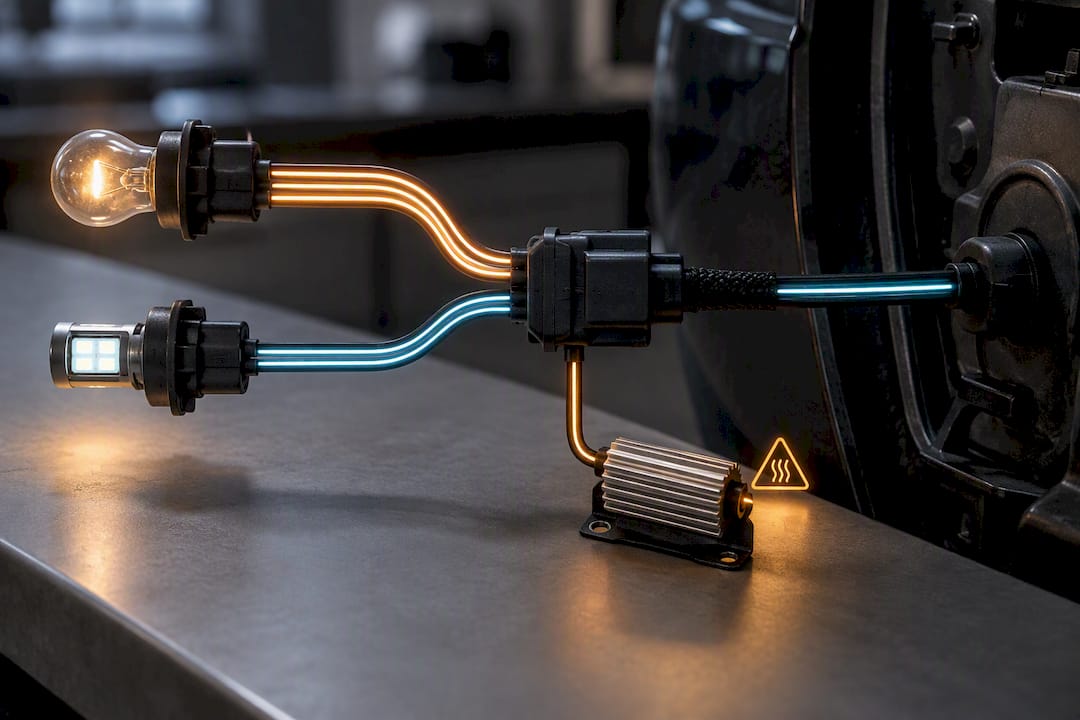
Maintenance matters more than most owners assume. Cleaning oxidized lenses, reseating loose connectors, and correcting a mounting angle that’s drifted from body damage or a bumper swap can restore lost brightness without replacing a single part.
Staying Legal While You Chase More Brightness
Brighter isn’t automatically legal. FMVSS No. 108 governs the function and photometry of side marker lamps, and federal reflector and placement rules require amber lamps at the front, red at the rear, and a reflex reflector at each marker position. Swapping in a replacement that skips the reflector can make a vehicle noncompliant even if the new lamp looks brighter in the driveway, since NHTSA has flagged missing reflex reflectors as a specific compliance failure.
Before buying:
- Confirm amber front / red rear color is preserved, not swapped for style
- Confirm the reflex reflector is included, not omitted for a cleaner look
- Check that decorative or auxiliary lighting near the marker doesn’t visually mask it
- Skip parts advertised only by LED count or lumens with no photometric documentation
A heavily smoked or tinted marker lens can look sharp in the sun and still fail a nighttime off-axis visibility check.
What A Purpose-Built Marker Assembly Gets Right
A raw LED strip dropped into an old housing skips the parts that actually matter: sealed optics, a reflector shaped to the SAE test angles, and polarity protection built into the circuit rather than bolted on with a resistor. Wheellightexpress designs its lighting assemblies in Louisiana rather than sourcing generic parts overseas, which means the harness gauge and connector fit are built around the actual load, not a one-size-fits-all guess.
Before buying any marker replacement, check for four things: a documented reflex reflector, polarity and voltage protection on the circuit, a harness that matches your vehicle’s connector, and a warranty that backs the part if it fails. A satisfaction guarantee on top of that is a reasonable floor to expect from any purpose-built assembly, not a bonus.
Balancing Brightness, Style, and Legal Safety
Enthusiasts chase brighter, bolder lighting, and that instinct isn’t wrong. It’s incomplete. The trade-off that matters is cosmetic brightness versus preserved marker function: a stunning smoked lens that hides the reflector or shifts the color off amber has traded style for a lamp that fails its actual job.
My rule of thumb: pick assemblies that keep the required reflector, correct color, and off-axis visibility intact first, then chase intensity within those limits. Anything else is decoration wearing a safety part’s job.
— Christopher
Get Compliant Brightness Without The Guesswork
Some companies design their marker assemblies and harnesses with reflectors, optics, and connectors engineered around specific vehicle circuits rather than generic LED boards dropped into old housings. That’s the practical difference between a lamp that looks bright in a parking lot and one that holds up to an off-axis visibility check at night.

If a swap test or voltage check pointed to the lamp itself rather than the wiring, browse the side-marker and cab light collection to compare assemblies with documented reflectors and harness compatibility before you buy. Check fitment against your vehicle’s connector first, confirm the reflex reflector is included, and reach out if you’re not sure a given assembly matches your setup. The Solar Powered Cab Lights are available as a one-time purchase; check the pricing page for current details and options for financing to spread out the cost.
Sources
FAQ
What Does A Side Marker Light Mean?
A side marker light is a required lamp, amber at the front and red at the rear, that makes your vehicle’s length and position visible to drivers approaching from the side. It works alongside reflex reflectors, which are separate, non-powered devices that also have to be present at each marker location under federal lamp placement rules.
Do Side Marker Lights Come On With The Headlights?
Yes, side markers are wired to activate with your parking lights and headlights, not as a standalone switch. If a marker only lights up with the turn signal or not at all with the headlights on, that points to a wiring fault rather than a bad bulb.
Is It Illegal To Drive With A Side Marker Light Out?
In most states, a non-functioning side marker light is a fixable equipment violation that can result in a citation, since it’s a required lamp under federal lighting standards. Get it repaired quickly. The swap test and voltage check described earlier will usually tell you within a few minutes whether it’s the bulb or the wiring.
When Should Side Marker Lights Be On?
Side markers should illuminate any time your parking lights or headlights are on, day or night, since their job is passive visibility rather than active signaling like a turn signal or brake light. They stay on continuously in that state and don’t flash or dim with other functions unless there’s a wiring problem.
Why Would A New LED Marker Still Look Dim After Installation?
A new LED can look dim if it’s wired with reversed polarity, if the assembly lacks voltage regulation, or if the vehicle’s circuit wasn’t designed for the LED’s lower current draw. A harness adapter built for that specific connector usually resolves it without resorting to resistor workarounds.