
Bold automotive lighting is defined as any vehicle lighting system that combines high-output illumination with distinctive visual design to enhance both safety and aesthetics. The types of bold automotive lighting available today span six major categories: headlights, tail lights, turn signals, fog lights, daytime running lights (DRLs), and accent or underglow systems. Technologies like matrix LED, HID/Xenon, laser, and RGB LED have pushed these categories far beyond basic visibility. Choosing the right option means understanding what each technology delivers on the road and what it demands in terms of compliance.
1. What are the main types of bold automotive lighting?
Bold automotive lighting covers every light on a vehicle, from primary illumination to decorative accents. The six core categories are headlights, tail and brake lights, turn signals, fog lights, DRLs, and accent or underglow lighting. Each category serves a distinct function, but all can be upgraded for a bolder, more distinctive look.
The technologies powering these categories include halogen, HID/Xenon, LED, laser, matrix LED, and adaptive driving beam (ADB) systems. Each step up the technology ladder brings more brightness, longer lifespan, and greater design flexibility. Understanding which technology fits which category is the first step toward a build that looks great and stays legal.
2. What are the main technologies used in bold automotive headlights?
Six headlight technologies define the current market, each representing a clear step forward in brightness, efficiency, and design capability. Here is how they compare:
- Halogen: The oldest and most affordable option. Halogen bulbs produce a warm yellow-white light and are easy to replace. They consume more power and have shorter lifespans than modern alternatives.
- HID/Xenon: High-intensity discharge bulbs produce a bright, bluish-white light with significantly more output than halogen. They require a warm-up period and a ballast unit to regulate voltage.
- LED: Light-emitting diode headlights are the current standard for most new vehicles. They are energy efficient, long-lasting, and allow designers to create sharp, signature light shapes.
- Laser: Laser headlights produce an extremely focused, high-range beam. BMW and Audi have used laser units in models like the i8 and R8. They are currently limited to high-end vehicles due to cost.
- Matrix LED: Matrix systems use dozens to thousands of individually controlled LED segments. They shape the beam in real time, brightening some zones and dimming others based on traffic and road conditions.
- Adaptive Driving Beam (ADB): ADB takes matrix LED further by using camera and sensor data to continuously adjust the beam pattern. Forvia Hella has developed ADB systems with pixel counts from 48 to 16,000, enabling shadow-casting precision around other vehicles.
Raw brightness is not the only measure of a great headlight. Proper beam control and glare management matter just as much as lumens for safety and legal compliance. A high-lumen bulb in the wrong housing creates dangerous glare for oncoming drivers.
Pro Tip: Match your headlight technology to your primary use. LED complete assemblies work well for daily driving and aesthetics. Matrix LED or ADB systems are worth the investment if you frequently drive rural roads at night.
3. How do bold tail lights, brake lights, and turn signals add to vehicle aesthetics and safety?
Rear lighting is where automotive brands build their most recognizable visual signatures. The distinctive light bars on a Porsche Taycan or the sequential turn signals on a Ford Mustang are not accidents. They are deliberate design choices that make those vehicles instantly identifiable from behind.
LED tail lights and brake lights deliver several clear advantages over standard incandescent units:
- Faster response time: LEDs reach full brightness in roughly 200 milliseconds faster than incandescent bulbs. That gap matters at highway speeds when a following driver needs every fraction of a second.
- Higher brightness: LED brake lights produce sharper, more attention-grabbing light output, which improves rear visibility in rain and low-light conditions.
- Design flexibility: LED strips and clusters allow designers and aftermarket builders to create custom shapes, light bars, and sequential patterns that standard bulbs cannot replicate.
- Longer lifespan: LED units outlast incandescent bulbs by a wide margin, reducing replacement frequency.
RGB LED options add multi-color capability and mode switching to rear lighting setups. Products like Auxbeam’s RGB series advertise outputs up to 25,000 lumens and lifespans up to 50,000 hours. These units enable dramatic color cycling and custom lighting effects for show builds. On public roads, color choices must stay within legal limits, since red is reserved for brake lights and amber for turn signals in most U.S. states.
4. What are accent lighting and underglow options for bold automotive customization?
Accent and underglow lighting are the most expressive types of bright vehicle lights available to enthusiasts. Interior ambient lighting uses LED strips placed along door panels, footwells, and dashboards to create a custom cabin atmosphere. Exterior underglow, also called ground-effect lighting, projects light downward from beneath the vehicle’s body panels to create a floating visual effect.
Color options for underglow range from single-color static setups to full RGB systems with app or remote control. Popular choices include blue, purple, green, and white for street builds, and full-spectrum color cycling for show vehicles. The visual impact is immediate and significant, especially at night or in low-light environments.
U.S. underglow legality varies by state. Red and blue colors are restricted in most states because they mimic emergency vehicle signals. Flashing or strobing patterns are also widely prohibited on public roads. California, for example, has specific brightness and color angle restrictions that go beyond basic color rules.
- Static white or amber underglow is the safest choice for street-legal builds in most states.
- RGB systems with a “driving mode” that locks to a legal color are a practical compromise for enthusiasts who want show-quality looks with street-legal operation.
- Interior ambient lighting faces far fewer legal restrictions and delivers strong visual impact without compliance risk.
Pro Tip: Before installing underglow, check your specific state’s vehicle code. Many states allow static, non-red/blue underglow but prohibit any flashing pattern while the vehicle is in motion. A quick check saves a costly fix later.
5. How do adaptive and intelligent lighting systems redefine bold automotive lighting?
Adaptive matrix LED and ADB systems represent the most advanced bold car lighting options on the market today. These systems do not just produce light. They manage it with real-time precision. Adaptive lighting systems use pixel-level control to create glare-free high beams, keeping the driver’s road fully illuminated while casting precise shadows around oncoming vehicles and pedestrians.
The Range Rover Digital LED headlights and the McLaren 750S lighting system are two recent examples of production vehicles using advanced matrix LED technology. Both use individually controlled LED segments to shape beam patterns dynamically. Some systems can also project road markings, warnings, or guidance symbols directly onto the pavement ahead.
| System | Pixel Count | Key Feature | Availability |
|---|---|---|---|
| Standard LED | N/A | Fixed beam pattern | Widely available |
| Matrix LED | 48–84 segments | Zone-based dimming | Mid to high-end vehicles |
| High-res Matrix LED | Up to 16,000 pixels | Shadow-casting precision | Premium and luxury vehicles |
| Adaptive Driving Beam | Variable | Real-time camera-guided adjustment | Limited, regulatory pending in U.S. |
The regulatory picture in the U.S. is still catching up. NHTSA has been slow to approve full ADB systems for American roads, while European markets have had access to these systems for several years. Forvia Hella has publicly stated readiness to deploy ADB technology, but NHTSA regulatory approval remains a barrier for U.S. consumers. For enthusiasts building show vehicles or track cars, these restrictions matter less. For daily drivers, the wait continues.
6. Comparison of bold automotive lighting types: which suits your build?
Choosing among the available automotive lighting variations comes down to four factors: brightness, budget, legal use, and customization goals. This table gives you a direct comparison.
| Type | Brightness | Lifespan | Customization | Best For |
|---|---|---|---|---|
| Halogen | Low | Short | Minimal | Budget builds, stock replacement |
| HID/Xenon | High | Medium | Low | Performance street builds |
| LED (standard) | High | Long | Moderate | Daily drivers, clean aesthetics |
| Laser | Very High | Long | Low | Premium performance vehicles |
| Matrix LED | Very High | Long | High | Advanced street and show builds |
| RGB LED bulbs | Variable | Long | Very High | Show vehicles, accent lighting |
| Underglow | Low | Long | Very High | Show vehicles, custom builds |
Legal headlamp upgrades require preserving the original certified optical system. Swapping LED bulbs into a housing designed for halogen can cause dangerous glare and fail safety inspections. Complete certified LED assemblies are the correct path for street-legal upgrades. For show-only builds, RGB and full-spectrum options open up far more creative territory.
For enthusiasts who want to combine functional and accent lighting into a cohesive build, pairing a quality LED headlight assembly with tasteful underglow and interior ambient lighting produces the strongest overall result. Each layer adds to the visual identity without any single element overwhelming the others.
Key takeaways
The boldest and most effective automotive lighting builds combine certified functional upgrades with legally compliant accent lighting, matched to the vehicle’s design and the driver’s primary use case.
| Point | Details |
|---|---|
| Technology drives boldness | Matrix LED and ADB systems deliver the most advanced bold headlight performance available today. |
| Compliance is non-negotiable | Swapping bulbs without certified assemblies creates glare hazards and risks inspection failure. |
| Underglow requires state-level research | Red, blue, and flashing patterns are restricted in most U.S. states for underglow systems. |
| RGB lighting suits show builds best | Multi-color and cycling modes are visually striking but carry legal risk on public roads. |
| Layering creates the best results | Combining functional LED upgrades with accent and ambient lighting produces the most cohesive bold look. |
What I’ve learned about bold lighting after years of builds
The biggest mistake I see enthusiasts make is treating brightness as the only goal. A 25,000-lumen RGB bulb dropped into a stock halogen housing looks impressive in a parking lot and creates a hazard on the highway. The optics of the housing determine where the light goes. The bulb only determines how much of it there is.
My personal preference leans toward matrix LED assemblies for any vehicle that sees regular road use. The glare-free high beam alone is worth the cost. You get full illumination on your side of the road and zero blinding of oncoming drivers. That combination is genuinely rare in automotive lighting, and it makes night driving noticeably less fatiguing.
For accent work, I favor static white or warm amber underglow paired with interior ambient LED strips. The role of wheel lighting in a complete build is also underrated. Wheel-mounted LED rings add a layer of visual depth that underglow alone cannot replicate. The whole vehicle reads as intentional rather than patched together.
The legal pitfall I warn everyone about is the flashing pattern. A strobing underglow that looks incredible at a car show will get you pulled over on the way home. Build two modes into your setup from the start: a show mode for static displays and a driving mode that locks to a legal static color. That approach lets you maximize visual impact without the legal risk.
— Christopher
Bold automotive lighting products from Wheellightexpress
Wheellightexpress designs all of its lighting products in Louisiana, which means every LED strip, wire harness, and lighting kit is built with U.S. quality standards in mind. If you are ready to upgrade your vehicle’s lighting, the aftermarket lighting collection covers headlights, underglow kits, LED strips, and the accessories needed to install them correctly.
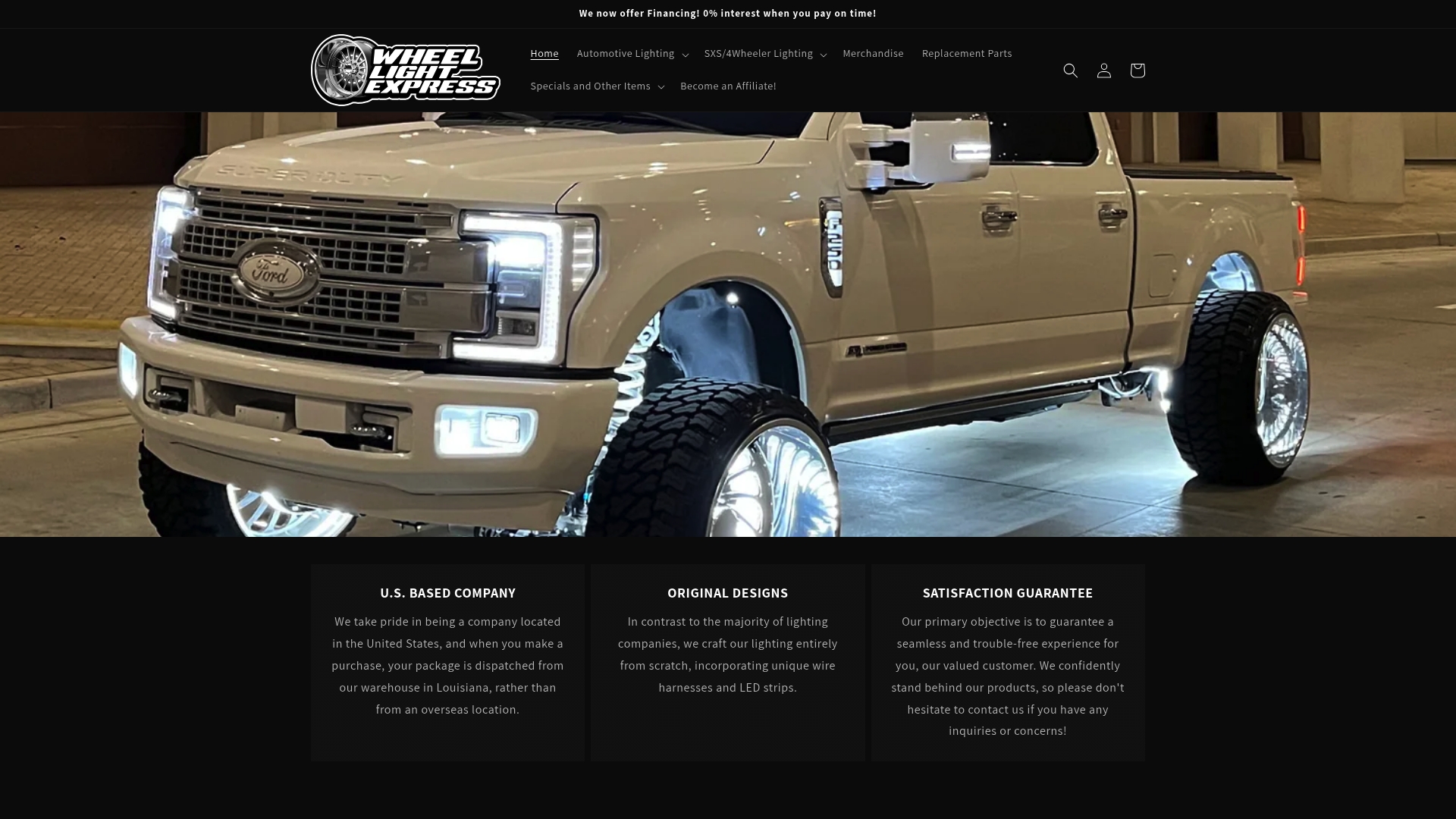
Every build needs reliable wiring. Wheellightexpress offers wire harness leads designed specifically for automotive lighting upgrades, so your installation stays clean and your lights perform the way they should. Financing options are available, making it straightforward to get the full setup you want without waiting.
FAQ
What are the boldest types of automotive headlights?
Matrix LED and adaptive driving beam headlights are the boldest and most technically advanced options available. They combine high output with real-time beam shaping for both dramatic appearance and superior night visibility.
Is underglow lighting legal in the U.S.?
Underglow legality varies by state. Most states prohibit red and blue colors and any flashing patterns, as these mimic emergency vehicle signals. Static, non-restricted colors like white or amber are permitted in most jurisdictions.
Can I swap LED bulbs into my stock halogen headlight housing?
Swapping LED bulbs into a housing not designed for them causes unsafe glare and can result in inspection failure. Street-legal LED upgrades require complete certified assemblies that preserve the original optical system.
What is the difference between matrix LED and standard LED headlights?
Standard LED headlights produce a fixed beam pattern. Matrix LED systems use individually controlled segments to dim specific zones in real time, reducing glare around other vehicles while keeping the driver’s road fully lit.
What bold lighting options work best for show vehicles?
RGB LED bulbs, full-spectrum underglow kits, and interior ambient LED strips are the top choices for show builds. These options offer the widest color range and most dramatic visual effects, though they are best reserved for off-road or static display use.