

Most CANbus LED problems trace back to one thing: LEDs draw far less current than the halogen bulbs your vehicle expects, so the body computer flags a working bulb as failed. Before you rewire anything, run an OBD-II or BCM scan and swap in a known CANbus-compatible LED or a quality decoder. If the symptom is flicker rather than a warning light, the culprit is usually PWM dimming, and a bulb with a compatible driver or an active decoder resolves it in most cases.
- Low LED current draw triggers false “bulb out” alerts on many vehicles
- Flicker points to PWM mismatch, not a wiring fault
- Scan first, then test a CANbus-ready LED or decoder before permanent changes
- Resistors are a fallback, not a first move
Key Takeaways
CANbus LED issues are usually caused by low current draw or PWM mismatch, and the fastest fix is testing a compatible LED or decoder before adding resistors or rewiring anything.
| Point | Details |
|---|---|
| Scan before you swap parts | Run an OBD-II or BCM scan first to confirm whether the fault is current-sensing or message-based. |
| Match the fix to the fault | Resistors help current-sensing systems only; message-based systems need decoders or module coding. |
| Check the boring stuff first | Bad grounds and reversed polarity mimic CANbus faults and cost nothing to rule out. |
| Verify “CANbus ready” claims | Confirm PWM tolerance, EMC compliance, and a documented vehicle-compatibility list before buying. |
| Start with quality wiring | Wheellightexpress builds harnesses and LED strips in Louisiana, reducing the connector mismatches that cause repeat faults. |
Table of Contents
- How CANbus Monitoring Causes LED Issues
- Quick Troubleshooting Checklist For CANbus LED Faults
- Choosing the Right Fix: LEDs, Decoders, and Resistors
- Installation Tips That Prevent Repeat Failures
- When You Need a Pro or ECU Coding
- Who’s Behind This Guide
- What Actually Fixes Most CANbus LED Problems
- Get Wiring Built Right the First Time
- Where to Verify Compatibility Next
- Sources
How CANbus Monitoring Causes LED Issues
Your vehicle checks bulb health one of two ways. Current-sensing systems measure how much amperage flows through a lighting circuit and compare it to a stored baseline for a halogen bulb. Message-based systems, running over LIN or CAN networks, get a status report directly from a lighting module rather than reading raw current. LEDs confuse both, but for different reasons. A current-sensing system sees a fraction of the expected draw and assumes the filament burned out. A message-based system relies on a module that was never programmed to expect an LED’s electrical signature in the first place.
PWM dimming adds a second layer of trouble. Many vehicles dim daytime running lights or taillights by switching power on and off dozens of times per second rather than lowering voltage. Halogen filaments coast through those gaps because they retain heat. LEDs respond instantly, so they visibly flicker or strobe when the PWM frequency doesn’t match what the bulb’s driver expects.
The symptom pattern usually tells you which mechanism is at fault:
- Dashboard bulb-out warning at startup — typically current-sensing, triggered by low LED draw.
- Hyper-flash on turn signals — almost always current-sensing; the flasher relay reads low resistance as a burned-out bulb.
- Flicker only when dimmed or in daytime mode — PWM incompatibility.
- Limp-home lighting or reduced headlight function — often a message-based fault, especially on adaptive lighting systems.
Manufacturer guidance backs this up directly: Philips’s technical documentation on LED signaling and CANbus confirms that low LED current is the primary driver behind false bulb-out warnings and hyper-flash across a wide range of vehicles, which is why Philips maps specific adapter part numbers to specific bulb and vehicle combinations rather than selling one generic fix.
Quick Troubleshooting Checklist For CANbus LED Faults
Work through this in order rather than jumping straight to a decoder purchase. Each step isolates a different possible cause, and skipping ahead usually means paying for a part you didn’t need.
- Identify the exact lamp and symptom. Turn signal hyper-flash and headlight flicker have different root causes even though both get blamed on “CANbus.”
- Swap in a known-good bulb. Try the stock halogen or a bulb you know works elsewhere to confirm the circuit itself is fine.
- Scan for lamp-related DTCs. An OBD-II reader or a BCM-capable scan tool will show stored or active codes tied to the specific circuit.
- Check polarity, connector fit, and ground continuity. A multimeter across the ground point and the bulb’s power leads will confirm whether voltage is reaching the LED cleanly.
- Look for PWM or irregular voltage with an oscilloscope. If you don’t have one, note whether flicker changes with dimming mode. That pattern alone is diagnostic.
- Only then add a decoder or resistor. Confirm the circuit type first. Adding load resistance to a message-based system won’t fix anything and just wastes power.
Pro Tip: Keep a cheap OBD-II reader in your glove box. Clearing a code takes ten seconds, but knowing whether it reappears after a drive cycle tells you more about the real fault than any forum thread will.
Choosing the Right Fix: LEDs, Decoders, and Resistors
Three fixes dominate this space, and each changes the circuit differently.
- CANbus-ready LED bulbs with integrated drivers emulate the electrical load of a halogen bulb internally, and some also decode PWM signals so the light doesn’t strobe. CarNEON’s guide to LED headlight flicker notes that kits with integrated driver ICs handle both current emulation and PWM decoding more reliably than bolt-on resistors, which is why they’ve become the default recommendation for modern vehicles with tight housings.
- Active CANbus decoders sit inline and interpret the vehicle’s actual signaling rather than just adding resistance. They’re the better option when your vehicle uses message-based monitoring, since a resistor can’t talk to a network it isn’t wired into.
- Load resistors or equalizers add resistance in parallel to bring current draw back up to what a current-sensing system expects. AutobulbsDirect’s breakdown of LED CANbus error codes confirms resistors resolve many hyper-flash and bulb-out warnings on current-sensing circuits, but they generate real heat and cancel out the power savings that made you switch to LEDs in the first place. They also do nothing on message-based systems.
Before buying anything labeled “CANbus ready,” check the fine print. Super Bright LEDs’ CANbus FAQ points out that the term isn’t standardized. Verify PWM tolerance, EMC compliance, documented current emulation, and an actual vehicle-compatibility list before you trust the label. A bulb that’s “CANbus ready” for a 2019 sedan isn’t automatically ready for your truck.
Installation Tips That Prevent Repeat Failures
Sloppy installation causes more repeat visits than bad parts do.
- Check polarity first. Some LED bulbs only light in one orientation, and Philips notes that rotating the bulb 180 degrees in the socket resolves a surprising share of “dead bulb” complaints.
- Mount resistors on bare metal chassis, never zip-tied against plastic trim, and keep them away from wiring insulation.
- Test ground continuity before blaming CANbus. A corroded ground point mimics the exact same symptoms as a signaling mismatch.
- Route decoders and harnesses so factory dust covers still seal properly. Water intrusion causes its own set of intermittent faults.
Pro Tip: After any fix, clear stored codes and road-test through every lighting mode, including daytime running lights and turn signals, before calling the job done.
When You Need a Pro or ECU Coding
Some CANbus LED issues won’t clear no matter how good the decoder is. If codes keep reappearing after a proper install, or your vehicle drops into limp-home lighting mode, you’re likely dealing with a message-based architecture that needs module-level coding.
- Persistent DTCs after a correctly wired decoder usually mean the fault is in the module logic, not the circuit.
- Newer platforms with adaptive headlights, particularly certain BMW and Mercedes-Benz systems, often require BCM or headlight-module recoding through dealership-level tools.
- A professional will run BCM diagnostics, confirm the lamp’s expected signature, and reprogram the module rather than swap parts. CarNEON’s guide on CANbus adapter requirements explains that this recoding step is what actually resolves faults that resistors and decoders can only mask.
- Keep receipts and documentation for any recoding work, especially if the vehicle is still under warranty.
Who’s Behind This Guide
This guide comes from Christopher, who covers vehicle LED lighting and CANbus troubleshooting for Wheellightexpress.
- Wheellightexpress designs and assembles its lighting products, including wire harnesses and LED strips, in Louisiana rather than sourcing them overseas.
- Every order carries a satisfaction guarantee, and financing options let you upgrade your lighting setup without paying the full cost upfront.
- Full author credentials and case-study data will be added to this page as they become available.
What Actually Fixes Most CANbus LED Problems
Most articles on this topic treat resistors as the default fix, and that’s backwards. Resistors solve one narrow problem, current-sensing systems reading low draw as a failure, while doing nothing for PWM flicker or message-based faults, and they burn power doing it. The better first move is almost always a CANbus-compatible LED with an integrated driver, because it addresses the load-emulation problem and the PWM problem in a single part.
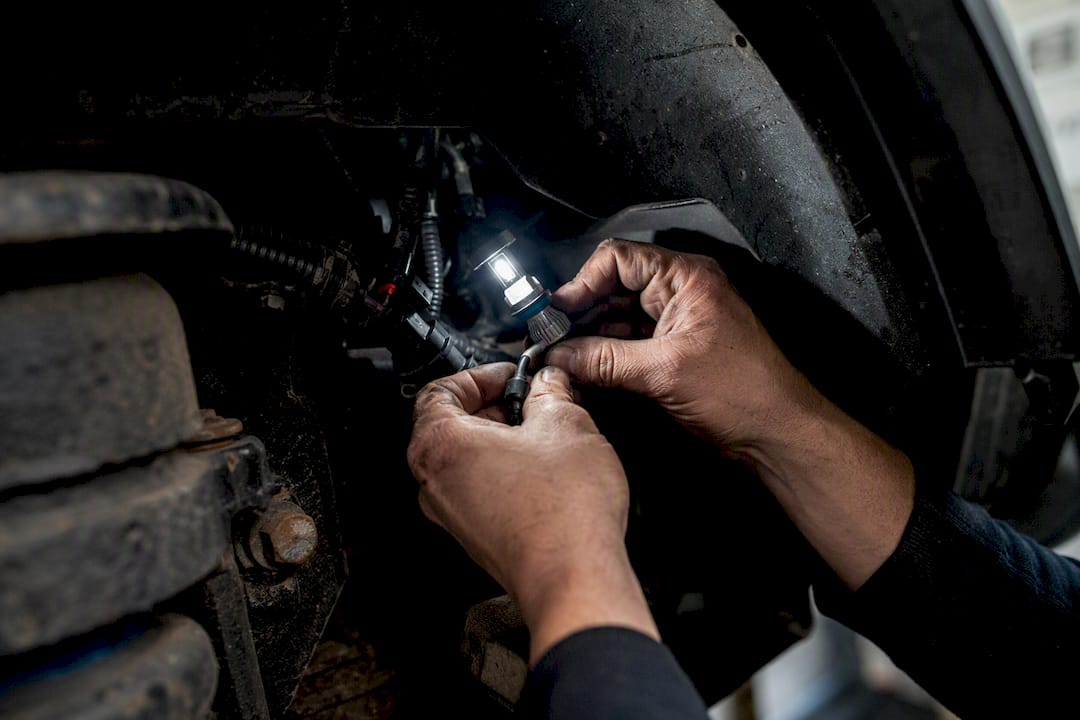
What gets underestimated is how much installation quality matters compared to part selection. A premium decoder wired to a bad ground will produce the exact same symptoms as a cheap one wired correctly, and I’d bet a meaningful share of “the decoder didn’t work” complaints online are actually ground faults or polarity issues nobody checked first.
If you’re building a lighting setup from scratch rather than retrofitting one bulb at a time, a properly matched harness from the outset avoids most of this troubleshooting entirely. That’s less about brand loyalty and more about the reality that connector mismatches and improvised splices cause a disproportionate share of the flicker and warning-light complaints you’ll find in any forum thread on this subject.
— Christopher
Get Wiring Built Right the First Time
A CANbus decoder only fixes half the problem if the harness underneath it is a patchwork of splices and generic connectors. Wheellightexpress designs and assembles its lighting products in Louisiana rather than importing generic parts, which means the wire harness leads and replacement wire harnesses you buy are built to fit cleanly the first time instead of forcing you into trial-and-error splicing.
If your current wheel light strip is the source of your flicker complaints, a replacement wheel light strip built for direct fitment removes one more variable from the diagnosis. For setups that need remote control integration alongside the lighting itself, the remote harness options pair cleanly with Wheellightexpress wiring. Every purchase carries a satisfaction guarantee, and financing is available if you’d rather spread the cost of a full lighting upgrade instead of paying it all upfront. Check compatibility and place your order on the Wheel Light Ring and Strip product page to get started.
Where to Verify Compatibility Next
- Check Philips’s CANbus technical guidance for adapter part numbers mapped to specific bulb types.
- Review Super Bright LEDs’ CANbus FAQ before trusting any generic “CANbus ready” label.
- Always confirm your specific model year against the manufacturer’s own OEM wiring diagram before finalizing a fix.
Sources
- Philips LED signalling CANbus technical guidance
- CarNEON: Do LED headlight bulbs require CANbus adapters? Expert guide
Recommended
- Vehicle LED Lighting Explained: What Owners Need to Know – Wheel Light Express
- Why Aftermarket LEDs Outshine Factory Lights for Enthusiasts – Wheel Light Express
- High Visibility Custom LED Options for Car Enthusiasts – Wheel Light Express
- Types of Automotive LED Lighting: Your 2026 Guide – Wheel Light Express