

For most wheel-light buyers, RGBW is the better choice because it adds a dedicated white emitter that produces true, bright white light instead of a mixed tint. RGB-only kits still hold their own if you only care about saturated color shows and want to save money upfront. The trade-off is real: RGBW kits typically cost more and draw more power per meter, and they often need a matching controller to unlock the fourth channel.
TL;DR:
- RGBW kits produce a brighter, more neutral white that is ideal for visibility, brake functions, and high-quality video footage, due to their dedicated white emitter.
- RGB kits are less expensive, draw less power, and are suitable for show-only setups focusing on saturated color effects without the need for realistic white lighting.
- Proper matching of controllers, wiring, and white-point calibration is essential for RGBW setups to perform optimally, especially with higher power demands.
- U.S.-designed kits, like Wheel Light Express, ensure better compatibility, easier installation, and more reliable support compared to overseas alternatives.
- Both technologies have similar durability, but RGBW strips run warmer and may require more careful maintenance or replacement of individual segments.
Table of Contents
- RGB vs RGBW Wheel Light Comparison: What You’ll Actually See
- The Tech Behind the Colors: Channels, CRI, and Power Draw
- When RGB Makes Sense vs When RGBW Wins
- Installing Wheel Lights: Controllers, Wiring, and Power Checks
- Why U.S.-Designed Wheel Lighting Matters
- Maintenance and Repair: What Changes With RGBW
- How RGB and RGBW Change the Look of Your Build
- Our Take: Stop Buying Wheel Lights Like They’re All the Same
- Get RGBW Performance With U.S.-Built Wheel Lighting
- Sources
- FAQ
RGB vs RGBW Wheel Light Comparison: What You’ll Actually See
Put both strips side by side on a wheel well at night and the difference shows up fast. RGB-only strips can produce genuinely vivid, saturated colors, and in pure hue mode (deep blue, hot pink, emerald green) they sometimes look punchier than RGBW because the RGBW’s extra white diode isn’t fighting for space on the circuit board. That’s where RGB earns its keep for show-only setups chasing a specific colorway.
Where RGBW pulls ahead is white. Because it mixes red, green, and blue LEDs to fake white, an RGB-only strip almost always renders a tinted, slightly muddy white rather than a clean one. This issue has been flagged repeatedly by Reddit’s LED community when comparing photos of both setups. RGBW’s dedicated white channel skips the mixing problem entirely, which is why it reads brighter and more neutral in both direct viewing and camera footage, according to Pixel LED Effects’ comparison of RGB, RGBW, and RGB+IC strips.
Here’s the quick breakdown:
- Saturated color output: RGB can edge out RGBW slightly since it dedicates all its diodes to color.
- White quality: RGBW wins clearly, producing a cleaner, brighter white with less tint.
- Night visibility: RGBW’s white mode gives more usable brightness for illuminating the wheel well itself, not just glowing colors.
- Cost: RGB kits are usually cheaper to buy and simpler to power.
- Power draw: RGBW pulls more watts per meter thanks to the added emitter.
The Tech Behind the Colors: Channels, CRI, and Power Draw
The difference between RGB and RGBW starts with the LED chip itself. An RGB strip runs three channels, red, green, and blue, and generates white by firing all three at once. An RGBW strip adds a fourth, dedicated white LED to that same chip, so white doesn’t have to be manufactured from color at all.
That fourth channel matters more than most buyers realize because of CRI, or color rendering index, a measurement of how accurately a light source shows true colors compared to natural daylight. Fixtures with a dedicated white emitter typically post higher CRI scores and render neutral surfaces and paint finishes more accurately than RGB-only mixes, per Litelees’ breakdown of RGB and RGBW stage lighting. If you’re filming your build or want your wheels to look accurate under a phone camera at night, that extra channel earns its keep.
A few technical points worth checking before you buy:
- Watts per meter: RGB strips commonly run at typical mid-range power levels, while RGBW versions at the same LED density typically draw noticeably more power, according to Pixel LED Effects.
- Fuse and battery impact: Higher watts per meter means your fuse and wiring gauge need to match, not just the controller.
- PWM frequency: Low pulse-width modulation frequencies can cause visible flicker on camera, an issue that affects both RGB and RGBW strips equally.
- LED emitter type: Some RGBW chips use a separate white die, others blend a phosphor coating; both work, but quality varies by manufacturer.
When RGB Makes Sense vs When RGBW Wins
The right pick usually comes down to what the vehicle is actually for.
-
Show-only builds on a budget. If the goal is chasing patterns, color cycles, and pixel effects for car meets, RGB does the job for less money and simpler wiring.
-
Tight-budget first installs. RGB kits are the more forgiving entry point if you’re testing whether wheel lighting is even something you want to keep.
-
Daily drivers that need real visibility. If you want a bright white mode for parking lots, trail lighting, or just making the truck visible at dusk, RGBW’s dedicated white channel is the practical choice.
-
Brake and turn signal integration. Vendors serving off-road and wheel-light buyers commonly recommend RGBW specifically because it can hold a clean white for daytime running duty and switch to color for shows, according to Rhino LED Lights’ comparison guide.
-
Photo and video work. Anyone documenting a build for social media or a shop portfolio benefits from RGBW’s more accurate, less tinted white balance.
On density, higher-row strips (8 rows versus 4, for example) push more total lumens regardless of RGB or RGBW, so if brightness is the priority, check row count alongside color technology before you commit to a kit.
Installing Wheel Lights: Controllers, Wiring, and Power Checks
Buying the right strip is half the job. The controller and wiring decide whether it actually performs the way you expect.
An RGB controller physically can’t drive a fourth white channel, so running an RGBW strip off RGB-only hardware means that white diode sits unused. You need a controller built for RGBW, and if you’re mapping channels manually, confirm the white channel is assigned correctly before final install.
Brake and turn integration adds another layer. Many wheel-ring kits wire in a “smart brake” function that switches the strip to a bright white or red pattern when the brake pedal is pressed, layered on top of the show colors, a feature increasingly common on Plug & Play RGBW wheel ring kits. Know which wire triggers which function before you cut into your factory harness, and always check your local lighting laws before wiring any color into a brake or turn circuit.
Because RGBW draws more power, size your fuse and gauge wire for the higher wattage, not the RGB spec sheet. A properly rated wire harness prevents the voltage drop that causes dim or flickering strips down the line.
- Confirm your controller supports the strip’s channel count before ordering.
- Check the smart brake wiring diagram against your vehicle’s actual brake circuit.
- Size fuses for RGBW’s higher watts-per-meter draw, not RGB numbers.
- Avoid mixing RGB and RGBW strips on the same vehicle unless firmware and white points are matched.
Pro Tip: If you’re combining strips from different batches or brands, ask about LED binning and white-point matching first. Mismatched whites side by side on the same vehicle are one of the most common, and most avoidable, mistakes installers make, a point echoed in stage lighting guidance on mixing color technologies.
Why U.S.-Designed Wheel Lighting Matters
Every Wheel Light Express kit is designed and manufactured in Louisiana rather than sourced overseas and rebranded. That matters more than it sounds for two practical reasons.
First, wire harnesses and LED strips built and tested in-house mean fewer surprises during install. When the harness, the controller, and the strip come from the same design team, channel mapping and plug-and-play compatibility are worked out before the kit ships, not left for the installer to troubleshoot in a driveway.
Second, U.S.-based design shortens the distance between a warranty question and an actual answer. Lead times shrink, replacement parts don’t take weeks to clear customs, and support isn’t routed through a chain of resellers. Wheel Light Express backs its kits with a satisfaction guarantee and offers financing, which matters if you’re upgrading a full RGBW setup with a controller, harness, and remote in one order rather than piecing it together part by part.
For buyers who’ve been burned by an overseas kit with a vague return policy, that difference shows up the first time something needs replacing, not on install day.
Maintenance and Repair: What Changes With RGBW
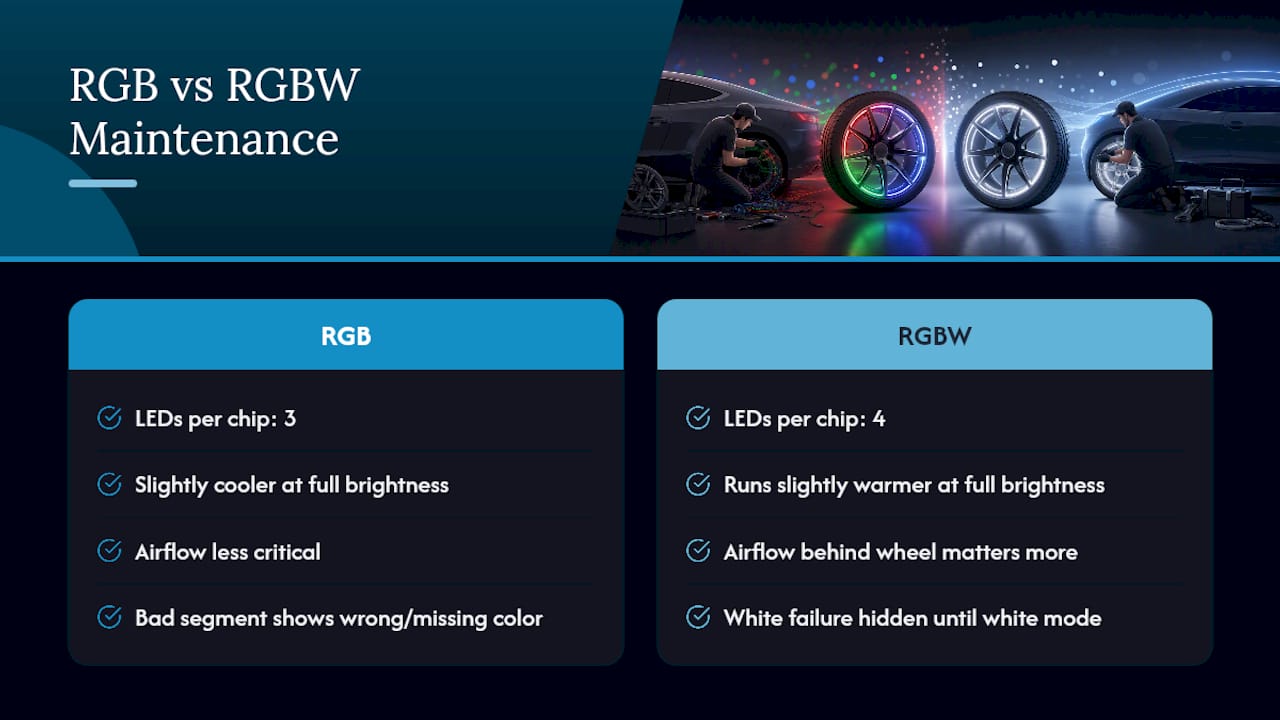
RGBW strips have one more LED per chip than RGB, and that extra diode is one more thing that can eventually fail, though in practice it rarely fails in isolation. The bigger maintenance factor is heat. More diodes packed into the same chip length means RGBW strips run slightly warmer at full brightness, so proper mounting with adequate airflow behind the wheel well matters more than it does for RGB.
Both technologies are similarly durable when sealed and installed correctly, but repair scenarios differ. On an RGB strip, a bad segment usually shows up as a missing or wrong color in one section. On RGBW, a failed white diode can be harder to spot at a glance since the color channels keep working, and you might not notice until you switch to white mode and see a dark patch.
Replacement is usually simpler than people expect. Instead of tearing out a full kit, a replacement wheel light strip or a fresh wire harness often solves the problem without touching the rest of the install. Keep your original wiring diagram or take photos before you tuck everything behind the wheel. It saves real time if you ever need to trace a fault or swap a segment months down the road.
How RGB and RGBW Change the Look of Your Build
The color technology you pick doesn’t just affect brightness. It changes what your build can actually do. RGB rewards vehicles built around a single signature color or a tight rotation of chase effects. It’s the better fit if your aesthetic goal is bold, saturated, and consistent, think a show truck running one dominant hue at every meet.
RGBW opens up range. Because you get a genuine white mode alongside full color, the same set of wheel lights can go from a daily-driver look (clean white accent lighting) to a full color show at night without swapping hardware. That flexibility matters for owners who use one vehicle for both daily duty and weekend shows, since you’re not locked into a single visual identity.
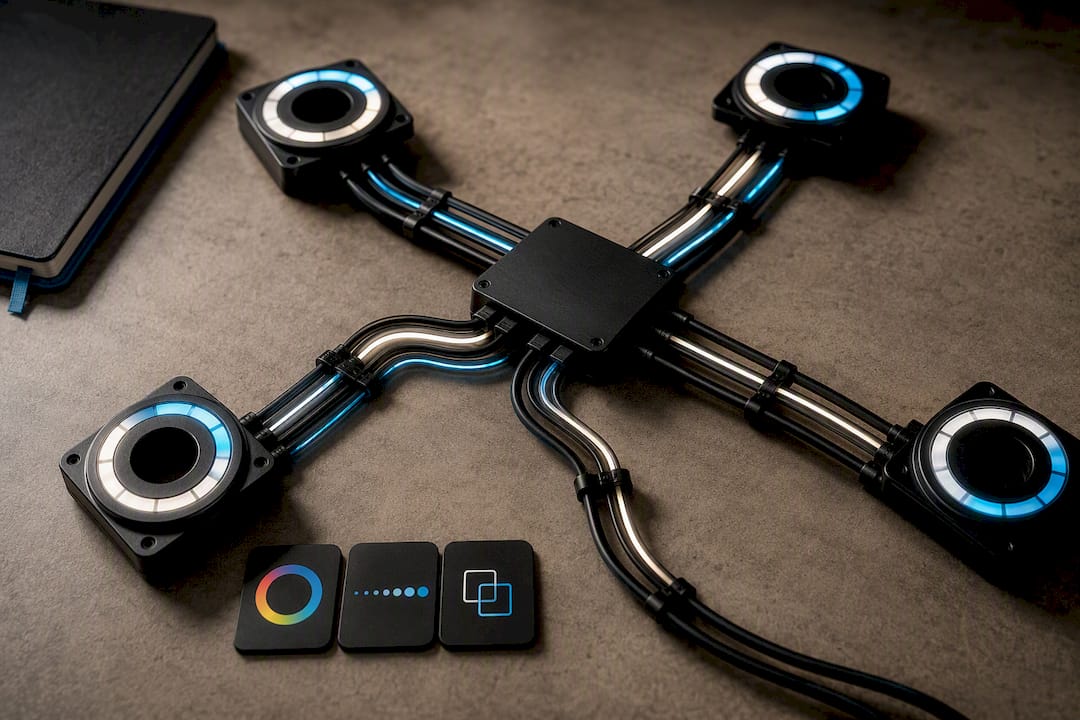
Controllers and remotes also shape customization more than people expect going in. A basic remote gets you through preset colors and patterns, but app-based or multi-zone controllers let you sync effects across wheels, adjust brightness independently, and save custom scenes for different occasions. If personalization is the whole point of adding wheel lights in the first place, the controller you pair with the strip matters just as much as RGB versus RGBW.
Our Take: Stop Buying Wheel Lights Like They’re All the Same
The RGB versus RGBW debate gets treated online like a simple upgrade decision, spend more, get more. That’s not quite right. The real question is what job the lights are doing on your vehicle, and most buyers skip that step entirely.
If you’re chasing a show-only aesthetic with one or two signature colors, RGB does the job well and there’s no reason to pay for a white channel you won’t use. But the conventional advice to “just get RGBW because it’s newer” misses the actual case for it: usable white for visibility, brake integration, and video work, not just novelty. That’s a function decision, not a spec upgrade.
What buyers should prioritize first isn’t color count or wattage specs. It’s matching the kit’s controller and wiring to what the vehicle will actually be used for. A gorgeous RGBW strip paired with an undersized fuse or an incompatible controller performs worse than a well-matched RGB setup. Buy for the use case first, the spec sheet second.
— Christopher
Get RGBW Performance With U.S.-Built Wheel Lighting
If the verdict here landed on RGBW for your build, the practical next step is finding a kit designed to deliver on that white channel instead of just claiming it on the box. Wheel Light Express builds its wheel light ring and strip kits with matched harnesses and controllers designed together in Louisiana, not sourced separately and hoped to work.
That matters because a mismatched controller is the single most common reason RGBW strips underperform after install. Wheel Light Express kits ship with wiring and channel mapping already sorted, so the white mode you paid for actually shows up bright and clean instead of dim or off-color. Pair your kit with a properly rated wire harness to keep power draw in check as you add brake and turn functions. Ready to see the difference a matched RGBW setup makes on your wheels? Browse current kits and start your build today.
Sources
- RGB vs RGBW vs RGB+IC: What’s the Difference?
- CMY vs RGB vs color wheel: how stage lights actually create color
- RGB vs. RGBW LEDs: What’s the Difference and Why It Matters
FAQ
What’s Better, RGB or RGBW, for Wheel Lights?
RGBW is the better overall pick if you want both color effects and a genuine white mode, since its dedicated white emitter produces a brighter, more accurate white than RGB’s mixed approach. RGB remains the smarter buy if your build is strictly show colors on a tighter budget.
What Are the Best Truck Wheel Lights for Everyday Use?
For daily drivers that need both visibility and show capability, RGBW kits with smart brake wiring tend to perform best, since they give you a bright, usable white alongside full color options. Look for a kit with a matched controller and properly sized wiring, like Wheel Light Express’s wheel light ring and strip, rather than piecing components together separately.
What Are the Disadvantages of RGB LED Lighting?
RGB-only strips can’t produce a true white since they have to mix red, green, and blue to fake it, which usually results in a tinted or dimmer white output. RGB strips also lack the visibility and brake-integration benefits that a dedicated white channel provides.
Is RGB or RGBIC Better for Wheel Lights?
RGBIC controls each LED individually for multicolor chase effects along a single strip, while standard RGB lights the whole strip in one color at a time; RGBIC is better for complex patterns, but neither adds a true white channel the way RGBW does. If usable white matters for your build, RGBW still outperforms both.
Does RGBW Use More Power Than RGB?
Yes, RGBW strips typically draw more watts per meter than RGB-only strips, roughly 18W/m compared to about 14.4W/m at similar densities, because of the added white emitter, according to Pixel LED Effects. Size your fuse and wiring gauge accordingly when planning an RGBW install.