

Wheel light synchronization is defined as the coordinated operation of all LED lights mounted on a vehicle’s wheels, producing perfectly timed, unified lighting effects across every wheel simultaneously. The industry term for this function is “multi-channel LED synchronization,” and understanding wheel light sync meaning is the first step toward building a lighting setup that looks intentional rather than accidental. Control boxes manage power delivery, brightness, pattern sequencing, and synchronization to prevent phase drift and timing issues across all four wheels. Wheellightexpress designs its wire harnesses and LED strips specifically to support this kind of coordinated performance, built right here in Louisiana.
What does wheel light synchronization mean technically?
Wheel light synchronization works through a central control system that sends timing signals to every LED module at the same moment. Without this coordination, each wheel runs its own independent cycle, and the result is a messy, out-of-phase flicker that undermines the whole effect. The control box is the core component. Control boxes act as the brain of wheel lighting systems, connecting vehicle power to the LEDs and maintaining harmony across all modules.
How control boxes manage timing
A quality control box handles four functions at once: power delivery, brightness regulation, pattern sequencing, and sync timing. When one wheel’s LED strip starts a color cycle, the control box triggers all other wheels at the exact same millisecond. That precision is what separates a polished light show from random blinking.
Master-slave systems vs. multi-channel controllers
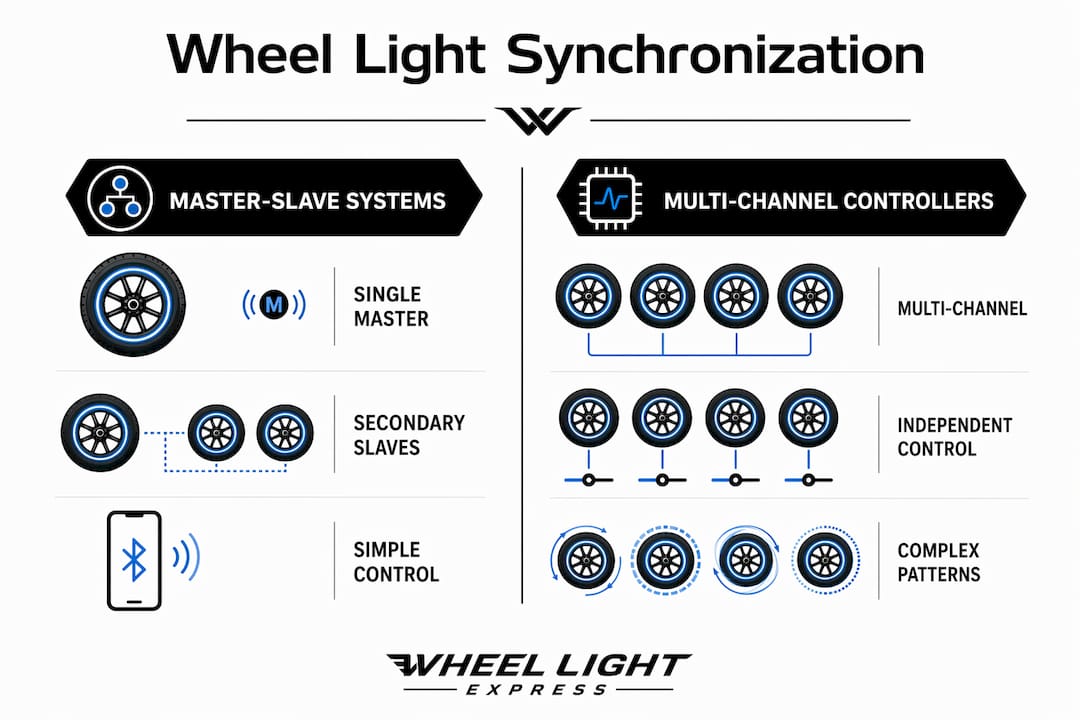
Two main architectures handle the wheel light synchronization function. The first is a master-slave setup. Master-slave compatible control systems enable front and rear wheel lights to sync perfectly by connecting multiple controller units in a chain. One controller acts as the master and broadcasts timing commands; the others follow. The second architecture uses a single multi-channel controller with dedicated output channels for each wheel. Multi-channel controllers are generally more reliable because all timing originates from one source with no communication lag between units.
Remote, app, and firmware control
Control options range from basic RF remotes to full Bluetooth smartphone apps. Bluetooth-enabled smartphone apps provide advanced control, customization, music sync, and firmware updates, making them the preferred choice for enthusiasts who want the most from their setup. App control lets you build custom patterns, schedule lighting sequences, and push firmware updates that fix timing bugs.
Key features to look for in a control system:
- Multi-channel output with at least four independent channels
- Bluetooth or RF connectivity for remote pattern changes
- Firmware update support to fix sync lag over time
- Music sync input for beat-reactive lighting
- Ignition-switched power wiring to prevent battery drain
Pro Tip: Always buy a control box rated for at least 20% more wattage than your total LED load. Headroom prevents overheating and keeps sync timing stable under load.
Why synchronized wheel lights make a real difference
Synchronized wheel lighting does more than look good. Customizable synchronized patterns provide both visual appeal and functionality, improving safety by linking lighting effects to vehicle signals. When your brake lights activate, a properly wired sync system can pulse all four wheel lights in response, giving drivers behind you a wider, more visible signal.
The aesthetic benefits are equally real. A vehicle with four wheels running the same color wave at the same speed reads as a finished, professional build. Four wheels running slightly different cycles read as an afterthought. The difference is entirely in the controller.
Here are the top benefits enthusiasts report from a properly synced setup:
- Cohesive visual impact. All four wheels run the same pattern at the same time, creating a unified look from any angle.
- Music synchronization. App-controlled systems can tie LED pulses to your audio input, producing beat-reactive light shows.
- Brake and turn signal integration. Sync-capable harnesses can wire wheel lights to respond to your vehicle’s existing signals.
- Customizable light shows. Firmware updates add new animation modes without replacing hardware.
- Community recognition. A clean, synced build stands out at car meets and earns respect from other enthusiasts who know what it takes.
The gap between entry-level and premium wheel lighting kits primarily centers on the controller’s ability to maintain perfect synchronization, not just aesthetics. Spending more on the controller is almost always the right call.
How to install synchronized wheel lights as a DIYer
Installation requires basic electrical knowledge, patience, and the right components. The most common DIY mistakes all trace back to wiring shortcuts that create sync failures or battery drain. Incorrect installation is a common cause for wheel light failures and synchronization issues among DIY enthusiasts.
Proper ground wiring and routing away from suspension components prevent malfunctions and electrical shorts. This single step eliminates the majority of post-install problems. Route all wiring through grommets, away from moving parts, and secure every connection with heat-shrink tubing rather than electrical tape.
Battery protection is non-negotiable. Improperly wired lights can drain a vehicle battery within 24–48 hours if left on a continuous circuit. Always wire your system through an ignition-switched relay so the lights cut power when the key is off. Wheellightexpress offers purpose-built wire harnesses designed to make this step straightforward for DIYers.
Installation checklist:
- Confirm your vehicle’s electrical load capacity before adding LEDs
- Use a relay and fuse on every power circuit
- Ground each controller to bare metal, not a painted surface
- Route wiring away from brake lines, suspension arms, and CV axles
- Test sync timing before final mounting to catch phase drift early
- Update controller firmware before the first full run
Pro Tip: Run a bench test with all four wheel modules connected before installing anything on the car. Confirm sync timing on a flat surface where you can see all four wheels at once.
For a deeper look at how the underlying technology works, the wheel lights explained guide from Wheellightexpress covers the full electrical picture.
What are the legal and insurance rules for wheel lights?
Wheel light laws vary by state and country, and ignoring them creates real risk. The most common restrictions target color. Red and blue lights are reserved for emergency vehicles in most U.S. states, meaning those colors on your wheels can result in a traffic stop or fine. White lights facing forward are also restricted in several states because they can be mistaken for headlights.
Some insurance providers classify aftermarket LED lighting as a significant vehicle modification, potentially affecting coverage or claims if unreported. This is not a theoretical risk. If your vehicle is involved in an incident and the insurer determines your lighting was illegal or undisclosed, your claim can be denied. Notify your provider before installation. For context on how lighting modifications interact with vehicle appearance and insurance, professional detailing services that work with modified vehicles often advise clients on disclosure requirements.
| Consideration | Key rule | Action required |
|---|---|---|
| Color restrictions | No red or blue in most U.S. states | Check your state DMV regulations |
| Forward-facing white | Restricted in several states | Use amber or color-changing only |
| Insurance disclosure | Modifications may affect coverage | Notify your insurer before install |
| Battery load | 5–10W per ring adds up across four wheels | Use ignition-switched relay wiring |
| Distraction laws | Moving light shows while driving may be illegal | Limit animations to parked mode |
Enthusiasts should balance impressive visual effects with battery longevity and legal compliance to fully enjoy synchronized wheel lighting without negative consequences. The best builds are the ones you can drive legally every day.
For guidance on wiring that keeps your electrical system safe, the sequential lighting DIY guide from Wheellightexpress walks through the logic behind timed circuits.
Key Takeaways
Wheel light synchronization requires a quality control box, correct wiring, and legal compliance to deliver consistent, unified lighting effects across all four wheels.
| Point | Details |
|---|---|
| Control box is critical | The controller manages timing, brightness, and pattern sync across all wheel modules. |
| Master-slave vs. multi-channel | Multi-channel controllers offer more reliable sync because all timing comes from one source. |
| App control adds real value | Bluetooth apps enable firmware updates that fix sync lag and add new animation modes. |
| Wiring determines reliability | Ignition-switched relays and proper grounding prevent battery drain and sync failures. |
| Legal compliance protects you | Color restrictions and insurance disclosure rules apply in most U.S. states. |
Synchronized wheel lights: what I actually think after years of builds
The most underrated part of any wheel lighting build is the controller, not the LEDs. Enthusiasts spend hours choosing strip colors and ring sizes, then buy the cheapest control box available. That decision causes 90% of the sync problems I see at car meets. The LEDs are fine. The controller is failing to hold timing under load.
App-controlled systems with firmware update support have changed the game in the last two years. I used to recommend RF remotes for their simplicity, but the ability to push a firmware fix when sync lag develops is genuinely valuable. You are not replacing hardware. You are solving a software problem in five minutes from your phone.
The legal side gets ignored more than it should. I have seen builds confiscated at events because the owner used red wheel lights in a state where that color is reserved for emergency vehicles. Checking your state DMV website takes ten minutes. That ten minutes protects a build worth hundreds of dollars and keeps you out of a traffic stop.
My honest expectation for 2026 and beyond: vehicle integration is coming. Controllers that read CAN bus signals directly from the vehicle and sync wheel lights to factory brake and turn inputs are already appearing in premium kits. That level of integration will make synchronized wheel lighting feel like a factory feature rather than an afterthought. Invest in a controller that supports firmware updates now, and you will be positioned to take advantage of those features as they arrive.
— Christopher
Wheellightexpress has the right kit for your build
Wheellightexpress designs every lighting kit in Louisiana, with quality control that overseas-sourced kits simply cannot match. The Wheel Light Ring and Strip kit supports app control, master-slave synchronization, and music sync right out of the box. Every kit ships with Wheellightexpress’s original wire harnesses, which are built to handle ignition-switched wiring without modification.
Financing options make it possible to get a full four-wheel synchronized setup without paying everything upfront. If you need replacement components for an existing build, Wheellightexpress also carries replacement wire harnesses to keep your system running clean. Every purchase comes with a satisfaction guarantee, so you build with confidence.
FAQ
What does wheel light synchronization mean in simple terms?
Wheel light synchronization means all four wheel LED lights run the same pattern at the same time, controlled by a single system that keeps their timing perfectly matched.
How does wheel light sync work with a master-slave setup?
One controller acts as the master and sends timing signals to secondary controllers on the other wheels, keeping all modules in phase with each other.
Can synchronized wheel lights drain my car battery?
Yes. Improperly wired systems drawing 5–10W per ring can drain a battery within 24–48 hours. Always wire through an ignition-switched relay.
Are synchronized wheel lights legal in the United States?
Legality depends on your state. Red and blue wheel lights are prohibited in most states, and some states restrict white forward-facing lights. Check your state DMV rules before installing.
What is the difference between app control and a remote for wheel lights?
App control via Bluetooth supports firmware updates, custom pattern scheduling, and music sync. A basic RF remote only switches between preset modes with no update capability.