

Most automotive enthusiasts treat wheel lighting as an afterthought. Something you bolt on after the paint job is done and call it a day. But the role of wheel lighting aesthetics runs far deeper than decoration. It shapes how your vehicle reads emotionally, how it carries its identity at night, and how it communicates something specific about you as a driver. This guide covers the design principles, color theory, and customization strategies that separate a thoughtful wheel lighting setup from one that simply glows.
Table of Contents
- Key takeaways
- How automotive lighting became a design language
- Design principles behind great wheel lighting
- Color theory and the emotional impact of wheel lights
- Practical customization ideas for aesthetic wheel lighting
- My take on what wheel lighting actually does
- Take your wheel lighting further with Wheellightexpress
- FAQ
Key takeaways
| Point | Details |
|---|---|
| Lighting is identity, not decoration | Wheel lighting communicates personality and vehicle character far beyond surface-level visual appeal. |
| Architecture first, lights second | Effective wheel lighting integrates with your wheel’s physical structure rather than sitting on top of it. |
| Color drives emotion | The hues you choose for your wheel lights create specific emotional responses in observers and owners alike. |
| Restraint creates impact | Subtle, well-placed lighting often delivers more visual power than a maximalist, all-out approach. |
| Customization has real strategy | Selecting aesthetic wheel lights based on vehicle style and personal goals produces more coherent results than trend-chasing. |
How automotive lighting became a design language
Automotive lighting started as pure function. Headlights helped drivers see. Taillights helped other drivers avoid rear collisions. For most of the 20th century, that was the full scope of the conversation.
Then something shifted. Designers started recognizing that light could do more than illuminate. It could express. Luxury automakers led this charge, turning lighting signatures into brand identifiers as recognizable as a grille shape or a hood ornament. Ian Cartabiano of Lexus describes lighting as the vehicle’s jewelry, a design element that communicates intent and ambient emotion before a single door opens.
This shift matters for enthusiasts because it reframes what wheel lighting actually is. You are not adding a light strip to a wheel. You are participating in a design tradition that major manufacturers now treat as a core part of brand identity.
Here is how that evolution broke down across the decades:
- Safety era (pre-1990s): Lighting was regulatory. Brightness, angle, and visibility were the only metrics that mattered.
- Brand signature era (1990s to 2010s): DRLs and LED clusters became brand identifiers. Audi’s four-ring LED strips, BMW’s angel eyes, and Lexus’s L-shaped elements turned lighting into logos.
- Emotional communication era (2010s to present): Lighting now communicates vehicle status, mood, and in some cases pedestrian safety through color and animation sequences on autonomous concept vehicles.
- Wheel lighting as new frontier: As electrification removes traditional engine drama, lighting defines emotional identity in places designers never prioritized before. The wheel is now one of those places.
This context is not just historical background. It tells you what the best wheel lighting design actually aims to achieve.
Design principles behind great wheel lighting
When designer Dingxiao “Lex” Liu works on wheel lighting for a vehicle concept, he does not start by picking a color. He starts by studying the wheel’s physical structure. Every groove, every spoke angle, every surface curve becomes a potential canvas for controlled reflection. Liu uses layered acrylic panels and optical manipulation to blend lighting with wheel architecture, producing the impression of motion and depth even on a stationary car.
This is the key distinction between wheel lighting that looks professional and wheel lighting that looks like an accessory. Professional wheel lighting design treats the physical structure as the primary tool. The light source is secondary.
Pro Tip: Before purchasing any LED strip or ring kit, photograph your wheels under a single light source from the front, side, and rear. Study where the light catches naturally. Those points of natural reflection are where placed lighting will have the most architectural impact.
Here is how architectural integration compares to surface-level lighting approaches:
| Approach | Method | Visual Result |
|---|---|---|
| Surface overlay | LED strip applied to the outer rim face | Flat glow with no depth or dimension |
| Architectural integration | Lighting placed to interact with spoke geometry and grooves | Layered depth, implied motion, dynamic shadow play |
| Structural fusion | Light embedded within fins or aerodynamic panels | Performance-grade visual that reads as intentional design |
Advanced 3D CAD modeling allows professional designers to simulate how light reflects off grooves and surfaces before anything is physically built. As an enthusiast, you can replicate this logic simply by being intentional about where your light source sits in relation to your wheel’s structural features.
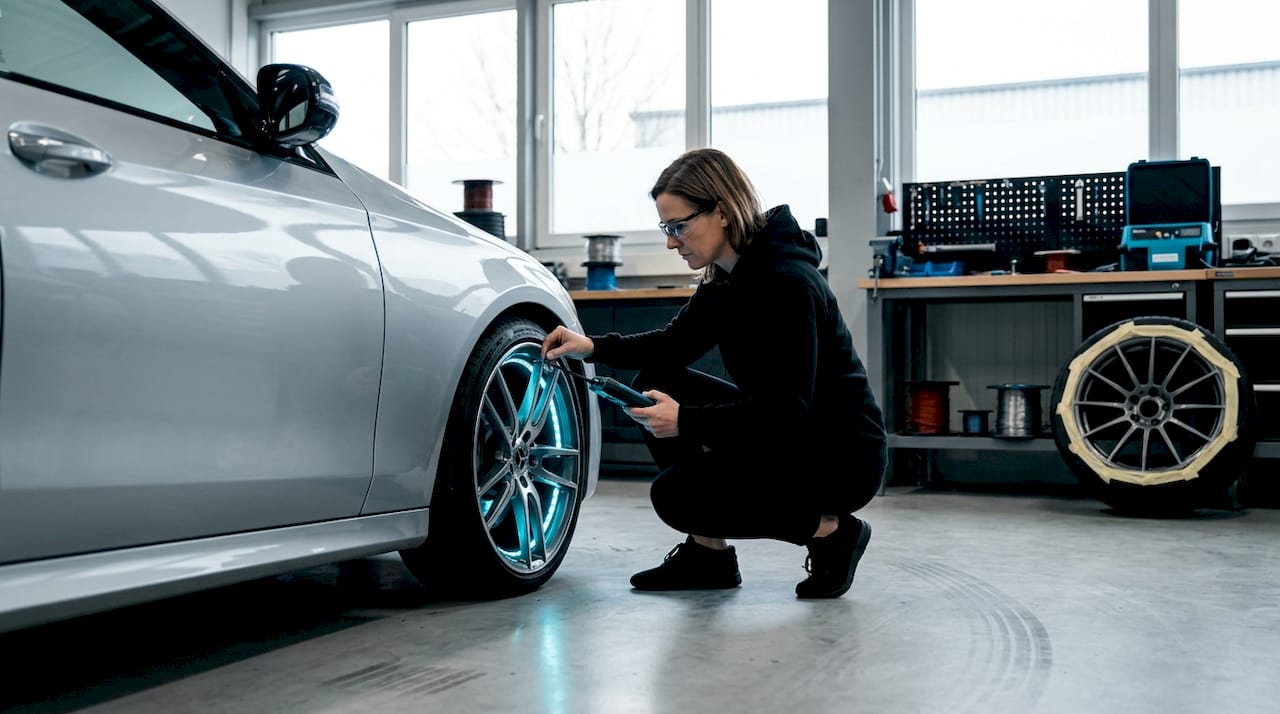
The goal is to create what designers call moments of discovery. Places where a viewer’s eye is drawn inward, revealing depth and dimension that flat surface lighting cannot produce. Liu’s work on the Lexus BEV Sports Concept demonstrated this directly, where fin structures and lighting interacted to suggest both airflow and visual energy simultaneously.
Color theory and the emotional impact of wheel lights
Color is not a stylistic preference. It is an emotional instruction. The wheel light color options you choose will tell viewers something specific about your vehicle and yourself, whether you intend them to or not.
Stage lighting designers have worked with this reality for decades. They use color wheels to select hues that evoke precise moods, balancing harmony and contrast to produce a desired emotional response in an audience. The same principles apply directly to wheel illumination effects on a vehicle.
Here is how the core color theory logic breaks down for wheel lighting:
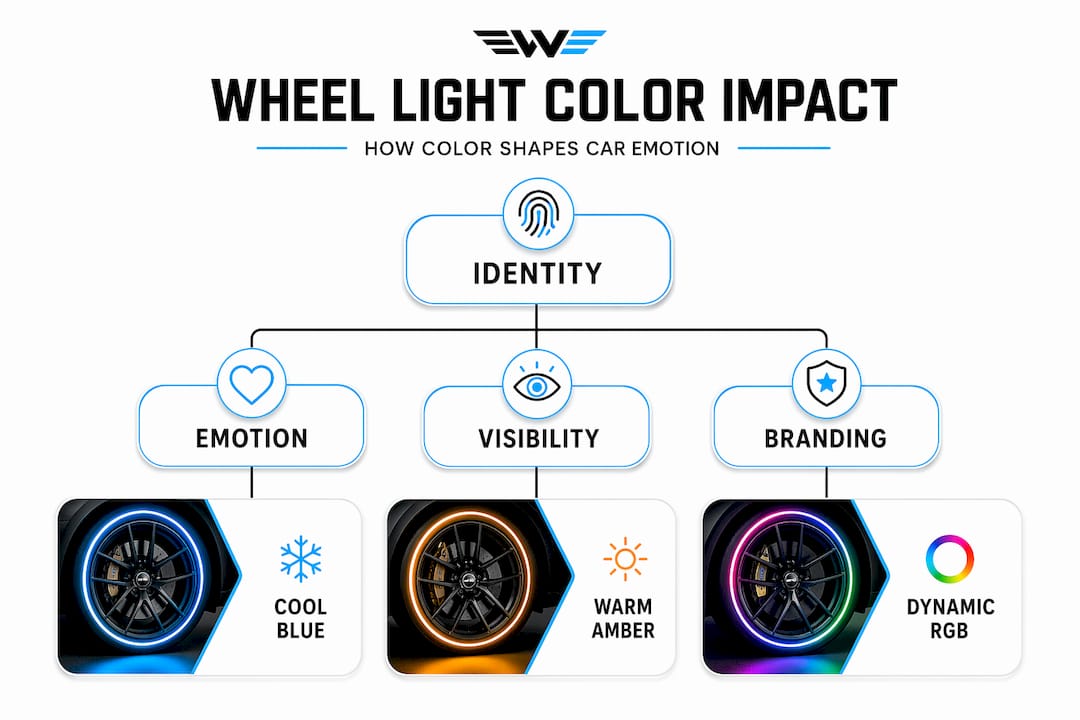
- Cool blues and whites: Communicate technology, precision, and modernity. Common in electric vehicle aesthetics because they reinforce the idea of advanced engineering.
- Warm ambers and golds: Create intimacy and warmth. On a dark street, amber wheel lighting reads as approachable and rich rather than aggressive.
- Red and deep orange: Signal performance and urgency. These work well on sport-tuned builds where the vehicle’s other design cues already lean aggressive.
- Complementary pairs (blue and orange): Create visual tension. Complementary color combinations deliver the strongest contrast and make the eye work harder, which translates to a more memorable visual impression.
- Single-color saturation: A pure, deeply saturated single color on all four wheels creates visual cohesion that reads as intentional and confident rather than experimental.
Color temperature matters too. Warm tones create intimacy while cool tones convey a sense of technology and calm. Mixing warm and cool sources from different positions on the wheel adds texture without requiring multiple colors. This technique is underused in aftermarket customization and consistently delivers results that look more sophisticated than simple single-color builds.
The practical takeaway: anchor your wheel light color options to an emotional goal first, then select the color that serves that goal. Do not start with “what looks cool.” Start with “what should someone feel when they see my vehicle?”
Practical customization ideas for aesthetic wheel lighting
Getting your wheel lighting right comes down to a few decisions made in the right order. Most enthusiasts skip steps one and two and go straight to purchasing, which is why so many builds end up looking inconsistent.
Follow this sequence for a setup that actually reflects your intent:
-
Define your vehicle’s existing visual identity. Is it aggressive, refined, understated, or theatrical? Your wheel lighting should reinforce that identity, not contradict it. A clean, minimalist build with single-color paint looks strongest with subtle, single-tone wheel illumination effects rather than a multi-color chase sequence.
-
Choose your integration strategy. Decide whether you want surface lighting (LED strips along the rim face), spoke-focused lighting (placing light sources to interact with spoke geometry), or a combined ring and strip approach. Check out ring and strip kits for a clean starting point that covers both planes.
-
Select your color based on emotional intent. Use the color theory framework above. Lock in your choice before purchasing and do not second-guess it based on trend content you see online.
-
Plan your wire routing before installation day. Poor wire management is the most common reason a clean lighting build ends up looking amateur. Read up on automotive LED lighting types to understand how different systems route differently.
-
Test at night before finalizing placement. What looks balanced in daylight often looks uneven after dark. Run a test session in a dark environment and photograph from 15 feet out before committing to permanent installation.
Pro Tip: If you want lighting that reads as creative wheel lighting rather than a standard aftermarket install, use a dimmer-compatible LED strip and dial the brightness down to 60 to 70 percent of maximum. Full-brightness lighting often creates a harsh, flat effect. Slightly reduced output allows shadows to survive and gives the wheel genuine depth.
For enthusiasts who want to stay within legal parameters, lighting that serves dual functions such as both aesthetic and visibility enhancement tends to satisfy both personal expression goals and practical road considerations. Proper restraint in placement, as Lexus designers emphasize, creates atmosphere without overwhelming the overall design. That same principle protects you from lighting setups that attract unwanted attention for the wrong reasons.
Current trends in aftermarket creative wheel lighting include color-shifting RGB options with app control, static single-color setups in OEM-matching tones, and structural lighting that mimics concept car design language. The strongest builds in 2026 tend to lean toward restraint and cohesion over spectacle.
My take on what wheel lighting actually does
I’ve watched a lot of enthusiasts treat lighting as the final checkbox on a build list. Get the wheels, get the wrap or paint, get the suspension sorted, then throw some lights on and call it done. The result is usually lighting that exists but does not add anything.
What I’ve learned from paying attention to how top designers approach this is that lighting should be the first decision, not the last. The moment you decide on your emotional target, your color range, and your architectural integration approach, every other decision becomes easier. Your wheel choice, your finish, your overall stance should all follow from a coherent visual intention.
The designers I respect most treat lighting as integrated architecture, not as a graphic overlay. That philosophy changes everything about how you approach a build. You stop asking “does this look cool” and start asking “does this communicate what I want to communicate.”
My honest advice: spend more time on color and placement decisions than on the product selection itself. A well-placed, properly colored LED strip on a $60 kit will outperform a poorly considered setup using premium hardware every single time. The importance of wheel lighting is not in the hardware. It is in the intention behind it.
— Christopher
Take your wheel lighting further with Wheellightexpress
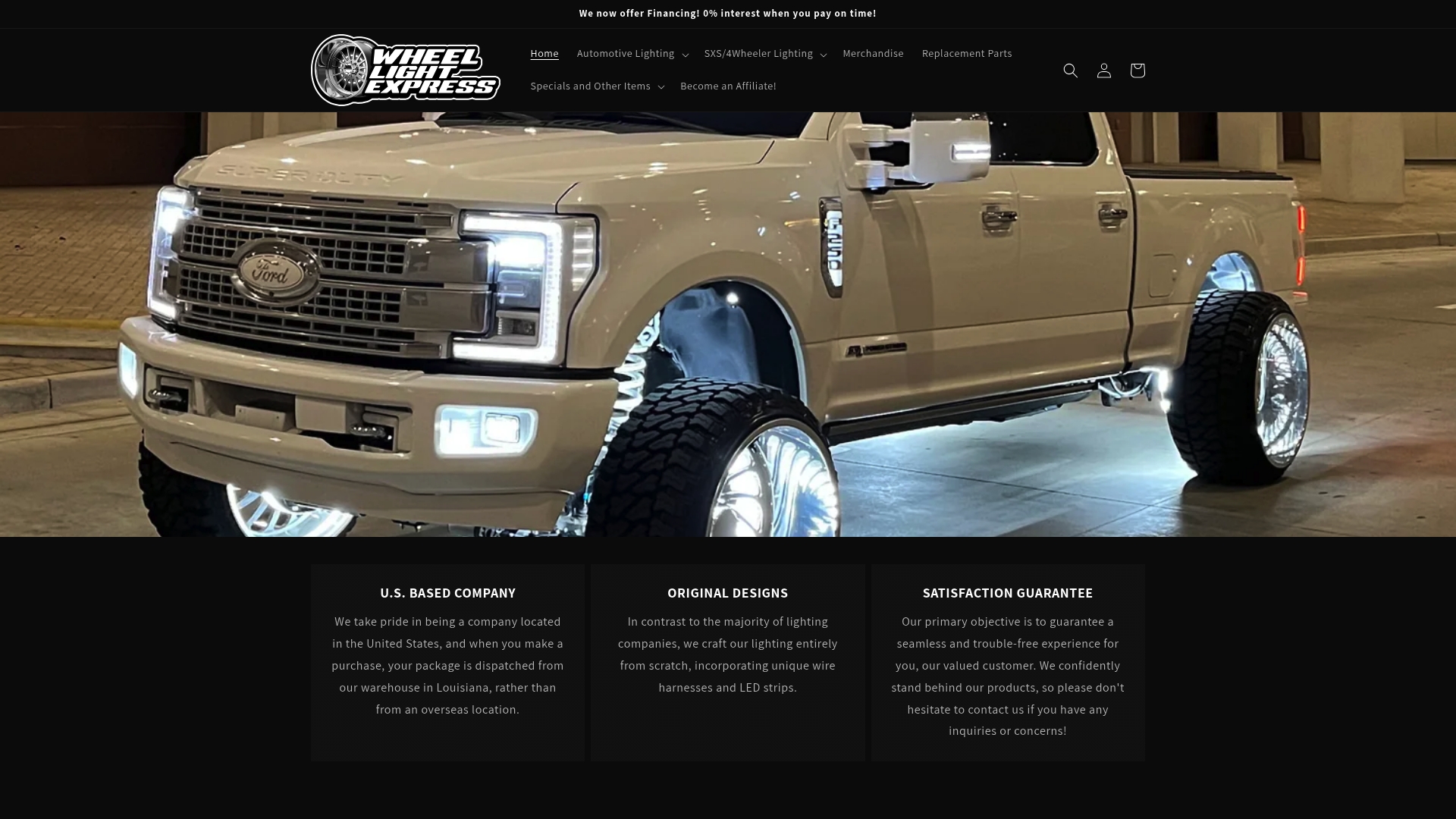
If you are ready to move from concept to installation, Wheellightexpress has the products to get you there. Designed in Louisiana and built specifically for automotive enthusiasts, the lineup includes everything from complete aftermarket lighting kits to replacement wire harnesses built for clean, reliable installs. Every product comes with a satisfaction guarantee, and financing options mean you do not have to wait to build the vehicle you have been planning. Whether you are refreshing an existing setup or starting from scratch, Wheellightexpress offers original designs that give your build a look no overseas-sourced kit can match.
FAQ
What is the role of wheel lighting aesthetics in car design?
Wheel lighting aesthetics shape a vehicle’s emotional identity and visual presence, communicating personality and design intent beyond basic decoration. When integrated with wheel architecture, lighting creates depth, motion effects, and a coherent brand-level statement.
What wheel light color options work best for most builds?
Single-color setups in cool whites or blues work well for modern and electric-influenced builds, while warm ambers suit refined or classic styles. Complementary pairs like blue and orange create strong contrast but require careful balance to avoid visual overload.
How do I improve wheel lighting without professional installation?
Start by studying your wheel’s natural reflection points under a single light source, then place LED strips or rings to amplify those existing angles. Reducing brightness to 60 to 70 percent of maximum output adds depth and prevents the flat, harsh look of fully saturated LED output.
Does wheel lighting serve any functional purpose beyond aesthetics?
Yes. Lighting can improve vehicle visibility at night and, in advanced applications, communicate vehicle status or intent to pedestrians and other drivers. Even basic aesthetic wheel lights increase a vehicle’s low-light presence on the road.
How does color theory apply to wheel illumination effects?
Color temperature and hue selection directly influence how observers emotionally perceive a vehicle. Cool tones suggest technology and precision, warm tones suggest intimacy and approachability, and complementary color pairs create memorable visual tension that makes the overall design more striking.