
Not all automotive LED lights are created equal, and that’s exactly where most vehicle owners get tripped up. The types of automotive LED lighting span everything from precision-engineered headlamp assemblies to decorative wheel strips, and each category has its own performance standards, legal requirements, and installation demands. Choosing the wrong type doesn’t just look bad. It can compromise safety, fail inspection, or leave you with a beam pattern that blinds oncoming drivers. This guide breaks down every major LED lighting type by function so you can make a smart, informed decision for your vehicle.
Table of Contents
- Key takeaways
- The main types of automotive LED lighting explained
- 1. LED headlights
- 2. Daytime running lights (DRLs)
- 3. Turn signals and indicators
- 4. Tail and stop lights
- 5. LED fog lights for cars
- 6. Automotive LED interior lights
- 7. Decorative and accent LED lighting
- Comparing LED upgrade types: what actually fits your needs
- How to choose the right LED lighting for your vehicle
- My honest take on LED lighting upgrades
- Upgrade your vehicle with Wheellightexpress
- FAQ
Key takeaways
| Point | Details |
|---|---|
| LED types vary by function | Each lighting position has distinct beam, color, and legal requirements you must match. |
| Retrofit bulbs have real limits | Swapping LED bulbs into halogen housings can distort beam patterns and cause heat issues. |
| Adaptive LEDs are now legal in the US | FMVSS 108 changes in 2022 opened the door for matrix/adaptive headlamps on American roads. |
| Decorative LEDs require legal research | Underglow and wheel lights are not universally legal. Check your state laws before installing. |
| Match the upgrade to your goal | Daily drivers, off-road builds, and show vehicles each call for a different LED strategy. |
The main types of automotive LED lighting explained
Before you spend a dollar, understand that automotive lighting functions include headlamps, fog lights, daytime running lights, turn indicators, tail and stop lights, and interior lighting. Each function has specific photometric requirements, meaning the brightness, beam shape, and color are regulated separately. Treating all LED upgrades as interchangeable is the single biggest mistake enthusiasts make.
Here is what actually separates the categories:
- Beam pattern and optics: Headlights need a precise cutoff line to avoid glare. Fog lights use a wide, low beam. Auxiliary off-road lights use flood or spot patterns depending on terrain.
- Color and legal standards: Front position lights emit white, tail lights must be red, and stop lights must meet defined brightness ranges. Turn signals require amber in most US states.
- Form factor: You are choosing between full LED lamp assemblies (plug-and-play replacements), retrofit LED bulbs (drop into existing housings), LED strips and modules (flexible, often decorative), and auxiliary LED systems (light bars, pods).
- Heat management: LEDs generate heat at the base, not the lens. Poor heat dissipation in a tight housing shortens bulb life and can damage surrounding components.
- Controls and compatibility: Some vehicles use CANbus systems that detect bulb resistance. An LED’s lower draw can trigger error codes or hyperflash without a load resistor or adapter.
Pro Tip: Before purchasing any LED upgrade, check your vehicle’s wiring architecture. Many modern trucks and SUVs use smart lighting modules that require specific adapters to work correctly with aftermarket LEDs.
1. LED headlights
LED headlights come in three distinct configurations. Full LED headlamp assemblies are purpose-built units where every component is designed around LED optics. These deliver the best beam quality and longest lifespan, but they carry the highest price tag.
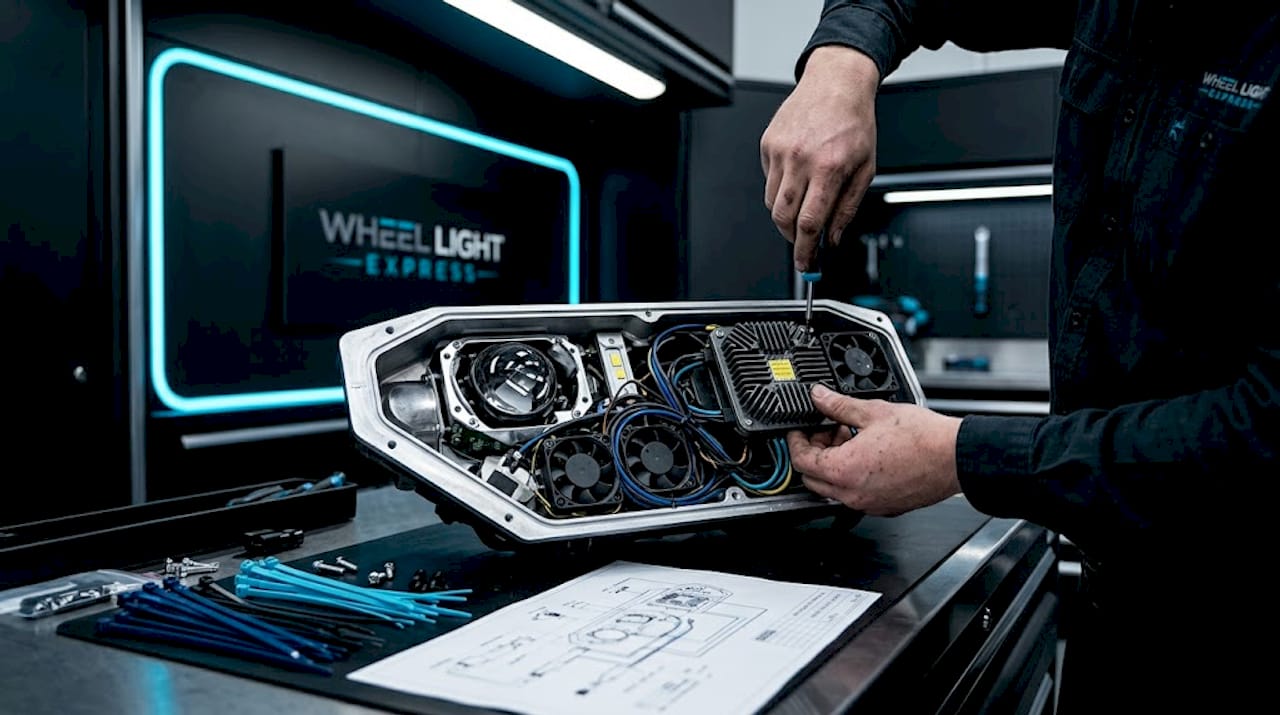
Retrofit LED bulbs drop into your existing halogen housing. They are affordable and widely available, but beam pattern distortion is a real concern because halogen housings are engineered around the filament position of a halogen bulb, not an LED chip. The optical center shifts, the cutoff line blurs, and glare increases.
Adaptive or matrix LED headlights represent the most advanced option. Hella’s matrix LED systems use electronically switchable segments to shape the beam around oncoming traffic, maintaining high-beam illumination without blinding other drivers. These systems became formally legal in the US after FMVSS 108 rule changes in 2022, and adoption is growing fast.
2. Daytime running lights (DRLs)
DRLs exist for one purpose: making your vehicle visible to others during daylight hours. They are not designed to help you see the road. DRLs emit white or amber light and typically activate automatically when the vehicle is in drive.
On modern vehicles, DRLs are often integrated into the headlamp housing as a dedicated LED strip or ring. On older vehicles, aftermarket DRL LED strips can be mounted near the grille or under the headlamp housing. The key distinction is that DRLs must not substitute for proper low-beam headlights at night. Many enthusiasts confuse the two, which is both illegal and dangerous.
3. Turn signals and indicators
Turn signal LEDs come as standard replacement bulbs or specialty programmable units with sequential flash patterns. The sequential style, where the light sweeps outward in segments, has become a popular aesthetic upgrade on trucks and muscle cars.
LED signal bulbs offer longer lifespan and brighter visibility compared to incandescent bulbs, but color compliance is non-negotiable. Most US states require amber for front and rear turn signals. If your lens is clear, your LED bulb must be amber. If your lens is already amber-tinted, a white LED bulb may be acceptable. Always verify before installing.
4. Tail and stop lights
Tail and stop lights are available as full LED assemblies or retrofit bulb replacements. Full assemblies are the cleaner option, especially for trucks and SUVs where aftermarket LED tail light units are widely available and designed to match OEM fitment.
Retrofit LED bulbs for tail and stop positions are straightforward swaps in most cases, but brightness calibration matters. Stop lights must meet defined brightness thresholds so the signal is clear to following drivers. An LED that is too dim fails that standard. An LED that is excessively bright can cause glare in the rearview mirrors of the car behind you.
5. LED fog lights for cars
LED fog lights for cars use a wide, low-mounted beam designed to illuminate the road surface directly in front of the vehicle without reflecting back off fog, rain, or snow. The beam pattern is fundamentally different from a headlight. It is flat and wide, not projected forward.
Retrofit LED fog light bulbs are common and generally work well because fog light housings are less optically sensitive than headlamp housings. Full LED fog light assemblies are available for popular truck and SUV platforms and offer the cleanest installation. Auxiliary LED pods and light bars are sometimes used in the fog light position on off-road builds, but high-output LED bars require precise aiming to avoid creating dangerous glare for other drivers.
6. Automotive LED interior lights
Automotive LED interior lights cover dome lights, map lights, footwell lights, trunk lights, and reading lights. These are among the easiest LED upgrades you can do. Most interior bulb positions use festoon or wedge-base bulbs that swap out in minutes with no tools.
The visual impact is significant. LEDs produce a whiter, cleaner light compared to the yellow-orange glow of incandescent interior bulbs. Color temperature matters here. A 6000K cool white gives a modern, clean look. A 3000K warm white keeps the interior feeling comfortable on long drives. Some enthusiasts use color-changing RGB LED strips in footwells and door panels for a custom ambient effect.
7. Decorative and accent LED lighting
This category covers underglow, wheel lights, LED strips along body panels, and puddle lights. These are the most visible customization options and also the most legally variable. Interior LED swaps are straightforward, but exterior decorative lighting requires you to research your state’s laws before installing.
Wheel lights, in particular, have become a standout trend for truck and SUV owners. LED rings and strips mounted to the wheel face or inner barrel create a dramatic effect that is visible day and night. Underglow strips run along the chassis and project light downward onto the road surface. Both are legal in many states with restrictions on color. Red and blue are typically prohibited because they are reserved for emergency vehicles.
Comparing LED upgrade types: what actually fits your needs
| LED Type | Best For | Installation | Cost Range | Legal Complexity |
|---|---|---|---|---|
| Full LED assemblies | Clean OEM-style upgrades | Moderate | High | Low |
| Retrofit LED bulbs | Budget-friendly swaps | Easy | Low to mid | Medium |
| LED strips and modules | Interior and accent lighting | Easy | Low | Medium to high |
| Adaptive/matrix LED headlamps | Maximum visibility, anti-glare | Complex | Very high | Low (post-2022) |
| Auxiliary LED bars and pods | Off-road and work lighting | Moderate | Mid to high | High |
Adaptive LED headlamps deliver the best real-world visibility but require a compatible vehicle platform and professional installation. Standard full LED assemblies hit the sweet spot for most daily drivers: clean output, long lifespan, and straightforward installation. Retrofit bulbs are the budget entry point but carry the most risk of optical and heat-related problems.
Pro Tip: If you are upgrading headlamps on a Ford F-Series or Bronco, a dedicated LED headlight adapter resolves the CANbus compatibility issues that cause error codes and hyperflash with direct LED swaps.
After your LED headlamp upgrade, proper headlamp aiming per FMVSS 108 is not optional. Changes in optical center or mounting height after an LED swap can cause misalignment that creates glare for oncoming traffic and reduces your own forward visibility.
How to choose the right LED lighting for your vehicle
The decision process comes down to four clear questions.
- What is the primary goal? Safety upgrades (headlights, fog lights) require function-first thinking. Style upgrades (wheel lights, interior strips) give you more creative freedom.
- What is your budget? Entry-level retrofit bulbs start under $30 per position. Full adaptive LED headlamp systems can exceed $1,000 per side. Define your ceiling before you browse.
- Are you installing it yourself? Interior LEDs and simple bulb swaps are genuine DIY projects. Adaptive headlamp systems and wiring-intensive auxiliary setups benefit from professional installation.
- What are your local laws? Verify color and placement regulations for any exterior decorative lighting before purchasing. A wheel light sizing guide can help you choose the right fit for your specific wheel diameter before you commit.
For 2026, the most popular upgrade combinations among truck and SUV owners are full LED headlamp assemblies paired with DRL adapters, sequential LED turn signals, and wheel light rings for exterior accent. That combination covers safety, style, and personalization without crossing into legally gray territory.
My honest take on LED lighting upgrades
I’ve seen a lot of enthusiasts make the same mistake: they chase lumens. They buy the brightest retrofit LED bulb they can find, drop it into a halogen housing, and wonder why oncoming drivers are flashing them. Brightness is not the metric that matters most. Beam control is.
A well-designed full LED assembly with 3,000 lumens will outperform a 6,000-lumen retrofit bulb in a mismatched housing every single time. The housing’s optics determine where the light actually goes. Without the right optics, you are just scattering light in every direction and reducing visibility for everyone on the road.
My other strong opinion: do not skip the wiring. I’ve watched people spend hundreds on quality LED assemblies and then run them through undersized wire or skip a proper harness. Heat builds up, connections corrode, and the lights fail within a year. The electrical side of an LED upgrade is just as important as the light itself.
For decorative lighting, I think wheel lights are genuinely one of the best value upgrades you can make to a truck or SUV. The visual impact is disproportionate to the cost, and when they are installed correctly with quality strips and a proper harness, they are reliable. Just do your homework on your state’s color laws first.
— Christopher
Upgrade your vehicle with Wheellightexpress
If you are ready to move from research to installation, Wheellightexpress has the products to back it up. Designed in Louisiana and built for the US market, every product in the catalog is an original design, not a rebranded import.
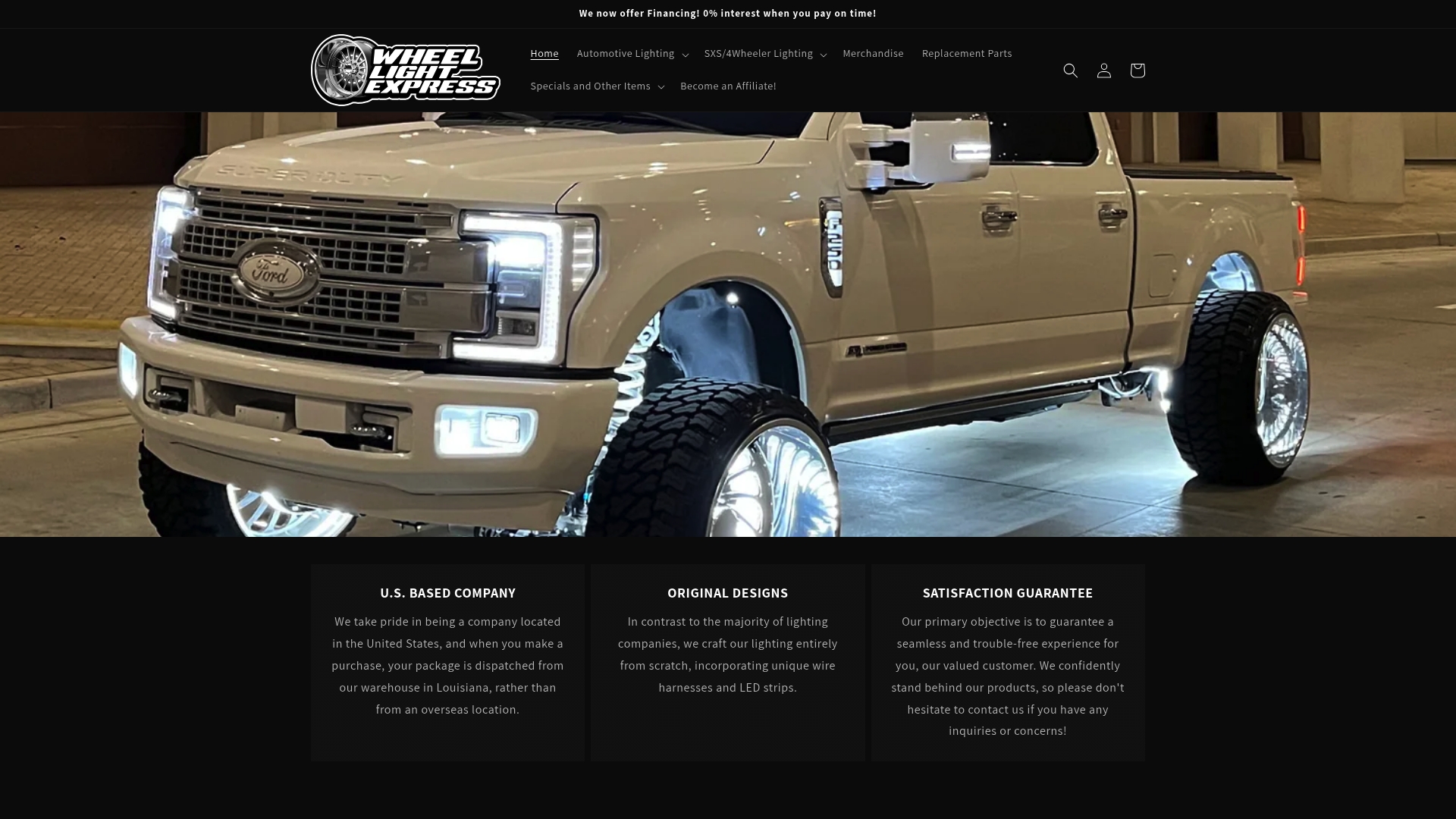
For truck owners, the XB LED mirror lights and XB LED puddle lights are standout upgrades for Ford F-150 and Super Duty platforms. The wheel light ring and strip system gives you a clean, customizable accent setup that is built to last. Every installation is backed by a replacement wire harness designed specifically for automotive LED systems, so your connections stay solid and your lights perform the way they should. Financing options are available, so quality lighting does not have to wait.
FAQ
What are the main types of automotive LED lighting?
The main types include LED headlights, daytime running lights, turn signals, tail and stop lights, fog lights, interior LEDs, and decorative accent lighting such as wheel lights and underglow strips. Each type has distinct beam, color, and legal requirements.
Can I swap LED bulbs into my existing halogen headlight housing?
You can, but it carries real risks. Halogen housings are designed around filament optics, and an LED chip in the same position often distorts the beam pattern and increases glare for oncoming drivers.
Are adaptive LED headlights legal in the United States?
Yes. Adaptive driving beams became legal in the US after FMVSS 108 rule changes in 2022, allowing matrix LED systems that shape the beam around other vehicles without switching off the high beam entirely.
What LED color is legal for turn signals in the US?
Most US states require amber for front and rear turn signals. If your lens is clear, your LED bulb must be amber. Always verify your state’s specific regulations before installing sequential or custom turn signal LEDs.
Do I need a special adapter for LED headlight upgrades on modern trucks?
Many modern trucks and SUVs use CANbus or smart lighting modules that detect bulb resistance. A direct LED swap without an adapter can trigger error codes, hyperflash, or complete lighting failure. Vehicle-specific adapters resolve this cleanly.
Recommended
- Ford Bronco Parking Lights Adapter for LED Headlights (2021-2023) – Wheel Light Express
- Ford Superduty Parking Lights Adapter for LED Headlights (2020-2022) – Wheel Light Express
- Wheel Light Sizing Guide – Wheel Light Express
- Ford Super Duty Parking Lights Adapter for LED Headlights (2023-2024) – Wheel Light Express