

UTV wheel lighting is defined as any LED-based system mounted on or around a vehicle’s wheels, rims, or undercarriage to improve visibility and visual appeal during off-road riding or show events. The two primary categories in any UTV wheel lighting options list are LED wheel ring lights and rock lights, also called wheel-well pods. Brands like Nilight, Apollo RGB, DITRIO, and Honalia each offer kits built around 12V DC systems with IP67 or IP68 waterproof ratings. Whether you ride trails at night or compete at shows, the right UTV LED wheel lights change how your machine looks and performs after dark.
1. What are the main UTV wheel lighting types and their features?
UTV wheel lighting options list breaks into two core categories: wheel ring lights and rock lights. Each serves a different purpose, and many riders use both together for full coverage.
Wheel ring lights are LED rings that mount directly around the rim face. They create a halo or spoke effect visible from a distance, making them the go-to choice for shows and aesthetic builds. Most rings come in single color, RGB, or RGBW configurations, with RGBW adding a dedicated white LED for cleaner neutral tones.
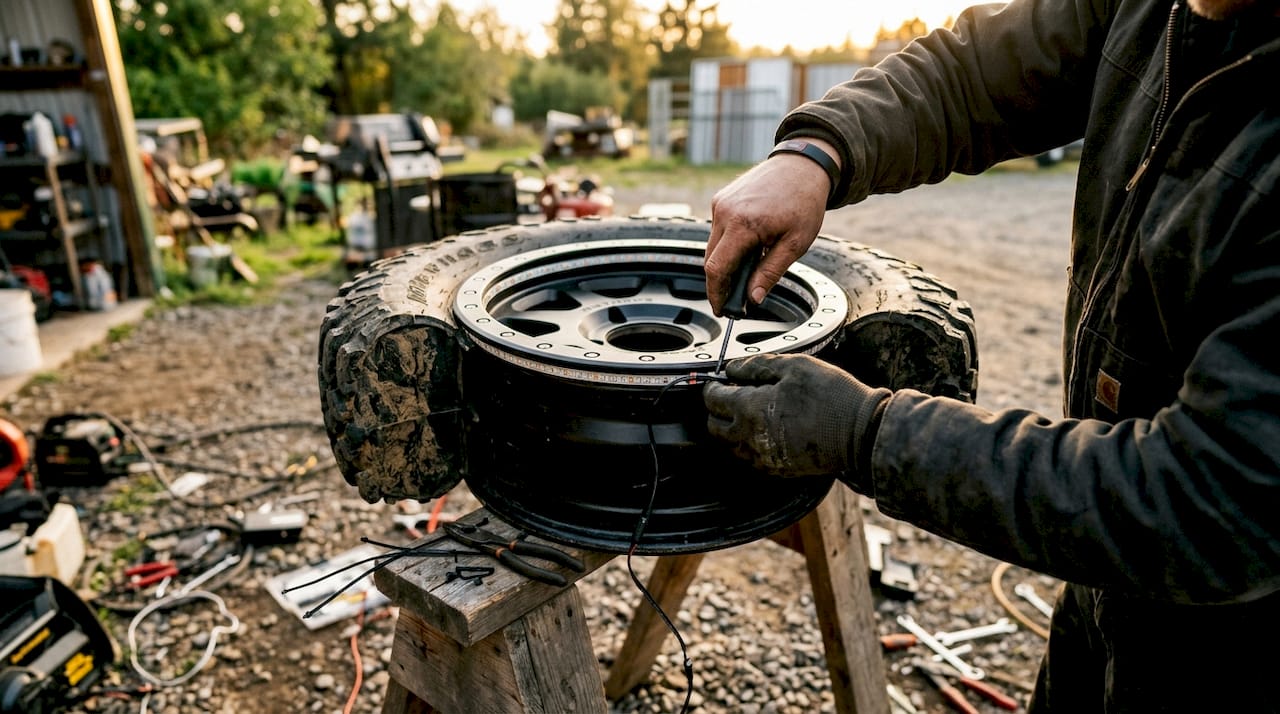
Rock lights (also called wheel-well lights or ground pods) are small, high-intensity LED pods that mount under the chassis or inside wheel wells. Their job is to flood the ground around your tires with light, which is critical for reading terrain on technical night trails. Rock lights operate on 12V DC and come in OEM plug-and-play styles or aftermarket RGB variants.
Key specs to compare across both categories:
- Voltage: 12V DC is standard across nearly all UTV kits
- Color options: Single white, RGB (16 million colors), RGBW (RGB plus dedicated white)
- Waterproof rating: IP67 (dust-tight, 30-minute water immersion) or IP68 (continuous submersion)
- Housing material: Die-cast aluminum is the most durable option for vibration and heat resistance
- Pod count: Kits range from 4 pods for compact UTVs up to 20 pods for full undercarriage coverage on larger machines
Pro Tip: If you run both wheel rings and rock lights, wire them to the same controller so you can sync colors and effects across the whole vehicle without managing two separate systems.
2. How to install UTV wheel lighting: key steps and best practices
Installing wheel lighting for UTV builds is straightforward when you plan the job before touching a wire. Rushing the routing step is the most common mistake, and it leads to chafed wires and failed connections within a few rides.
Follow these steps for a clean, reliable install:
- Disconnect the negative battery terminal before any wiring work. This prevents shorts and protects your electrical system throughout the process.
- Choose your mounting locations. Mount lights on frame rails away from suspension travel, exhaust pipes, and steering components. One pod per wheel well is the standard starting point.
- Perform a dry run. Route all wires without connecting them to power first. This lets you confirm lengths, identify where extensions are needed, and spot any routing problems before they become permanent.
- Select your power source. Accessory or ignition-synced power is the preferred connection point. It cuts power when you shut the vehicle off, preventing battery drain. Direct-to-battery wiring is simpler but leaves lights on if you forget to switch them off.
- Install inline fuses. Every lighting circuit needs fuse protection between the power source and the first light in the chain.
- Use daisy-chain wiring where the kit supports it. Daisy-chain configurations connect lights serially, which cuts down on cable clutter and simplifies the overall install significantly.
- Secure all wires with zip ties and loom. Any wire running near moving parts or heat sources needs split loom conduit and tie points every six to eight inches.
Check the wheel light sizing guide from Wheellightexpress before purchasing to confirm pod dimensions fit your specific wheel well depth and rim diameter.
Pro Tip: Use a label maker to tag each wire at both ends before final installation. When something needs troubleshooting six months later, you will thank yourself for the five minutes it took.
3. Comparing popular UTV wheel lighting kits and control options
The best UTV wheel lighting kit for your build depends on how you plan to use it. Here is a direct comparison of four widely used options:
| Kit | Pod Count | Control Method | Key Feature | IP Rating |
|---|---|---|---|---|
| Nilight RGB 6-pod | 6 | Bluetooth app | Music sync, millions of colors | IP68 |
| Apollo RGB Wheel Lights | 4 to 8 | Plug-and-play harness | Multi-color, easy install | IP67 |
| DITRIO 8-pod | 8 | Physical remote | Chase modes, brake safety sync | IP68 |
| Honalia RGB kit | 6 | Wired switch | Budget-friendly, solid build | IP67 |
Nilight RGB kits use die-cast aluminum housings, Bluetooth app control, and vibration-resistant construction, making them one of the most specified options for full-size UTVs. The music sync feature is a genuine crowd-pleaser at shows. DITRIO’s 8-pod kit adds a brake light sync function, which flashes the pods red when you apply the brakes. That is a practical safety feature, not just a style choice.
Control method matters more than most buyers realize. Consider these trade-offs:
- Bluetooth app control gives you the most color and effect options but requires your phone and can disconnect in cold weather
- Physical remote controls are reliable in all conditions and do not depend on a paired device
- Wired switches are the simplest and most durable option, with no wireless components to fail on the trail
For wiring support on any of these kits, the wiring guide from Wheellightexpress covers power sources, fusing, and harness setup for every skill level.
4. Which UTV wheel lighting option is best for your needs?
Visibility goals govern lighting choice: pure white LEDs deliver better raw brightness for terrain safety, while RGB kits prioritize color effects with lower functional lumen output. That single distinction should drive most buying decisions.
Here is how to match your choice to your actual use case:
- Night trail riding: Choose pure white rock lights with a high pod count and wide beam angles. The quad row white ultra high density format from Wheellightexpress maximizes lumens per pod for serious ground coverage.
- Show builds and events: RGB or RGBW wheel ring lights with Bluetooth app control give you the color depth and animation effects that win attention in a show environment.
- Budget builds: A 4-piece rock light kit covers the basics for smaller UTVs without overcomplicating the install or the budget.
- Dual-purpose builds: Combine white rock lights under the chassis with RGBW wheel rings on the rims. Run white for the trail, switch to color for the show. This setup requires a two-channel controller but gives you full flexibility.
Affordable UTV wheel lights do not have to mean low quality. IP67-rated kits with aluminum housings are available at accessible price points. The key is buying from a brand that tests for vibration resistance, not just water resistance.
Power management is one area where riders consistently underestimate the planning required. Wiring directly to the battery is the fastest install, but it is also the fastest way to kill your battery on a trail. Always tie your lighting circuit to ignition-switched power with a properly rated inline fuse.
5. Understanding IP ratings and housing materials for off-road durability
IP67 and IP68 ratings are the minimum standard for any UTV wheel lighting kit used in real off-road conditions. IP67 means the housing is dust-tight and can handle 30 minutes of water immersion at one meter. IP68 means it can handle continuous submersion beyond that depth. For river crossings and deep mud, IP68 is the right call.
Housing material is equally important. Die-cast aluminum dissipates heat better than plastic, resists cracking from trail impacts, and holds up to the constant vibration that UTVs generate at speed. Plastic housings are lighter and cheaper, but they degrade faster under UV exposure and mechanical stress.
Vibration resistance is a spec that does not always appear on the product listing but matters enormously in practice. Look for kits that specify vibration testing or that use potted (resin-filled) LED modules. Potted modules lock the LED and circuit board in place so trail vibration cannot shake connections loose over time.
Key takeaways
The most effective UTV wheel lighting setup pairs white rock lights for terrain visibility with RGB wheel rings for show aesthetics, wired to ignition-switched power with inline fuse protection.
| Point | Details |
|---|---|
| Two core lighting types | Wheel ring lights handle aesthetics; rock light pods handle ground illumination. |
| IP68 for off-road use | Choose IP68-rated housings for river crossings and deep mud conditions. |
| Ignition-synced power | Wire lights to accessory power, not direct battery, to prevent drain on the trail. |
| Pod count scales with UTV size | Use 4 pods for compact models and 8 to 20 pods for full-size UTVs needing complete coverage. |
| White vs. RGB choice | White LEDs maximize functional visibility; RGB kits maximize color customization for shows. |
What I have learned after years of UTV lighting builds
I have seen riders spend serious money on RGB kits and then wonder why they cannot see the trail at night. The answer is always the same: they chose color over lumens. RGB LEDs split their output across three channels. A white LED puts all its output into one. For actual trail riding after dark, white wins every time.
The mounting location decision is where most installs go wrong. I have pulled lights off UTVs that were mounted directly above exhaust components, and the housings were warped from heat within two rides. Frame rails are the correct answer. They are rigid, they clear the suspension arc, and they keep your lights away from anything that gets hot or moves aggressively.
One thing I always tell riders: do not skip the dry run. Routing wires on a UTV is not intuitive. The path that looks obvious on a cold machine in the garage is often blocked by a brake line or a fuel line you did not notice. Running the wires without connecting them first takes an extra 20 minutes and saves you from cutting wires that are too short.
If you are building for both trail and show use, invest in a quality two-channel controller and a wire harness designed for UTV applications. The harness quality is what separates a clean, lasting install from one that starts throwing connection errors after a season of hard riding. Wheellightexpress designs their harnesses in Louisiana specifically for this kind of dual-purpose build, and that domestic design process shows in how the connectors hold up.
— Christopher
Find your UTV wheel lighting setup at Wheellightexpress
Wheellightexpress carries a full selection of aftermarket UTV lighting designed and built in Louisiana, from rock light pods and wheel ring strips to complete wire harnesses. Every product is built for off-road durability and show-quality aesthetics, with a satisfaction guarantee behind each order. You can browse wheel light rings and strips for rim upgrades or pick up a complete wire harness kit to support a professional-grade install. Financing options are available, so you can get the full setup you want without waiting. If you know what your UTV needs, Wheellightexpress has the product to match it.
FAQ
What are the two main types of UTV wheel lighting?
The two main types are wheel ring lights, which mount around the rim for visual effect, and rock lights, which are LED pods mounted under the chassis or in wheel wells for ground illumination.
What IP rating do I need for off-road UTV lighting?
IP67 is the minimum for off-road use, but IP68 is recommended for UTVs that cross water or ride in deep mud, as it handles continuous submersion beyond one meter.
How many pods do I need for a full-size UTV?
Six to eight pods cover most full-size UTVs effectively, while 20-pod kits provide maximum undercarriage coverage including front and rear tire areas for complete ground illumination.
Should I wire UTV lights directly to the battery?
Direct-to-battery wiring is the simplest method but risks draining the battery if lights are left on. Wiring to an accessory or ignition-switched power source with an inline fuse is the safer and preferred approach.
What is the difference between RGB and RGBW wheel lighting?
RGB kits produce color effects using red, green, and blue LEDs. RGBW kits add a dedicated white LED channel, which delivers cleaner neutral white tones and better functional brightness than mixing RGB channels to approximate white.