

LED lighting upgrades are the most effective performance modification truck owners overlook. Quality automotive LED units deliver a lifespan of 25,000 to 50,000 hours, far exceeding halogen bulbs while drawing less power from your electrical system. The best LED upgrades for trucks balance controlled beam patterns, DOT compliance, vibration resistance, and electrical compatibility with your specific truck model. Get those four factors right, and you gain better visibility, a sharper look, and lights that last for years.
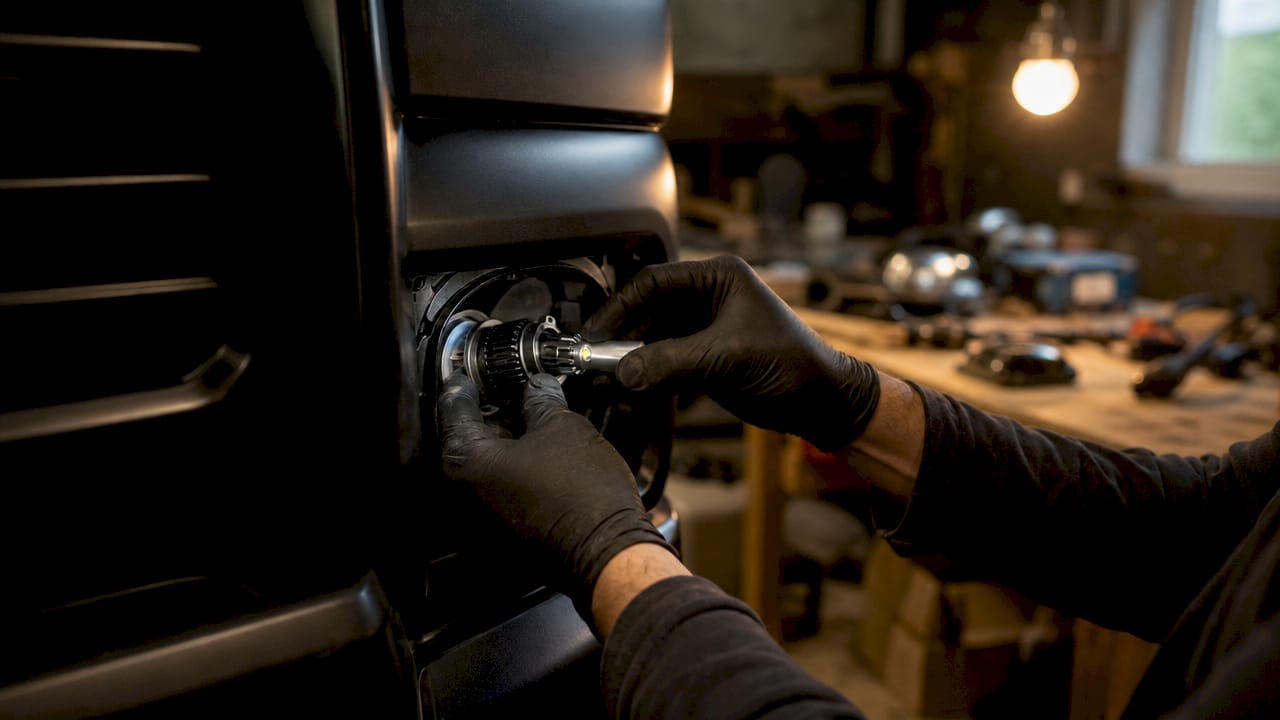
1. Best LED upgrades for trucks: LED headlight assemblies
LED headlight assemblies deliver the biggest single improvement in road visibility. The key metric is not raw brightness. A sharp cutoff beam pattern reduces glare for oncoming drivers while pushing more light onto the road surface where you actually need it.
- Beam pattern: Look for a defined horizontal cutoff line with wide peripheral spread.
- Heat management: High-performance units use aviation-grade aluminum heat sinks or active turbo-fan cooling to protect the diodes.
- Compatibility: Model-specific adapters prevent fitment issues. Ford F-150 owners (2021–2023) can use a dedicated headlight adapter for a direct, secure fit.
- DOT compliance: Required for street-legal use in all 50 states.
Pro Tip: If your truck uses a projector housing, confirm the LED bulb is designed for projector optics. A reflector-style bulb in a projector housing scatters light and reduces visibility instead of improving it.
2. LED tail light assemblies
LED tail lights serve three functions at once: brake signal, turn signal, and reverse light. Quality assemblies switch all three functions to LED simultaneously, eliminating the mismatched color temperature that comes from mixing LED and halogen in the same housing.
- Multi-function design: Brake, turn, and reverse LEDs in one sealed unit.
- Response time: LEDs illuminate roughly 200 milliseconds faster than halogen, giving drivers behind you more reaction time.
- Sealing: Look for IP67 or higher ratings to handle rain, road spray, and temperature swings.
3. LED marker and clearance lights
Marker lights are the amber and red lights running along the sides and top of your truck. Upgrading them to LED improves vehicle conspicuity in heavy rain and fog, making your truck visible to other drivers well before your headlights are in their line of sight.
- Color accuracy: Amber markers must meet SAE J592 standards for turn and side marker functions.
- Plug-and-play fit: Most marker light sockets are standardized, making this one of the easiest LED swaps on any truck.
- Style benefit: LED markers produce a cleaner, more uniform glow compared to the orange tint of aging halogen units.
4. Cab and roof clearance lights
Cab lights sit across the top of the cab and give your truck the classic big-rig look. They also serve a real safety function. Brighter cab lights reduce driver fatigue and help other road users judge your truck’s width and height in low-visibility conditions.
- IP rating: Roof-mounted lights need IP67 or IP68 ratings. They face direct sunlight, wind-driven rain, and car wash pressure.
- Installation difficulty: Adding factory-style roof clearance lights to a truck not originally equipped is a high-difficulty job. It requires specialized templates and professional wiring expertise.
- OEM-style options: Some assemblies replicate factory designs exactly, preserving resale value and avoiding warranty concerns.
5. LED fog lights
Fog lights sit low on the front bumper and throw a wide, flat beam designed to illuminate the road surface without reflecting back off fog or precipitation. LED fog lights outperform halogen in this role because they produce a more consistent color temperature, typically in the 3,000K to 4,000K range, which cuts through moisture better than the warmer output of halogen.
- Beam shape: Wide and flat, not a spotlight pattern.
- Color temperature: 3,000K to 4,000K for best fog penetration.
- Wiring: Most trucks have a dedicated fog light circuit, making this a straightforward swap.
6. LED puddle lights
Puddle lights project downward from the door mirrors or rocker panels when you open the door. They illuminate the ground directly below the door, which prevents stepping into mud, ice, or puddles in the dark. Ford F-150 and Super Duty owners can install XB LED puddle lights designed specifically for 2017–2024 models.
These are a low-cost, high-impact upgrade. Installation takes under 30 minutes on most trucks, and no additional wiring is required since the factory circuit handles the load.
7. LED truck bed lights
Truck bed lights mount inside the bed rail and illuminate the cargo area. They are practical for loading and unloading after dark and add a clean look when the tailgate is down. Quality bed light kits use flexible LED strips sealed against moisture, since the bed collects standing water regularly.
- Mounting: Adhesive-backed strips or rail-mounted channels.
- Brightness: Look for high-lumen output strips. A strip light install guide covers the wiring and placement steps for most truck beds.
- Switch integration: Some kits tie into the tailgate sensor so lights activate automatically.
8. Wheel lighting rings and strips
Wheel lights mount behind the wheel face and project colored or white light outward. They are the most visible aesthetic upgrade you can make to a truck at night. Wheellightexpress designs its wheel light rings and strips in Louisiana and builds them with original wire harness designs that simplify installation.
Pro Tip: Pair wheel lights with a remote control harness so you can switch colors or turn them off without getting out of the truck. Remote-controlled systems also let you match your lighting to different events or driving conditions.
9. Interior cab LED lighting
Interior LED upgrades replace dome lights, map lights, and footwell lighting. LED interior bulbs draw significantly less current than incandescent units, which matters when you run accessories off the battery with the engine off. Color temperature around 6,000K produces a clean white light that makes reading maps and finding gear much easier at night.
Compatibility is straightforward on most trucks. The bulb base sizes are standardized across most domestic and import truck models, so this is a true plug-and-play swap with no wiring changes required.
10. Remote-controlled LED accent lighting
Remote-controlled accent lighting lets you adjust color, brightness, and flash patterns from inside the cab. These systems use an RF or Bluetooth remote paired to a control module wired into your truck’s electrical system. For a full breakdown of how these systems work, the remote control lighting guide covers setup and compatibility in detail.
The main advantage over fixed-color systems is flexibility. You can run white for visibility on the highway and switch to a custom color for shows or events without touching a wire.
What separates quality LED truck lights from budget options?
The single biggest difference between quality and budget LED lights is heat management. High-performance LED headlights use liquid-cooled heat pipes, aviation-grade aluminum heat sinks, and active turbo-fan cooling to maintain brightness and protect diodes over thousands of hours of use. Budget units skip these systems, and the diodes degrade quickly under heat stress.
Electrical compatibility is the second major factor. Trucks using PWM systems to control lighting require LED upgrades with integrated CANBUS drivers. Without them, you get strobing, flickering, or dashboard warning lights that are difficult to clear.
| Feature | Quality LED | Budget LED |
|---|---|---|
| Lifespan | 25,000–50,000 hours | Under 10,000 hours typical |
| Heat management | Heat sinks, active cooling | Passive only or none |
| Electrical compatibility | CANBUS-integrated drivers | Generic, no PWM support |
| Beam control | Sharp cutoff, wide spread | Uncontrolled scatter |
| Weather sealing | IP67 or IP68 rated | Minimal or unrated |
Experts consistently recommend focusing on optics and beam control rather than lumen count alone. A light that produces 8,000 lumens with poor optics delivers less usable road illumination than a 5,000-lumen unit with a well-designed reflector and lens.
How to install LED lighting upgrades on your truck
Installation difficulty ranges from a two-minute bulb swap to a multi-hour professional job, depending on the upgrade type. Here is a practical sequence for most exterior LED upgrades.
- Confirm compatibility. Match the bulb base, voltage, and wattage to your truck’s factory specs before ordering.
- Check your electrical system. Identify whether your truck uses PWM lighting control. If it does, order CANBUS-compatible units. A fuse box wiring guide covers how to tap into the correct circuits safely.
- Gather tools. Most plug-and-play swaps need only a trim removal tool and a small screwdriver. Custom wiring jobs require a multimeter, wire crimpers, and heat-shrink connectors.
- Disconnect the battery. Always disconnect the negative terminal before working on any lighting circuit.
- Install and seat the bulb or assembly. Plug-and-play units click directly into the factory socket. Verify the locking tab engages fully.
- Test before closing up. Reconnect the battery and test every function: low beam, high beam, turn signal, and hazard. Check for dashboard error codes.
- Seal any exposed wiring. Use heat-shrink tubing on any spliced connections. Exposed splices corrode and fail.
Pro Tip: For roof clearance lights on trucks without factory prep, professional installation is the right call. Factory-style clearance light installations require precise template placement and wiring runs through the headliner. A mistake here means water intrusion and electrical shorts.
Which LED upgrades fit your driving conditions?
The right upgrade depends on how and where you drive your truck.
- Long-haul and highway driving: Prioritize LED headlight assemblies with sharp beam cutoff and wide horizontal spread. Quality LED lighting reduces driver fatigue on extended night runs by delivering consistent, bright illumination without eye strain.
- Off-road and trail use: Add LED fog lights and high-output auxiliary lights mounted on a light bar or bumper. Off-road use does not require DOT compliance, so you have more options for beam intensity.
- Daily driving and commuting: Plug-and-play headlight and tail light upgrades cover most needs. Focus on DOT-compliant units with IP67 sealing for year-round weather exposure.
- Adverse weather: Weatherproof ratings of IP67 or IP68 are non-negotiable for any light mounted on the exterior. Cab lights, marker lights, and fog lights all need this level of sealing.
- Shows and events: Wheel lighting rings, remote-controlled accent strips, and bed lights create the visual impact that stands out at shows. Wheellightexpress offers financing options, so you can build out a full lighting setup without paying everything upfront.
For trucks used in mixed conditions, start with headlights and tail lights for safety, then add aesthetic upgrades like wheel lights and accent strips as a second phase.
Key takeaways
The best LED upgrades for trucks combine controlled beam optics, CANBUS electrical compatibility, and IP67-rated weather sealing to deliver lasting safety and style gains.
| Point | Details |
|---|---|
| Beam control over brightness | A sharp cutoff pattern delivers more usable road light than high lumen count alone. |
| CANBUS compatibility matters | PWM-equipped trucks need integrated CANBUS drivers to prevent strobing and error codes. |
| IP67 or IP68 for exterior lights | Any light exposed to weather needs proper sealing to survive long-term. |
| Start with headlights and tail lights | These two upgrades deliver the biggest safety return for most truck owners. |
| Professional install for complex jobs | Roof clearance lights on non-equipped trucks require templates and expert wiring. |
What I’ve learned after years of watching truck owners get LED upgrades wrong
Truck owners consistently make the same mistake: they chase the highest lumen number on the box. I’ve watched people install 10,000-lumen headlight bulbs in reflector housings and end up with worse visibility than the halogen they replaced. The optics matter more than the output. A well-designed LED headlight with 5,000 lumens and a proper cutoff line will outperform a cheap high-lumen unit every single time.
The second thing I’ve seen cause real frustration is ignoring electrical compatibility. Modern trucks, especially late-model Ford F-Series and Ram Heavy Duty trucks, use PWM-controlled lighting circuits. Drop a generic LED bulb into one of those sockets and you get a strobing light and a dashboard warning that takes a scan tool to clear. Spending a little more on a CANBUS-compatible unit eliminates that problem entirely.
My honest advice: build your upgrade list in order of safety impact. Headlights first, tail lights second, marker and cab lights third. Aesthetic upgrades like wheel lights and accent strips are genuinely worth doing, but they belong in phase two after your visibility lighting is solid. For guidance on custom automotive lighting practices, that resource covers the sequencing and standards that professionals follow.
One more thing that gets overlooked: maintenance. LED lights do not burn out the way halogens do. They dim gradually. Check your lights every six months and clean the lenses. A fogged or dirty lens cuts your effective output significantly, even on a quality LED unit.
— Christopher
Wheellightexpress has the truck lighting products you need
Wheellightexpress designs every product in Louisiana and builds lighting solutions specifically for automotive enthusiasts who want quality without compromise. The lineup covers wheel light rings and strips, replacement wire harnesses, and LED accent strips built with original designs you will not find sourced from overseas suppliers.
Every product comes with a satisfaction guarantee, and financing options make it possible to build out a full lighting setup without a large upfront cost. If you need professional installation support in the Dallas area, automotive lighting repair in Plano offers diagnostics and installation for LED headlights and exterior lighting systems. Visit Wheellightexpress at wheellightexpress.net to browse the full catalog and find the right fit for your truck.
FAQ
What are the best LED upgrades for trucks in 2026?
LED headlight assemblies, tail light assemblies, and marker lights deliver the highest safety return. Wheel lighting rings and remote-controlled accent strips are the top choices for aesthetics.
Do LED headlights require special adapters for trucks?
Many truck models need model-specific adapters for proper fitment and electrical compatibility. Ford F-150 and F-Series trucks from 2015 onward have dedicated adapter options available.
Will LED bulbs cause dashboard warning lights on my truck?
Generic LED bulbs can trigger warning lights on trucks with PWM-controlled circuits. CANBUS-compatible LED units with integrated drivers prevent this issue.
How long do quality LED truck lights last?
Quality automotive LED lighting units typically last 25,000 to 50,000 hours, which far exceeds the lifespan of standard halogen bulbs.
What IP rating do I need for exterior truck lights?
IP67 is the minimum rating for any exterior truck light. IP68 provides additional protection for lights in direct water exposure, such as roof clearance and cab lights.