

Remote control lighting trucks are vehicles equipped with wireless lighting systems that let operators manage multiple mounted lights from a distance, without touching a physical switch inside the cab. These systems use radio-frequency (RF) remotes, Bluetooth, or app-based controls to activate specific lighting zones on demand. Whether you work night shifts on a job site, run off-road trails after dark, or want a cleaner dash setup, remote lighting systems solve real problems. Brands like Jameson, Alpha Six Switch, and Ford have each built products around this concept, making wireless truck lighting more accessible than ever.
What is remote control lighting on trucks?
Remote control lighting on trucks is defined as any system where one or more exterior or auxiliary lights are activated, adjusted, or switched off using a wireless controller rather than a hardwired cab switch. The industry term for this category is wireless auxiliary lighting control. Most enthusiasts and tradespeople use “remote control lighting trucks” as shorthand for the full setup.
The core components are straightforward: a light source (LED bar, spotlight, rock light, or strip), a relay and wiring circuit, and a wireless receiver paired to a handheld or key fob remote. The remote sends a signal to the receiver, which triggers the relay, which powers the light. That three-step process is the foundation of every remote lighting setup on the market today.

How do remote control lighting systems for trucks work?
RF wireless remotes are the most reliable control method for truck lighting. RF systems at 433 MHz activate instantly without pairing complications or connection dropouts, unlike Bluetooth, which can lose signal in cold weather or metal-heavy environments. Physical buttons on a weatherproof remote also give you tactile feedback in gloves, which matters on a job site at 2 a.m.
A 6-gang RF control panel, like the Alpha Six Switch, centralizes control of up to six separate accessories from one unit. These panels operate on 12–30V systems with batteries lasting around 80 days between charges. That means you can wire in your light bar, rock lights, scene lights, and bed strips, then control all of them from a single remote without cluttering your dash with toggle switches.
For spotlights, the Jameson 31-RCSL2 shows what the technology can do at the professional end. It operates wirelessly up to 170 feet and rotates 360 degrees horizontally with a 45-degree tilt. It delivers roughly 4,800 lumens and runs on standard 12–24V truck electrical systems. That range and output make it practical for utility crews, not just weekend off-roaders.
Key components in a typical remote lighting setup:
- RF receiver module (mounted near the light or in the cab)
- Relay rated for the light’s amperage draw
- Dedicated fused wiring circuit from the battery
- Weatherproof handheld remote or key fob
- LED light source (bar, pod, strip, or spotlight)
Pro Tip: Always match your relay’s amp rating to the light’s actual draw, not just the fuse size. Undersized relays overheat and fail without tripping the fuse first.
What types of remote control lights are used on trucks?
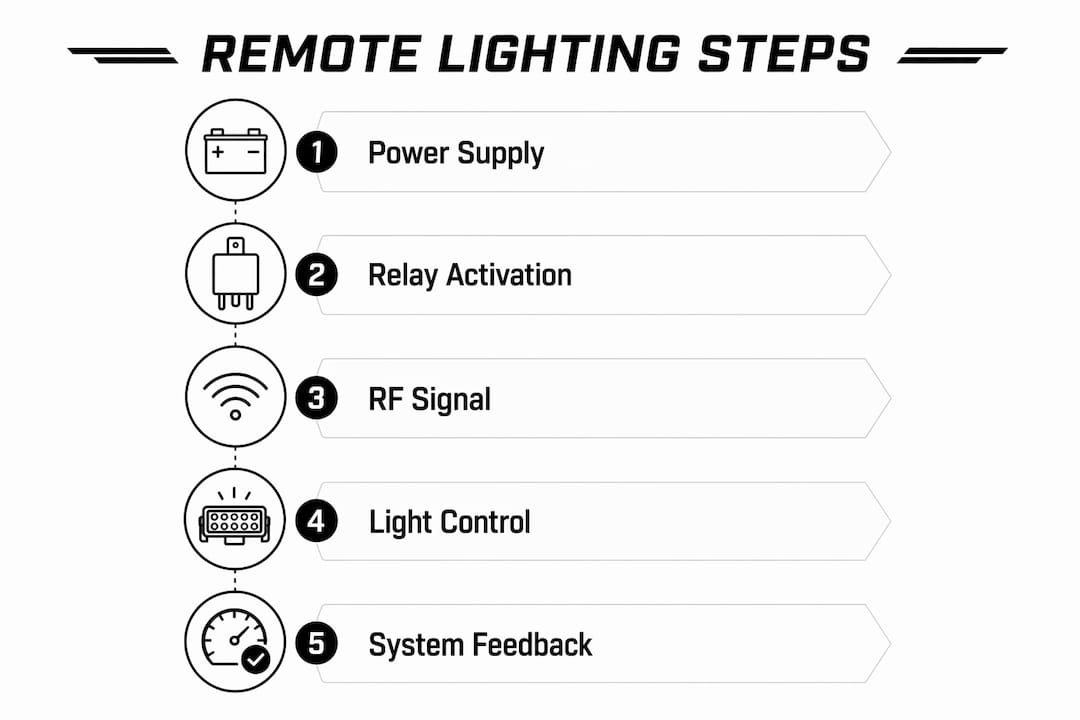
Light bars, pod lights, rock lights, spotlights, and LED strips are the five most common types used in remote-controlled truck lighting setups. Each serves a different zone and purpose.
| Light Type | Typical Mount Location | Primary Use Case |
|---|---|---|
| Light bar | Roof, bumper, or grille | Long-range forward driving light |
| Pod lights | A-pillars, bumper corners | Peripheral and corner illumination |
| Rock lights | Undercarriage, wheel wells | Underbody visibility and aesthetics |
| Spotlights | Roof rack, bed rail | Directional work or scene lighting |
| LED strips | Bed, running boards, wheel wells | Accent, zone, and task lighting |
Mounting method affects both function and installation complexity. Magnetic mounts work well for spotlights you reposition frequently, like a Jameson-style work light moved between job sites. Permanent mounts using brackets or clamps suit lights you want aimed and locked in place, such as a bumper-mounted light bar or A-pillar pods.
Lighting zones matter more than most truck owners realize. A three-tier lighting approach covering roof scene lights, tool bed LED strips, and portable inspection lights reduces downtime and improves worksite safety. Each tier handles a different task, and remote control lets you activate only the zone you need at any moment.
For off-road use, underbody lights for lifted trucks add both safety and visual impact, letting you see obstacles under the frame that headlights never reach.
How do modern trucks integrate factory and aftermarket remote lighting?
Factory-integrated zone lighting has become a standard feature in newer full-size trucks. The 2026 Ford F-150 is a clear example. Its zone lighting system lets drivers activate front, rear, driver-side, or passenger-side exterior lights individually via the touchscreen or the FordPass app. That means you can light up only the driver side while loading gear without blinding anyone on the other side of the truck.
Aftermarket RF panels complement factory systems rather than replace them. Here is how a typical integration works:
- Keep the factory zone lighting for perimeter and exterior zones already wired from the factory.
- Add an aftermarket RF panel like the Alpha Six Switch for auxiliary accessories not covered by the factory system, such as rock lights, bed strips, or a roof-mounted light bar.
- Wire each aftermarket circuit independently with its own fuse and relay, keeping it separate from the factory harness.
- Assign each accessory to a dedicated channel on the RF panel so you can control everything from one remote.
This layered approach gives you the best of both worlds. You get the reliability and warranty protection of the factory system plus the flexibility of aftermarket control. Wireless panels also clean up the dash by eliminating toggle switches, which is a real advantage in work trucks where cab space is already tight.
Truck owners interested in custom lighting integration will find that planning zones before buying components saves significant rework time later.
What are the benefits of remote control lighting trucks?
The primary benefit is hands-free operation. On a job site or trail, you often need light exactly when both hands are occupied. A key fob remote lets you activate a scene light or spotlight without walking back to the cab.
Core benefits at a glance:
- Safety: Activate specific lighting zones remotely without entering a dark cab or leaving a worksite perimeter.
- Customization: Control individual zones independently for camping, trail driving, or task lighting without running all lights at full power.
- Convenience: RF remotes work from outside the truck, which is useful when setting up camp, unloading gear, or directing a crew.
- Cleaner cab: Wireless panels replace rows of toggle switches, reducing visual clutter and potential wiring failure points.
- Versatility: The same RF panel can control lights, air compressors, winches, and other 12V accessories.
Off-road experts recommend a 5-zone lighting system covering forward driving, peripheral corners, fog and dust, scene and camp lights, and undercarriage. Remote control makes managing all five zones practical rather than overwhelming. Without wireless control, switching between five separate circuits while driving a trail is genuinely dangerous.
Pro Tip: Treat your lighting as a system, not a collection of individual lights. Map your zones on paper before you buy a single component. It prevents duplicate coverage and wiring headaches.
What are best practices for wiring remote control lighting on trucks?
Safe wiring is the foundation of any reliable remote lighting setup. Every auxiliary light needs its own dedicated circuit with a fuse, relay, and switch. Sharing circuits between lights risks blown fuses and, in worst cases, electrical fires.
Follow these steps for a clean, safe installation:
- Run a dedicated wire from the battery positive terminal to a fuse holder mounted within 18 inches of the battery.
- Connect the fused wire to the relay’s power input terminal.
- Wire the relay’s output to the light.
- Connect the relay’s trigger wire to the RF receiver output for that channel.
- Ground the light, relay, and RF receiver to a clean chassis ground point.
Aiming matters as much as wiring. A-pillar-mounted lights can throw unwanted light spill off the hood, which creates glare and reduces forward vision. Angling them slightly outward eliminates most of that reflection. Beam pattern optics also matter more than raw lumen output for practical visibility.
For reliable components that support clean installations, wire harness leads designed specifically for automotive lighting reduce connection failures and simplify the wiring process.
Pro Tip: Install relays near the battery, not near the light. Shorter high-current runs mean less voltage drop and less heat in the wiring.
Key Takeaways
Remote control lighting trucks use RF wireless systems to manage multiple lighting zones independently, giving truck owners hands-free control, cleaner wiring, and better safety on worksites and trails.
| Point | Details |
|---|---|
| RF over Bluetooth | RF at 433 MHz activates instantly with no pairing issues, making it more reliable in harsh conditions. |
| Zone-based thinking | Plan lighting in zones (forward, peripheral, scene, undercarriage) before buying components. |
| Dedicated circuits | Every auxiliary light needs its own fuse, relay, and wiring run from the battery. |
| Factory plus aftermarket | Use factory zone lighting for perimeter zones and add RF panels for auxiliary accessories. |
| Aiming beats brightness | Proper beam aiming and optics deliver better visibility than simply adding more lumens. |
Why I think most truck owners approach lighting backwards
Most truck owners buy a light bar first and figure out control later. That backwards approach leads to toggle switches zip-tied to the dash, shared circuits that blow fuses at the worst moment, and lights aimed straight ahead when the real need is side or scene coverage.
After working with remote lighting setups across work trucks and off-road builds, the pattern is clear. The owners who get the most out of their systems planned zones first. They asked what they actually needed to illuminate and when, then chose lights and control methods to match. A 6-gang RF panel with five well-aimed lights in the right zones outperforms a roof full of light bars with no zone control every single time.
The other thing most people underestimate is the value of wireless control outside the truck. Being able to stand at the back of a truck and activate a bed light or scene light without walking to the cab changes how you work at night. It sounds minor until you have done it once on a dark trail or a job site with no ambient light.
The future of this technology points toward tighter app integration alongside RF reliability, not replacing RF with apps. The best systems will offer both. For now, RF remains the standard for anyone who needs it to work every time, not just when the Bluetooth decides to cooperate.
— Christopher
Wheellightexpress has the components to build it right
Building a reliable remote lighting setup starts with quality components, and Wheellightexpress designs every product in Louisiana specifically for automotive enthusiasts who want original, durable results.
Wheellightexpress carries the remotes for remote harness systems you need for hands-free lighting control, along with wire harness leads built for clean, safe automotive installations. Every product comes with a satisfaction guarantee, and financing options make it easy to build your full setup without paying everything upfront. Browse the full catalog at Wheellightexpress and find the components that fit your truck and your build.
FAQ
What is a remote control lighting truck?
A remote control lighting truck is a vehicle fitted with wireless-controlled auxiliary lights that can be activated, switched, or adjusted using an RF remote or app. The system uses a receiver, relay, and dedicated wiring circuit to power each light on command.
Are RF remotes better than Bluetooth for truck lighting?
RF systems at 433 MHz are more reliable than Bluetooth for truck lighting because they activate without pairing and work in cold, wet, or metal-heavy environments where Bluetooth connections drop.
How many lights can one RF panel control?
A 6-gang RF panel like the Alpha Six Switch controls up to six separate accessories from one remote. Each channel operates independently, so you can run a light bar, rock lights, and bed strips on separate switches.
Do I need a relay for each remote-controlled light?
Every auxiliary light requires its own relay and dedicated fused circuit. The relay lets a low-current remote signal safely switch a high-current light circuit, preventing electrical damage and fire risk.
Can I add remote lighting to a truck that already has factory zone lighting?
Yes. Factory zone lighting handles perimeter exterior zones, and an aftermarket RF panel adds control over auxiliary accessories not covered by the factory system. The two systems run independently and do not interfere with each other.
Recommended
- Truck Lighting Kit Components Explained for Enthusiasts – Wheel Light Express
- Underbody Lights for Lifted Trucks: Role and Benefits – Wheel Light Express
- Lighting Best Practices for Custom Automotive Builds – Wheel Light Express
- Custom Lighting Integration Explained for Car Enthusiasts – Wheel Light Express