

Lighting in car culture is defined by two equally powerful functions: safety on the road and identity within the community. The role of lighting in car community life goes far beyond headlights and tail lights. It shapes how enthusiasts express themselves, how groups recognize each other at meets, and how a build gets remembered long after the event ends. From LED wheel rings to illuminated emblems, automotive lighting has become one of the most visible and socially loaded forms of vehicle customization available today.
How does vehicle lighting enhance safety and communication?
Vehicle lighting systems primarily serve to enhance visibility for the driver and signal intentions such as turning or braking to other road users. That function is the foundation of every lighting decision you make, whether you are building a show car or a daily driver.
Regulatory standards in the United States set minimum requirements for headlight brightness, beam angle, and color. These standards exist because failing to maintain fully functional lights compromises communication with other drivers and creates real safety risks. A burned-out tail light is not just a ticket waiting to happen. It is a genuine hazard.
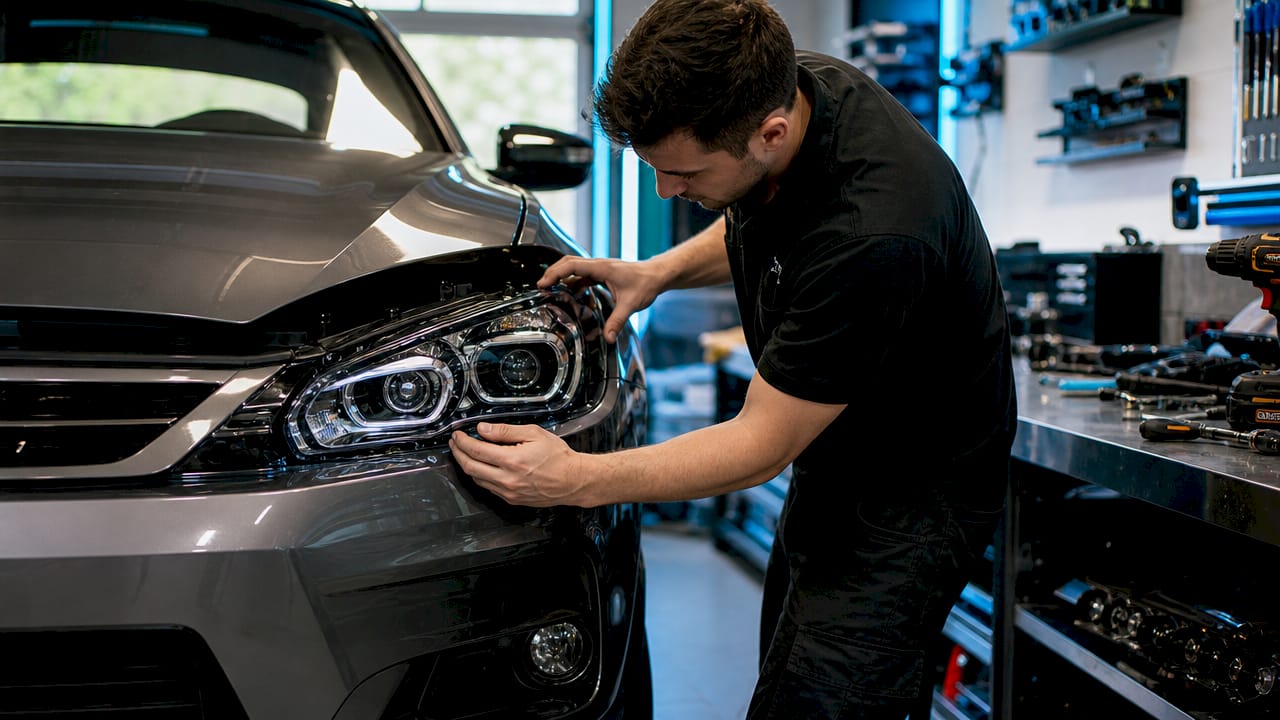
Modern LED and projector headlight technology has improved beam patterns and peripheral illumination significantly compared to older halogen systems. Better beam patterns mean you see more of the road edge without blinding oncoming drivers. That is the practical payoff of upgrading to quality lighting rather than simply chasing maximum brightness.
Key functional lighting categories every enthusiast should keep in top condition:
- Headlights: Low and high beams for forward visibility in all conditions
- Tail lights: Rear visibility and braking signals for drivers behind you
- Turn signals: Communicating directional intent to all road users
- Fog lights: Cutting through low-visibility conditions at ground level
- Reverse lights: Alerting pedestrians and drivers when backing up
Pro Tip: Check all exterior lights monthly, including the ones you rarely think about like side markers and license plate lights. These are the first items inspectors flag during safety checks.
What lighting trends are shaping car customization in 2026?
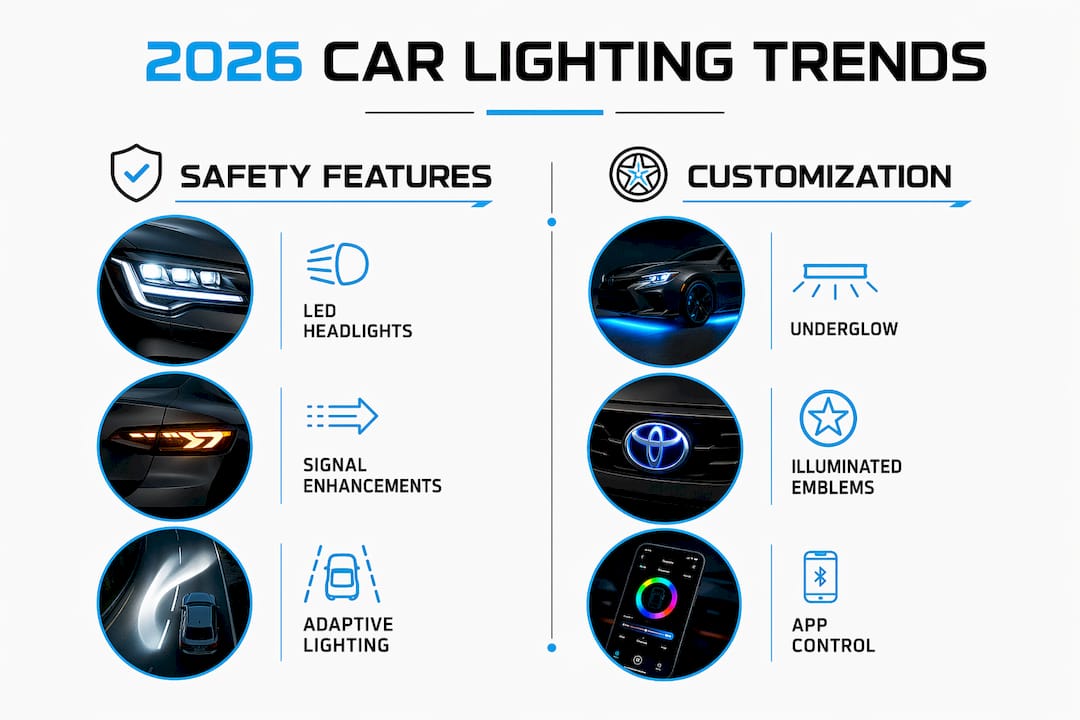
Car community lighting trends in 2026 reflect a clear shift toward cleaner, more intentional design. The era of chaotic, pixelated LED strips plastered everywhere is fading. What is replacing it is a more disciplined aesthetic that moves toward OEM-style LED signatures with clean lines and premium finishes.
Underglow is back, but done differently
Underglow lighting has made a strong comeback. Large-scale night meets exceeded 25,000 attendees in Q2 2026, showing that street glow culture is thriving again after its early 2000s peak. The difference now is restraint. Enthusiasts are choosing single-color setups and tucked wire runs instead of the chaotic rainbow flicker that defined the first wave.
Illuminated emblems are everywhere
Illuminated badge kits have taken over car culture at every price point. Modern illuminated emblems use LED panels with light diffusion films to create a uniform, polished glow rather than the visible dot pattern of cheaper alternatives. That quality gap is now visible to anyone who looks closely at a well-built car. Installation for common emblem upgrades now takes as little as 20 minutes for a prepared enthusiast, making this one of the fastest ways to add a premium look.
App-controlled ambient interior lighting
USB-powered ambient kits controlled via smartphone apps have become one of the most searched interior accessories among younger enthusiasts. The appeal is obvious: you can change the mood of your interior in seconds, match your lighting to music, or coordinate with your crew at a meet. The cost of entry is low, and the visual payoff is high.
Here is how the major current trends compare across key criteria:
| Lighting style | Install difficulty | Cost range | Community reception |
|---|---|---|---|
| Underglow strips | Moderate | Mid-range | Strong at night meets |
| Illuminated emblems | Easy | Low to mid | Widely praised |
| Ambient interior kits | Very easy | Low | Viral among younger builds |
| Wheel light rings | Moderate | Mid-range | High visual impact at shows |
| OEM-style LED accents | Moderate to hard | Mid to high | Respected as premium finish |
Pro Tip: When choosing between lighting styles, pick one or two that complement your build’s existing lines. Stacking too many different lighting types on one car creates visual noise that works against you at shows.
For a deeper look at which styles are gaining traction, the 2026 automotive lighting guide from Wheellightexpress covers the full spectrum of bold options.
Why does lighting carry so much social weight in car culture?
Lighting is considered the jewelry of the vehicle, serving as the key emotional and brand signature element of a build. That framing is not just poetic. It is accurate. At a car meet, your lighting choices communicate taste, effort, and group affiliation before anyone reads your badge or opens your hood.
“Lighting is not just functional but a vital emotional signature and branding tool for enthusiasts, especially as vehicle technology shifts away from traditional mechanical cues.”
This matters more now than it did a decade ago. As electric vehicles remove engine sound and traditional performance cues, lighting fills that gap. It becomes the primary way a car announces itself. The impact of lighting on vehicle identity is growing in direct proportion to how much other traditional signals are disappearing.
At events like Type S Night Lights, which drew over 25,000 attendees in 2026, lighting is the organizing principle of the entire experience. Cars are judged, photographed, and remembered by how they look in the dark. That reality has pushed enthusiasts to treat lighting as a primary build element, not an afterthought.
Lighting also creates social distinctions within communities:
- Clean, OEM-plus builds signal technical knowledge and restraint
- Bold underglow setups signal confidence and a connection to street culture roots
- Coordinated crew lighting signals group identity and belonging
- Wheel lighting signals attention to detail and full-build commitment
Understanding these unspoken codes helps you make lighting choices that land the way you intend them to within your specific community.
How to integrate custom lighting into your car build
The most common mistake enthusiasts make is chasing brightness. Upgrading lighting should prioritize beam pattern and peripheral illumination over raw lumen output. More light in the wrong direction does not make you safer or more visible. It makes you a hazard.
Follow these steps when planning a lighting upgrade:
- Audit your functional lighting first. Replace any burned-out or degraded bulbs before adding anything aesthetic. Safety compliance is non-negotiable.
- Choose a visual direction. Decide whether you are going clean and OEM-plus or bold and expressive. Mixing both without a clear plan produces inconsistent results.
- Match lighting to your vehicle’s existing lines. Angular LED accents work best on sharp-edged body designs. Curved, flowing light strips suit rounder body styles.
- Plan your wire routing before you buy. Clean installs require hidden wiring. Measure your runs, identify your power source, and confirm you have the right wire harness leads before starting.
- Check local regulations. Underglow and certain colored lights are restricted in some states. Verify legality before installing anything that could result in a citation.
- Test before finalizing. Power everything up before securing wires permanently. Finding a wiring fault after the trim panels are back on costs you hours.
Pro Tip: Use a quality wire harness from the start. Cheap wiring is the leading cause of lighting failures and electrical gremlins in aftermarket builds. Wheellightexpress designs its wire harnesses in Louisiana specifically for automotive applications, which means the connectors and gauge ratings are matched to real-world install conditions.
For a full breakdown of custom lighting integration techniques, Wheellightexpress has published detailed guidance for enthusiasts at every skill level.
Key takeaways
Lighting in car culture serves both a safety function and a social one, and the most respected builds treat both with equal seriousness.
| Point | Details |
|---|---|
| Safety comes first | Functional headlights, tail lights, and signals must meet legal standards before any aesthetic upgrades. |
| OEM-plus is the dominant trend | Clean, angular LED signatures with light diffusion are replacing busy, pixelated setups across the community. |
| Lighting signals identity | Your lighting choices communicate taste, group affiliation, and build philosophy at every meet and show. |
| Beam pattern beats brightness | Upgrading for better peripheral illumination and beam quality improves safety more than raw lumen output. |
| Wire quality determines longevity | Quality wire harnesses matched to automotive specs prevent failures and protect your investment. |
Lighting’s role has changed more than most enthusiasts realize
I have been watching car culture evolve for a long time, and the shift in how enthusiasts think about lighting is one of the most significant changes I have seen. Ten years ago, lighting was an add-on. You finished your suspension, your wheels, your exhaust, and then maybe you threw some strips under the car. Now, lighting is a primary build decision. Enthusiasts plan their lighting before they finalize their wheel choice.
What surprises me most is how quickly the community’s taste has matured. The move away from chaotic, multi-color pixel strips toward clean, intentional LED signatures happened faster than most trend cycles in car culture. Enthusiasts figured out on their own that restraint reads as confidence. A single, well-executed underglow color or a perfectly diffused illuminated emblem communicates more skill than a car covered in every lighting effect available.
My honest advice: resist the urge to add more. The builds that get the most attention at meets are almost always the ones where every lighting element has a clear purpose. If you cannot explain why a specific light is there, it probably should not be there. Study wheel lighting aesthetics and how they interact with body design before you commit to anything. The community notices the difference between a build that was planned and one that was assembled.
— Christopher
Wheellightexpress lighting products for your next build
Wheellightexpress designs all of its lighting products in Louisiana, which means every component is built with real automotive installs in mind, not generic consumer electronics repurposed for cars.
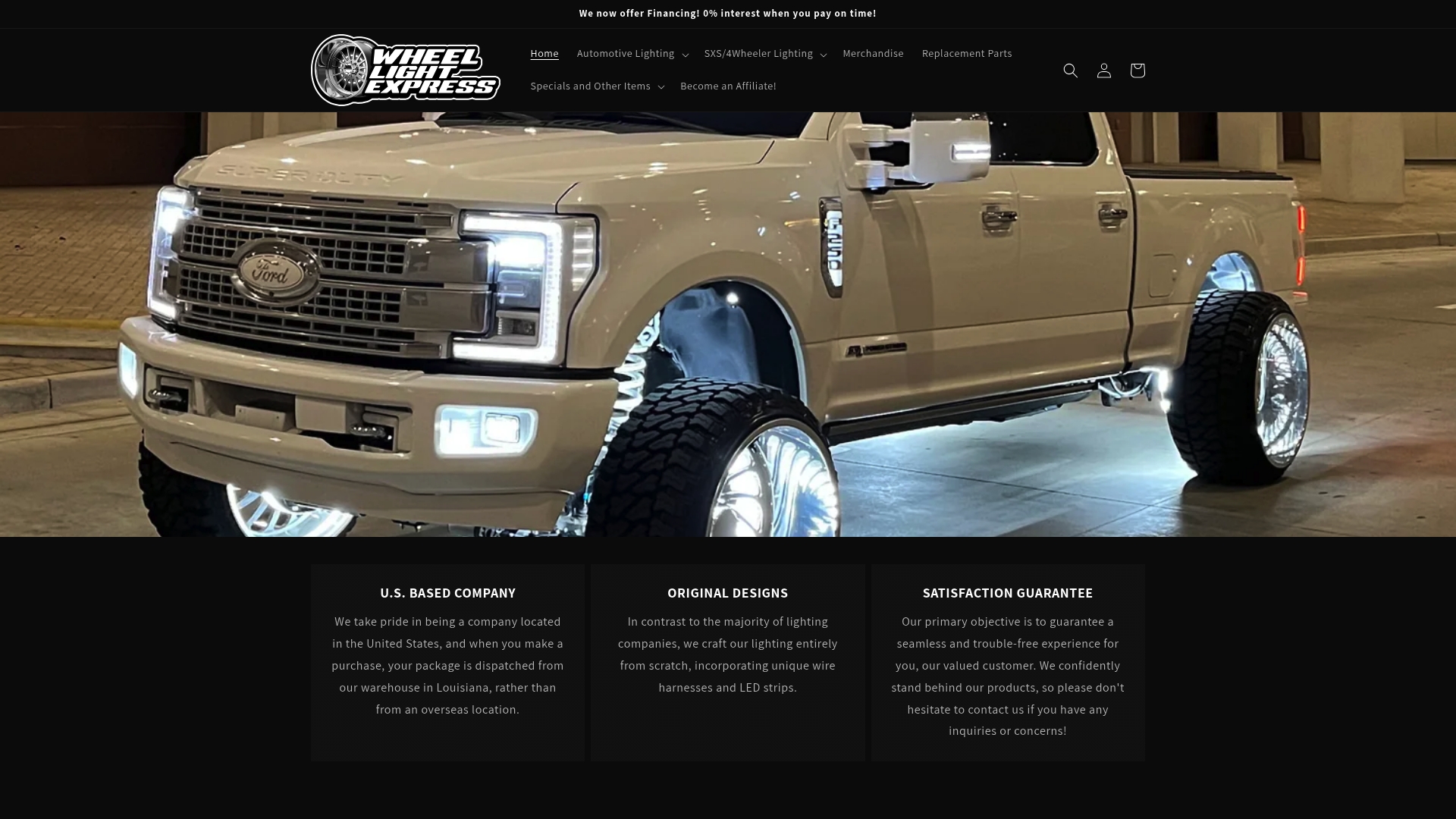
The wheel light ring and strip collection gives you high-impact wheel lighting with the wire harness quality to back it up. For enthusiasts who need to refresh an existing setup, the replacement wheel light strip keeps your build running without starting over. Wheellightexpress also offers financing options, so you can get the lighting your build deserves without waiting. Every product comes with a satisfaction guarantee, because quality and customer confidence are the standard here, not the exception.
FAQ
What is the role of lighting in car community culture?
Lighting in car communities serves as both a safety system and a form of personal and group identity. It communicates taste, build philosophy, and social belonging at meets and shows.
What are the most popular car lighting trends in 2026?
The leading trends are clean underglow setups, illuminated emblems with light diffusion panels, app-controlled ambient interior kits, and OEM-style LED accents that integrate with factory body lines.
How does LED lighting improve safety over older halogen systems?
LED upgrades improve beam pattern and peripheral illumination, which means better road coverage without the glare that harms oncoming drivers. The gain is in light placement, not just total brightness.
Are underglow lights legal in the United States?
Underglow legality varies by state. Most states permit white and amber underglow but restrict red, blue, or flashing lights that could be confused with emergency vehicles. Always verify your state’s regulations before installing.
How long does it take to install illuminated car emblems?
For a prepared enthusiast with the right tools, most illuminated emblem kits install in around 20 minutes. Kits using LED panels with diffusion films produce the most polished results and are widely available at mid-tier price points.
Recommended
- The Role of Wheel Lighting Aesthetics in Car Design – Wheel Light Express
- Custom Lighting Integration Explained for Car Enthusiasts – Wheel Light Express
- Lighting Best Practices for Custom Automotive Builds – Wheel Light Express
- Why US-Designed Lighting Differs for Auto Enthusiasts – Wheel Light Express