
On TikTok, “truck lighting” almost always means one of four things: underbody rock or underglow lights, wheel lights, portal lights, or multi-zone RGB cab and bed strips. If you want the look, the practical path is simple. Pick a style, confirm it fits your truck, check your state’s lighting laws, then buy a quality U.S.-designed kit instead of the cheapest option you can find.
TL;DR:
- Underbody rock lights are the most affordable option for achieving TikTok’s glow effect, but they often need extension cables for full-size trucks.
- App-controlled multi-zone LED systems allow quick preset switches and syncing with music, which enhances the video’s visual impact.
- Legal concerns include avoiding flashing, red, or blue lights while driving, and keeping RGB effects for private property clips only.
- Proper wiring with fused, heavy-gauge harnesses and clean grounds is crucial for long-term reliability and safety, not just choosing bright LEDs.
- Prices range from budget kits with shorter wiring to premium U.S.-designed systems that feature more durable wiring and better coverage for large trucks.
Table of Contents
- What TikTok Truck Lighting Trends Actually Look Like
- Which Hardware Type Fits Your Build
- Why Owners Add Lighting (And What It Costs Them)
- How to Choose a TikTok-Style Lighting Setup
- Installing Truck Lighting Without Frying Your Electrical System
- Are Rock Lights and RGB Truck Lighting Legal?
- Realistic Costs for TikTok-Style Lighting
- Filming Tips for Truck Lighting Content Creators
- A Straight Answer From Someone Who Builds This Stuff
- Get the TikTok Look With a Kit Built to Last
- Sources
- FAQ
What TikTok Truck Lighting Trends Actually Look Like
Scroll through enough truck content and you start seeing the same handful of formats repeat. The “reveal” clip, where a plain truck sits in a driveway before the lights snap on, is the most common. Right behind it is the music-synced color change, where RGB pods pulse in rhythm during a slow drive-by or a parked show session. Wheel-spin shots are their own category, filmed from a low angle so the light rings blur into a full circle as the truck rolls.
Color choice tends to follow the moment. Amber and white dominate anything filmed on a public road, because that’s what looks intentional and clean on camera without triggering comments about looking like a police vehicle. RGB shows up almost exclusively in parking lots, driveways, and truck meets, where the truck isn’t moving and the lighting is the whole point of the clip.
Multi-zone setups are what separate an amateur post from one that gets traction. Instead of a single on/off switch, creators run wheel lights, rock lights, and cab strips on separate zones so they can flip through presets. That kind of control usually comes from an app-controlled LED system rather than a basic toggle switch.
A few patterns worth copying:
- Wiring gets tucked behind fender liners and bed rails so nothing shows in wide shots.
- Doors and tailgates are wired as triggers, so lights come on automatically when someone approaches the truck for a walk-around clip.
- Presets are saved in the control app ahead of time, so switching looks fast in the video instead of fumbling through menus on camera.
- Static, single-color modes are used for any footage where the truck is actually moving.
Which Hardware Type Fits Your Build
Every TikTok lighting trend traces back to one of four hardware families, and each one solves a different problem.
Rock lights are small, rugged LED pods bolted to the frame, axles, or rocker panels. They’re built to survive mud, water, and rock strikes on the trail, which is why the name stuck even though most owners run them for looks rather than off-roading. A set of underglow-style rock lights is usually the cheapest entry point into the underbody glow look you see in most reveal videos.
Wheel lights mount inside the wheel well or on the wheel itself, and they’re what create that spinning halo effect in slow-motion clips. High density and ultra high density versions pack more LEDs per housing, which means a brighter, more even ring of light instead of visible gaps or dark spots when the wheel is moving.
Portal lights sit higher on the fender or rocker area and throw a wider beam than rock lights, making them popular for truck meets where the whole side profile needs to read as lit up in a group photo or panning shot.
Cab and bed strip lights run along the roofline, headache rack, or bed rails. Solar-powered cab light options add auxiliary illumination without pulling extra power from the truck’s electrical system, which matters more than most buyers expect once accessory count climbs.
A quick comparison of where each type earns its keep:
| Hardware type | Best use case | Durability consideration |
|---|---|---|
| Wheel lights | Spin effects, show builds | High density models resist gaps in coverage |
| Portal lights | Meet shots, wide-angle glow | Larger surface area, moderate exposure |
| Cab/bed strips | In-bed work light, roofline accent | Solar options reduce wiring and battery draw |
Why Owners Add Lighting (And What It Costs Them)
Most owners install lighting for one of two reasons: they want their truck to stand out, or they want actual utility, like being able to see gear in the bed at night or light up a campsite without running a separate lantern. Rock lights and portal lights do double duty here. They look sharp in a video and genuinely help during a trailer hookup or a dark trailhead.
The tradeoffs are real, though. Every added light pulls current, so a fully accessorized truck needs a wiring plan, not just a pile of extension cables. Pods mounted low on the frame take on water, mud, and road salt constantly, so cheap seals fail faster than most buyers expect. And any setup that reads as flashy to a passing officer can draw attention, warranted or not, even when the install is technically legal.
How to Choose a TikTok-Style Lighting Setup
Buying lighting for looks is easy. Buying lighting that survives a season of driving and stays legal takes a bit more care. Work through these in order:
- Check brightness and color first. Anything visible from the road should stay in steady amber or white. NHTSA’s own guidance breaks impairment down into brightness, color, location, and activation pattern, so a light that’s too bright, too colorful, or positioned wrong can be treated as impairing your required lamps even if you never intended it as a signal.
- Decide how you want to control it. App control gives you presets and music sync, which is what most viral clips are built around. RF or IR remotes are simpler and cheaper but offer less zone flexibility. Hardwired switches are the most reliable but the least flashy.
- Look past the LED pod to the harness. A fused, over-spec wiring harness matters more to long-term reliability than the LED chip itself. Cheap harnesses are the number one reason budget kits fail within a year.
- Check the IP rating. Anything mounted low on the truck needs at minimum an IP67 rating to handle splashing water and road grime without corroding the connectors.
- Measure before you buy. Wheel diameter, bed length, and the distance from your battery to your mounting points all determine which kit actually fits. Full-size trucks with long beds or crew cabs often need extension harnesses that budget kits don’t include.
Pro Tip: Buy a little more harness length than you think you need. It’s far easier to zip-tie up slack than to splice in an extension later, and every splice is another point where corrosion or a loose connection can cause flickering.
If you’re not sure what size wheel lights or rock light spacing fits your truck, a sizing guide built specifically for wheel diameter and bolt pattern saves you a return shipment.
Installing Truck Lighting Without Frying Your Electrical System
The wiring pattern behind almost every reliable truck lighting install follows the same basic order: fused battery feed, then a relay, then the harness, then the LED load, with a clean ground back to bare metal on the chassis. Standard DIY truck bed LED guides describe this exact sequence because skipping any step is where most failures start.
Here’s the process broken down:
- Run a fused wire from the battery. The fuse should sit as close to the battery as possible, so any short in the downstream wiring blows the fuse instead of your truck’s main harness.
- Wire in a relay. The relay lets a low-current trigger, like a dome light or tailgate switch, control a high-current LED circuit without overloading a factory switch.
- Connect your trigger source. Dome light circuits, tailgate switches, and ignition-on wires are common choices. Avoid tapping into brake, turn signal, or headlight circuits directly, since a wiring mistake there can affect lamps you’re legally required to keep working correctly.
- Ground to bare metal. Scrape paint or coating off the mounting point and use a star washer to guarantee a clean connection. A weak ground is one of the most common causes of flickering LEDs.
- Route and secure everything. Keep wiring away from exhaust components and moving suspension parts, and secure every foot of harness with zip ties or clips so nothing droops onto hot or moving parts.
The most common DIY mistakes are predictable: no fuse at all, a ground point that’s actually painted metal instead of bare, wires routed too close to the exhaust, and connectors left dangling instead of secured. Any one of these can cause anything from a dead circuit to a genuine fire risk.
Pro Tip: If your install involves running wire anywhere near the exhaust, fuel lines, or brake lines, hire a professional. A proper shop install typically includes bench testing before final assembly and documentation of what was tapped and where, which matters if you ever need warranty or insurance support later.

Are Rock Lights and RGB Truck Lighting Legal?
Federal rules don’t ban colorful truck lighting outright, but they do draw a hard line on impairment. NHTSA’s interpretation of FMVSS No. 108 focuses on whether auxiliary lights interfere with your required lamps, and commercial installers can run into the Safety Act’s make-inoperative restriction if their work causes that kind of impairment.
Flashing lights carry extra risk. NHTSA has specifically flagged flashing amber and nonstandard colors as likely to confuse other drivers, since flashing patterns read as emergency signaling to most people on the road, regardless of intent.
State laws layer on top of that federal framework, and they vary. Red and blue are restricted or banned outright in most states because they’re reserved for emergency vehicles. Many states also prohibit any flashing or strobing pattern on lights visible from the roadway, and some restrict where auxiliary lights can be mounted if the placement could be mistaken for a required signal lamp.
The safest approach for anyone building a TikTok-style setup:
- Keep steady amber or white on any light visible while driving.
- Save RGB color cycling and flashing effects for parked, private-property filming.
- Turn off strobe or flash modes before pulling onto a public road, every time.
- Check your specific state’s vehicle code before mounting anything red or blue, no exceptions.
Realistic Costs for TikTok-Style Lighting
Prices split into three rough tiers. Entry-level RGB pod kits sit at the budget end and deliver real visual impact for the money, but reviewers note that 12-pod kits sometimes come with shorter wiring runs than a full-size truck needs, meaning you’ll likely buy extension cables separately.
Mid-tier app-controlled kits add better waterproofing, longer harnesses, and more reliable Bluetooth or Wi-Fi control, closing the gap that budget kits leave open. Premium, U.S.-designed kits sit at the top, built around heavier gauge wiring and denser LED counts per housing, which shows up most in wheel light rings that stay evenly bright at speed instead of flickering or dimming in spots.
A realistic budget build might run a basic rock light kit for underbody accenting plus a low-cost remote. A show-ready build layers in high density or ultra high density wheel lights, portal lights along the rockers, and a proper fused harness system, which is where most of the added cost over a bargain kit actually goes.
Filming Tips for Truck Lighting Content Creators
Presets are what make transitions look clean on camera instead of clunky. Set your color and pattern combinations ahead of time in the app so you’re tapping one button on camera, not scrolling through menus while filming. Stage any color-changing or flashing footage in a parked, private location, both for legality and because flashing patterns often look better in slow motion anyway.
For camera work, shoot wheel and portal light footage from a low angle to catch the full glow against the tire and ground. Slow-motion works especially well for color transitions, since it lets viewers actually see the shift instead of a blur. If you’re syncing lights to music for the clip, do the sync in editing rather than relying on the lights themselves to react live. It’s more reliable and gives you full control over the final cut.
One more thing worth building into your filming routine: keep a mental checklist before you hit record on any public road. No flashing, no red or blue, no colors that could read as emergency signaling to someone glancing over. Save the full RGB show for your driveway.
A Straight Answer From Someone Who Builds This Stuff
Most of the lighting failures I see traced back to one thing: a cheap harness, not a cheap LED. The chip almost never dies first. The wire does, usually at a splice or a ground point nobody scraped down to bare metal. That’s why Wheel Light Express designs its products around heavier gauge wiring and proper fused harnesses instead of just chasing the brightest spec sheet.
If you want a setup you won’t be troubleshooting six months from now, start with the sizing guide and match hardware to your actual truck, not just the truck in the video you’re copying.
— Christopher
Get the TikTok Look With a Kit Built to Last
Most viral truck lighting setups you see on TikTok trace back to four product families, and Wheel Light Express builds all of them, designed and assembled in Louisiana rather than sourced overseas like most of the market. Want the spinning wheel effect from a slow-motion reveal clip? That’s Wheel Lights or the brighter High Density and Ultra High Density versions. Chasing the underbody glow? Check the Rock Lights collection. Want the wide, meet-ready side profile? Portal Lights cover that look, and Solar Powered Cab Lights add roofline accenting without extra strain on your electrical system.
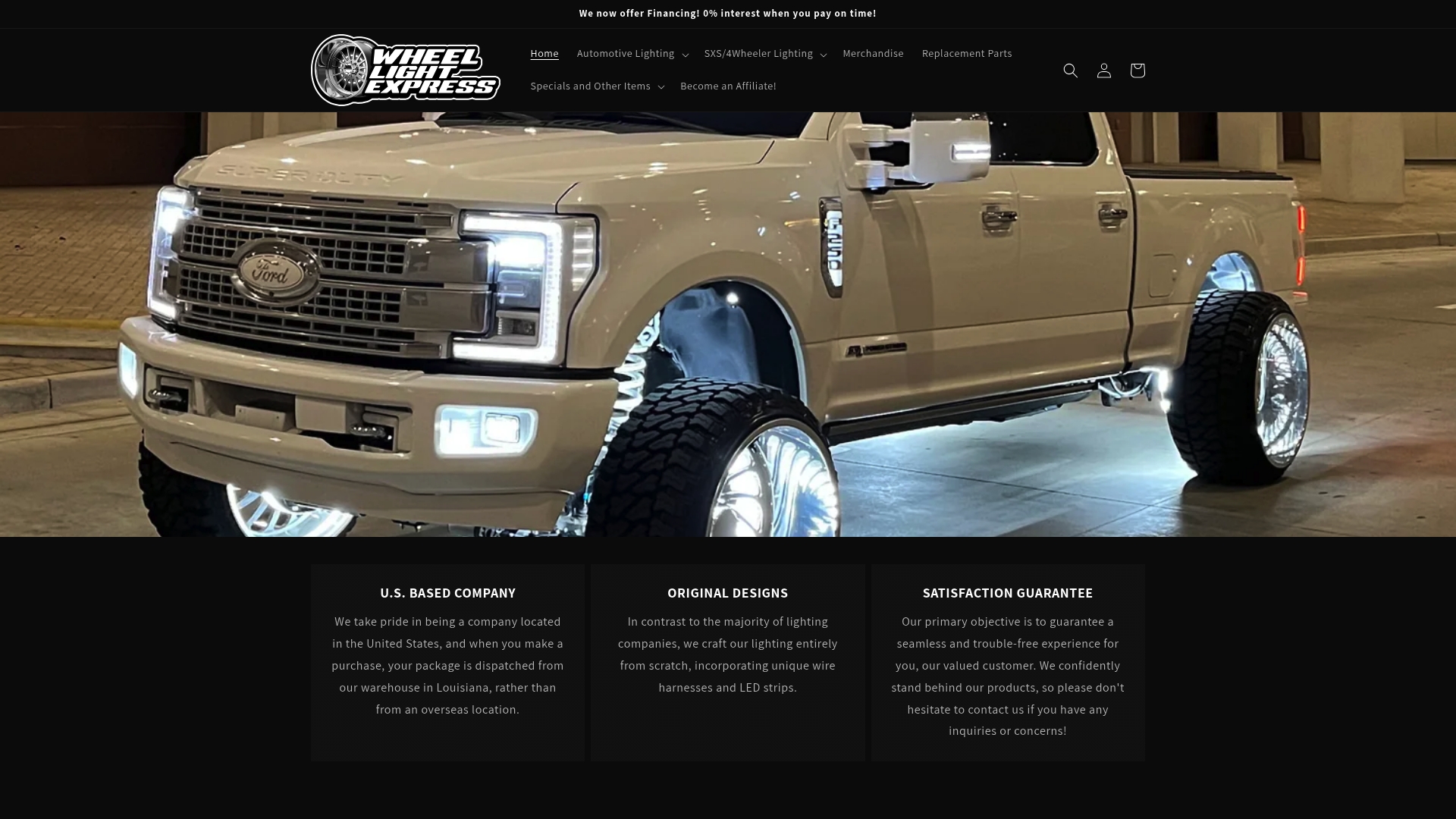
Every kit ships with wiring harnesses designed for quality and reliability discussed throughout this guide, backed by a satisfaction guarantee and financing options if you’d rather spread out the cost than pay it all upfront. Start with the wheel light sizing guide to confirm fit for your specific wheel diameter and bolt pattern, then head to the product collections to build your setup.
FAQ
What LED lights do TikTokers use for trucks?
Most viral truck clips feature rock lights for underbody glow, wheel lights for spinning ring effects, portal lights for wide side-profile shots, and RGB cab or bed strips for color-changing accents. App-controlled systems are especially common because they let creators switch presets quickly on camera, similar to the setups covered in Wheel Light Express’s app-controlled LED guide.
What are the lights that influencers use on trucks?
Influencers generally favor multi-zone RGB kits that separate wheel lights, rock lights, and cab strips onto independent circuits, so they can trigger different presets for different clips. Higher density wheel light kits are popular for slow-motion spin shots because they produce a more even glow than sparser LED arrangements.
Why do people put rock lights on trucks?
Rock lights started as trail lighting to help off-road drivers see terrain and rocks at night, and the rugged, sealed housings that made them useful off-road also made them a durable choice for underglow-style accent lighting. Many owners now run them purely for looks, though the same weatherproofing that protects against trail debris also holds up well under daily road grime.
How much does truck lighting cost?
Basic rock light kits sit at the budget end but often need extension harnesses on full-size trucks, since many entry-level pod kits ship with shorter wiring runs than large trucks require. Premium, U.S.-designed kits include heavier gauge harnesses built for long-term reliability, and Solar Powered Cab Lights are listed at $399 as a one-time purchase; pricing for other product lines is available directly on the site.