
Full truck light kits are defined as complete lighting systems that cover every required lamp position on a truck, including marker lights, clearance lights, headlights, tail lamps, turn signals, and auxiliary lighting. These kits exist because piecemeal lighting leaves gaps that cost money, create legal risk, and put lives in danger. Federal Motor Vehicle Safety Standard No. 108, codified under 49 CFR 571.108, sets the minimum lighting requirements every truck must meet. Understanding why full truck light kits matter starts with recognizing that lighting is not optional equipment. It is a federal safety requirement and a practical tool that directly affects how safely you operate on the road.
Why full truck light kits matter for safety and visibility
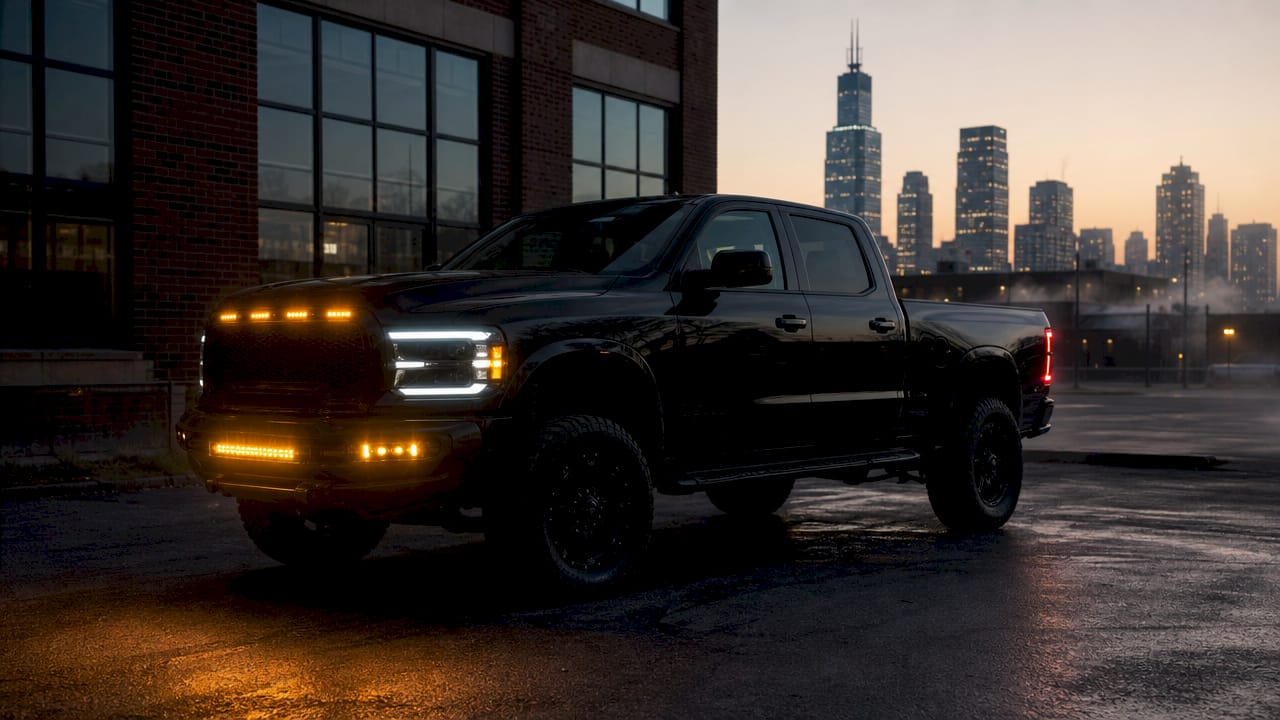
Full truck light kits extend nighttime visibility two to three times beyond what factory setups deliver. That extra distance gives you and other drivers more time to react, which is the single most effective way to prevent crashes in low-light conditions.
Marker lights solve a problem that most drivers underestimate. Other drivers on the road cannot accurately judge the size and position of a large truck at night without proper marker lighting. Marker lights communicate truck width and length to approaching vehicles, which directly reduces side-impact and rear-end collisions. A truck without functioning marker lights is essentially invisible at its edges, and that invisibility is what causes fatal crashes in reduced-visibility conditions.
LED lighting takes the safety benefit further by delivering focused illumination rather than a broad, diffused glow. LED focused illumination enables earlier hazard detection and reduces driver fatigue during long hauls. When you can see a road hazard sooner, you have more time to steer around it or brake safely.
Here is what a complete lighting system covers from a safety standpoint:
- Marker and clearance lights: Communicate truck dimensions to other drivers at night and in fog
- Headlights and auxiliary lights: Extend forward visibility on unlit roads and highways
- Tail lamps and brake lights: Signal deceleration to following traffic with enough lead time to stop
- Turn signals and hazard lights: Communicate lane changes and emergency stops clearly
- Side-marker lights: Prevent T-bone collisions at intersections and during lane merges
Pro Tip: Install amber front marker lights and red rear marker lights to match the color-coding required by FMVSS 108. Mixing colors creates confusion for other drivers and flags your truck for inspection.
Every one of these positions works together. Replacing only one or two lamps leaves the system incomplete. A full kit addresses all positions at once, which is why truck owners who upgrade comprehensively see the greatest safety gains.
What are the compliance requirements for truck lighting?
Federal Motor Vehicle Safety Standard No. 108 is the governing document for all truck lighting in the United States. It specifies which lamps are required, where they must be placed, and what photometric output they must produce. Non-compliance is not a minor issue. Federal penalties reach up to $19,246 per offense for lighting violations. A single roadside inspection with multiple non-compliant lamps can result in fines that dwarf the cost of a quality full kit.
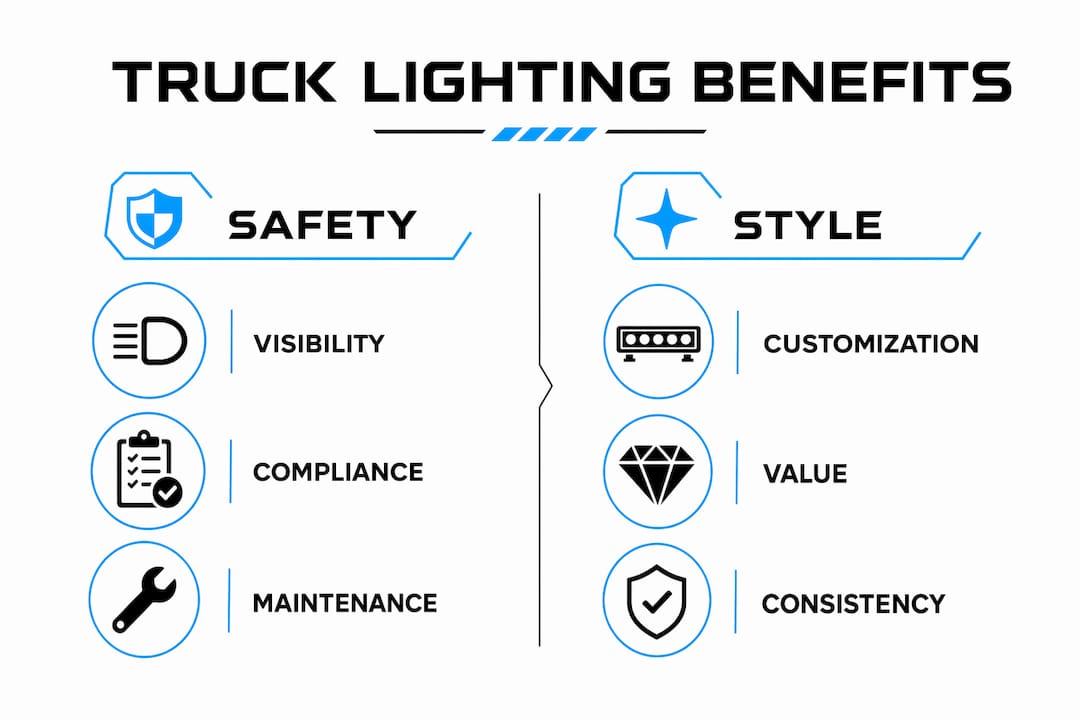
Insurance consequences compound the financial risk. Lighting violations tied to FMCSA standards can trigger insurance premium increases of 15–25%. That increase stays on your record and affects your rates for years, not just one renewal cycle.
DOT certification matters when you select a kit. A DOT-certified lamp has passed photometric testing, meaning it produces the correct light output, beam pattern, and color for its designated position. Non-certified lamps may look identical on the shelf but fail to meet the minimum candela requirements specified in FMVSS 108. Here is what compliance-ready full kits must include:
- Headlamps meeting minimum intensity and beam pattern standards
- Tail lamps visible from 500 feet under normal atmospheric conditions
- Stop lamps producing a distinct increase in intensity over tail lamp output
- Turn signals flashing at the correct rate and visible from 300 feet
- Clearance and marker lamps in the correct positions and colors for vehicle width and length
- Reflectors at specified rear and side positions
Pro Tip: Keep a copy of your kit’s DOT certification documentation in your truck. If a roadside inspector questions a lamp, you can show proof of compliance on the spot rather than arguing from memory.
You can also review truck lighting kit components to understand exactly which parts belong in a compliant setup before you buy. Knowing the full list prevents you from purchasing a kit that leaves out a required position.
How do LED full truck light kits reduce maintenance costs?
LED lighting upgrades reduce unplanned maintenance by 10–15% compared to incandescent systems. That reduction comes from longer lamp life, lower heat output, and fewer electrical failures. Incandescent bulbs burn out frequently under the vibration and temperature swings that trucks experience daily. LED lamps handle those conditions without degrading at the same rate.
Moisture ingress is the most common cause of premature lamp failure. Internal condensation causes corrosion and lens clouding that often goes undetected until the lamp fails completely. By the time you notice the problem, you are looking at a full replacement rather than a simple bulb swap. Sealed LED housings with high IP ratings prevent moisture from entering in the first place.
IP ratings tell you exactly how well a lamp resists the elements. IP68 and IP69K ratings indicate protection against dust, water immersion, and high-pressure steam cleaning. IP69K is the standard you want if your truck goes through industrial washing or operates in extreme weather. A lamp without a published IP rating is a lamp you cannot trust in heavy-duty conditions.
Wiring quality is the factor most truck owners overlook. Dedicated relays and fuses prevent electrical failures and protect the rest of your truck’s electrical system from damage caused by LED load changes. Flickering lights and intermittent failures almost always trace back to undersized wiring or missing protection components, not the lamps themselves.
Pro Tip: When installing a full LED kit, replace the wiring harness at the same time. Old wiring corrodes at connector points and creates resistance that causes new LED lamps to flicker or fail early.
Truck lighting is a long-term operational asset, not a consumable. Treating lighting as a strategic asset over a 12–36 month horizon changes how you budget for it. The upfront cost of a quality full kit is offset by fewer roadside failures, lower inspection risk, and reduced lamp replacement frequency.
How does custom lighting enhance your truck’s appearance?
Aesthetics and function are not mutually exclusive in truck lighting. Custom lighting trends among truck enthusiasts have grown significantly, with LED wheel rings, underbody lights, and app-controlled color-changing strips becoming standard upgrades for trucks that spend time at shows or on the street. You can learn more about app-controlled LED options to see how far the technology has come.
The key is balancing personal expression with legal compliance. Custom lighting that violates state laws on color or placement creates liability and can result in citations. Red and blue lights are restricted in most states because they mimic emergency vehicle signals. Amber and white are the safest color choices for exterior custom lighting that stays road-legal.
Here is what truck owners commonly add for visual impact:
- LED wheel rings: Illuminate the wheel well area and create a distinctive look at night
- Underbody lights: Add depth and presence to lifted trucks without interfering with required lamp positions
- Remote-controlled color strips: Allow color changes for shows or events while keeping compliance lamps intact
- Cab accent lighting: Highlights the roofline and cab contours for a finished, professional appearance
Upgraded lighting also adds perceived value to a truck. A well-lit truck with consistent, high-quality lamps reads as well-maintained to buyers and inspectors alike. Pride of ownership shows in the details, and lighting is one of the most visible details on any truck. The benefits of underbody lights for lifted trucks go beyond looks, adding low-level illumination that helps with off-road navigation and obstacle detection.
Key Takeaways
Full truck light kits matter because they address safety, compliance, maintenance, and appearance in a single upgrade rather than forcing you to solve each problem separately.
| Point | Details |
|---|---|
| Safety comes first | Full kits extend nighttime visibility 2–3 times and reduce side-impact and rear-end collisions. |
| Compliance protects your wallet | FMVSS 108 violations carry penalties up to $19,246 per offense and can raise insurance premiums 15–25%. |
| LED kits cut maintenance | Upgrading to LED reduces unplanned maintenance by 10–15% and eliminates frequent bulb replacements. |
| IP ratings determine durability | IP69K-rated lamps resist high-pressure washing and extreme weather, making them the right choice for heavy-duty use. |
| Aesthetics and compliance coexist | Custom LED strips, wheel rings, and underbody lights add visual appeal without sacrificing road-legal status. |
What I’ve learned from watching truck owners get lighting wrong
Most truck owners treat lighting as a reactive purchase. A lamp burns out, they replace it with whatever is cheapest and available. That approach costs more over time and creates compliance gaps that show up at the worst possible moment, usually during a roadside inspection or after an accident.
The system approach is the right one. Every lamp position on a truck interacts with the others. When you upgrade the headlights but leave aging marker lights in place, you create a mismatched system where some positions are reliable and others are not. Inspectors notice that inconsistency. Other drivers notice it too, even if they cannot articulate why the truck looks “off.”
Wiring quality is the detail I see ignored most often. Truck owners spend money on quality lamps and then connect them with the original corroded harness. The lamps fail early, and the owner blames the product. The real cause is almost always the wiring. Replacing the harness at the same time as the lamps is not optional if you want the system to perform as designed.
My honest recommendation is to view your lighting budget over a 24-month window. A quality full kit with sealed housings, DOT-certified lamps, and a new wiring harness costs more upfront than a piecemeal approach. It costs significantly less by month 18 when you account for avoided fines, reduced maintenance stops, and stable insurance rates.
— Christopher
Wheellightexpress lighting kits built for truck owners who care about quality
Wheellightexpress designs all of its lighting solutions in Louisiana, which means you get original designs built for the American market rather than generic overseas products. The product range includes wheel light rings and strips for visual upgrades and replacement wire harnesses engineered for reliable electrical integration with full truck light kits.
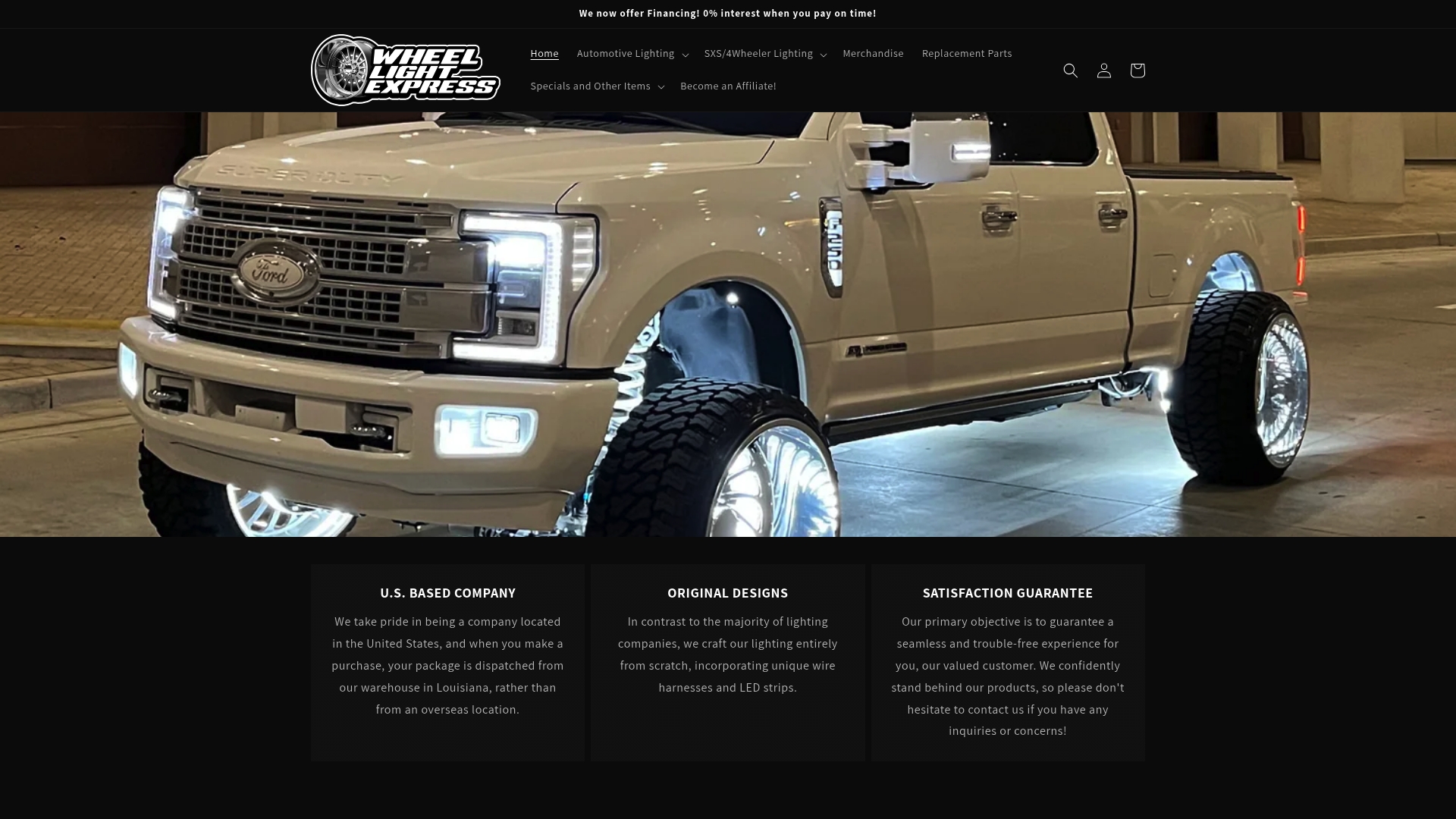
Every product comes with a satisfaction guarantee, and financing options make it possible to upgrade your full system without paying everything upfront. Whether you are focused on compliance, performance, or appearance, Wheellightexpress has the components to complete your build. If you need professional installation support, the team at Express Lube Richland Hills handles truck lighting repair and electrical work for owners in the Dallas-Fort Worth area.
FAQ
What is a full truck light kit?
A full truck light kit is a complete set of lamps covering every required position on a truck, including headlights, tail lamps, marker lights, clearance lights, and turn signals. It replaces piecemeal upgrades with a single, coordinated system.
Why do full truck light kits matter for legal compliance?
Federal Motor Vehicle Safety Standard No. 108 requires specific lamps at specific positions, and violations carry penalties up to $19,246 per offense. A full kit addresses all required positions at once, reducing the risk of non-compliance.
How much can LED truck light kits reduce maintenance costs?
Upgrading to quality LED lighting reduces unplanned maintenance by 10–15% compared to incandescent systems. Longer lamp life and sealed housings eliminate the frequent replacements that incandescent bulbs require.
What IP rating should I look for in truck lights?
IP69K is the highest protection rating for truck lighting, offering resistance to dust, water immersion, and high-pressure steam cleaning. It is the right choice for trucks that operate in harsh weather or go through industrial washing.
Can custom truck lighting be road-legal?
Yes, custom lighting is road-legal when it uses compliant colors and does not interfere with required lamp positions. Amber and white are the safest choices for exterior custom lights, while red and blue are restricted in most states.
Recommended
- Truck Lighting Kit Components Explained for Enthusiasts – Wheel Light Express
- App-Controlled Truck LEDs: What Every Enthusiast Should Know – Wheel Light Express
- The Role of Lighting in Car Community Culture – Wheel Light Express
- Remote Control Lighting Trucks: What You Need to Know – Wheel Light Express