
A high-density LED strip is an LED light strip featuring 120 or more LED chips per meter, producing a brighter, smoother, and more uniform beam than standard strips. If you are upgrading your vehicle’s lighting, understanding the difference between LED strip light types is the first decision that determines whether your final result looks professional or amateurish. This guide covers the technical distinctions, real automotive applications, power requirements, and installation best practices so you can choose with confidence.
What is a high-density LED strip vs. a standard LED strip?
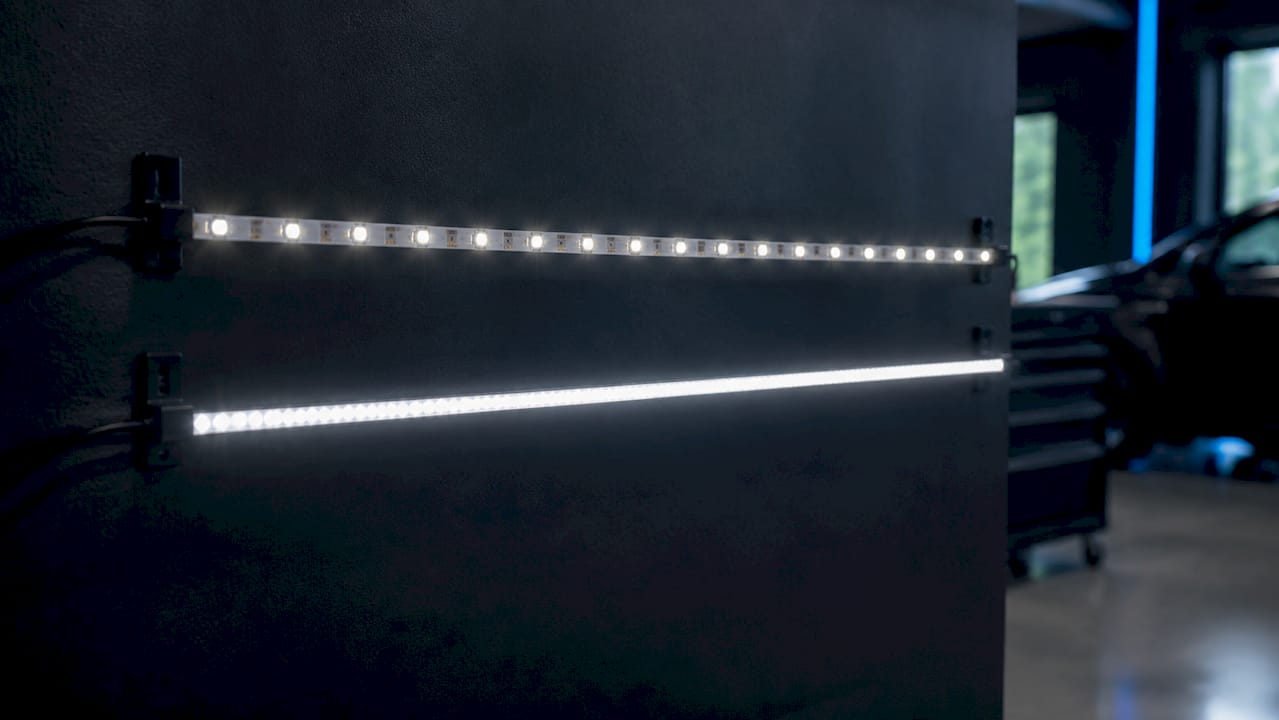
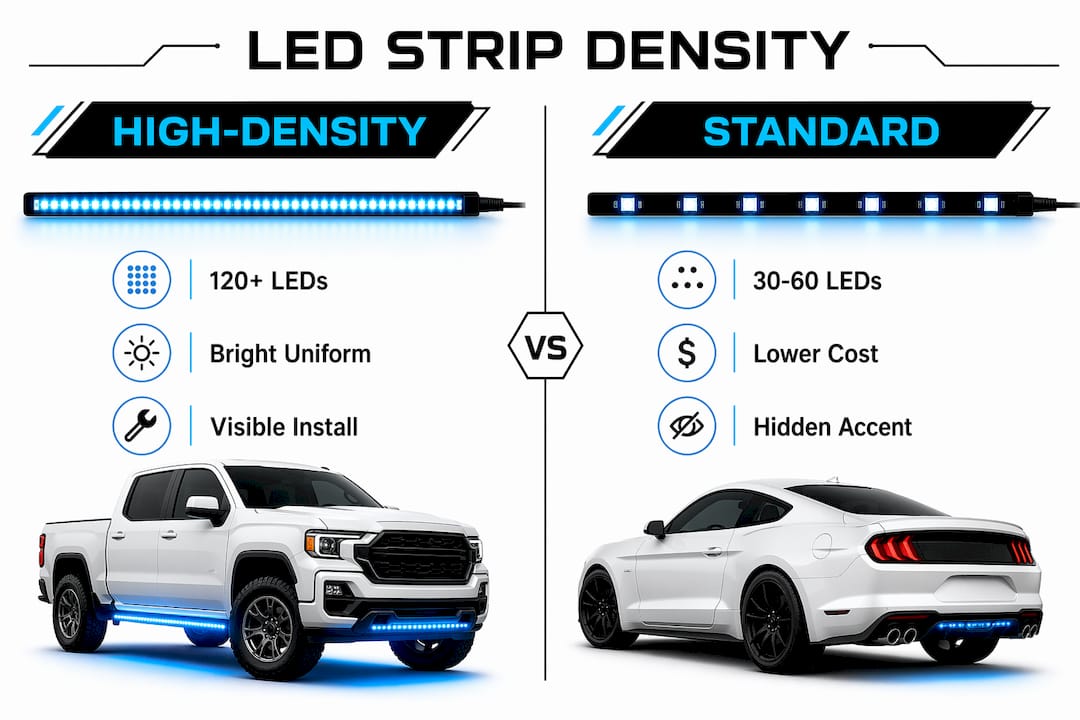
The core difference between high-density and standard LED strips comes down to LED count per meter and the visual quality that count produces. Standard strips typically carry 30 to 60 LEDs per meter. High-density strips start at 120 LEDs per meter and commonly reach 180 to 240 LEDs per meter in automotive-grade products.
That gap in LED count has a direct visual consequence: the “dotting” effect. On a standard 60 LED/m strip, each individual chip is visible as a distinct point of light, especially when viewed directly or through a diffuser. High-density strips eliminate this dotted appearance by packing chips close enough that the light blends into a continuous line. For automotive applications where strips are often visible, that difference is not cosmetic. It is the difference between a finished look and a cheap one.
| Density Level | LEDs per Meter | Best Automotive Use |
|---|---|---|
| Standard | 30 to 60 | Hidden accent lighting, trunk fills |
| High-density | 120 to 144 | Wheel rings, door sills, interior ambient |
| Ultra high-density | 180 to 240 | Undercar lighting, direct-view exterior accents |
| COB | 512+ | Premium seamless accent, show builds |
Here is what that table means practically: if your strip will be seen directly by anyone standing near your vehicle, you want at least 120 LEDs per meter. Products from Signlite LED and VST Lighting both confirm that 180 to 240 LEDs/m deliver the smooth, bright output suited for exterior automotive use when paired with the correct IP rating.
What are the benefits of high-density LED strips for automotive lighting?
Vehicle owners choose high-density LED strips primarily for light uniformity, not just raw brightness. Lighting experts confirm that uniformity is the deciding factor in direct-view applications, and automotive lighting is almost always a direct-view situation. Your wheel rings, undercar strips, and door accents are all seen up close by people who notice quality.
The practical advantages of high-density strips in automotive settings include:
- Brighter output per foot. HitLights data shows 894 lumens per foot from 2835 high-density LED configurations, which is significantly more than standard strips of the same chip size.
- No visible gaps. Fewer gaps between chips means no dark spots along wheel rings or door sill strips, even on curved surfaces.
- Better color consistency. More chips per meter means color mixing happens faster, so RGB strips look blended rather than segmented.
- Versatile placement. High-density strips work in wheel rings, undercar lighting kits, interior ambient lighting, and trunk accent builds.
- Improved aesthetics at low brightness. Even when dimmed, high-density strips maintain a smooth appearance. Standard strips at low brightness look like a string of disconnected dots.
For exterior use, IP rating matters as much as LED density. IP65 or higher ratings are required for any strip mounted outside the vehicle cabin, where road spray, vibration, and debris are constant threats. A high-density strip with an IP44 rating will fail faster on a wheel well than a standard strip with IP67 protection. Density and durability must be matched together.
Pro Tip: When selecting strips for wheel rings or undercar lighting, always verify both the LED density and the IP rating on the product spec sheet. A strip rated IP67 and 144 LEDs/m covers both performance and survival in an automotive environment.
How to manage power, heat, and installation for high-density LED strips
High-density strips demand more from your electrical system and your installation method than standard strips do. Getting these factors right is what separates a lighting upgrade that lasts years from one that fails in months.
Follow these steps to set up your installation correctly:
-
Calculate your power needs with a buffer. High-density LED strips consume more power than standard strips. Multiply the strip’s watts per meter by the total length, then add 20% to that figure. Running a power supply at full load shortens its lifespan and risks failure, especially in the heat of an engine bay or wheel well.
-
Install aluminum channel profiles wherever possible. High-density strips generate more heat than standard strips due to the higher chip count. Aluminum profiles act as heat sinks, pulling thermal energy away from the strip and extending its operational life significantly. In automotive environments where ambient temperatures are already elevated, this is not optional.
-
Do not rely solely on adhesive backing. Vehicle vibrations cause adhesive failure on LED strips faster than almost any other installation environment. Use mounting clips, silicone adhesive, or mechanical fasteners in addition to the factory tape backing. This is industry best practice for any mobile LED application.
-
Match voltage to your run length. 24V strips support longer runs with less voltage drop than 12V strips. For undercar lighting or full wheel ring circuits that cover significant distance, 24V is the more reliable choice. Voltage drop causes uneven brightness across the strip, which defeats the purpose of going high-density.
-
Use diffuser covers for direct-view installations. Even at 144 LEDs/m, a diffuser lens smooths the output further and protects the strip from physical contact. For interior ambient lighting or door sill accents, a frosted diffuser profile gives a cleaner, more finished appearance.
Pro Tip: Check out the LED strip installation guide from Wheellightexpress for vehicle-specific mounting advice, including how to route wiring cleanly through body panels.
What are the latest advances and limitations of high-density LED strips?
COB (Chip-on-Board) technology represents the most significant recent development in LED strip lighting. COB strips place bare LED chips directly on a circuit board with no individual packaging, achieving 512 or more LEDs per meter and producing a truly dotless, continuous line of light. For show vehicles or premium accent builds where perfection matters, COB is the current benchmark.
That said, COB strips come with trade-offs that matter in automotive contexts:
- Higher cost per meter. COB strips cost more than SMD high-density strips at equivalent lengths.
- Less flexibility. Some COB configurations are stiffer than traditional SMD strips, which can complicate installation around curved surfaces like wheel wells.
- Heat concentration. With chips packed even tighter, thermal management becomes more demanding. Aluminum profiles are non-negotiable with COB.
- Limited cut points. COB strips often have fewer cut points per meter, reducing your ability to trim them to exact lengths.
“For truly seamless and professional lighting outcomes in vehicles, consider upgrading to COB strips.” — Conversions Tech
For most vehicle owners, standard high-density SMD strips in the 120 to 144 LEDs/m range hit the right balance of performance, flexibility, and cost. COB makes sense for show builds and premium interior accent work where the strip is the focal point. For flexible strips on rough roads, SMD high-density strips with proper IP ratings and mechanical mounting remain the practical choice.
Key takeaways
High-density LED strips deliver superior light uniformity and brightness for automotive applications, but their performance depends equally on correct IP rating, power supply sizing, and heat management.
| Point | Details |
|---|---|
| LED density definition | High-density strips carry 120 or more LEDs per meter, eliminating the dotting effect. |
| Power supply sizing | Always add a 20% buffer above calculated wattage to prevent premature power supply failure. |
| Heat management | Install aluminum channel profiles to dissipate heat and extend strip lifespan in automotive environments. |
| IP rating requirement | Use IP65 or higher for any exterior vehicle application to survive moisture and road debris. |
| COB vs. SMD | COB strips offer dotless output above 512 LEDs/m but cost more and require stricter heat management. |
Why I always tell vehicle builders to start with density and IP rating together
I have seen too many builds where someone spent real money on a high-density strip and then mounted it with no heat management and an IP44 rating on a wheel well. Six months later, the strip is dead and they are back to square one. The density number gets all the attention, but the IP rating and thermal setup are what actually determine whether the investment survives.
The other mistake I see regularly is oversizing the power supply without adding the 20% buffer. People calculate exact wattage and buy a supply that matches it perfectly. Running any power supply at 100% load continuously shortens its life. In a vehicle where the lighting runs for hours at a time, that matters.
My honest recommendation for anyone starting a vehicle lighting project: use the lumen output comparison guide to set your brightness target first, then work backward to the density level you need. Do not buy the highest density strip available just because it sounds better. Match the density to the application, get the right IP rating for the location, and size your power supply with headroom. That approach produces results that last.
COB technology is genuinely impressive, and I expect it to become the standard for premium automotive builds within a few years. But for most enthusiasts today, a quality 144 LEDs/m SMD strip with IP67 protection and a proper aluminum channel is the right call. It performs well, installs reliably, and survives the conditions a vehicle actually experiences.
— Christopher
Upgrade your vehicle lighting with Wheellightexpress
If you are ready to put this knowledge to work, Wheellightexpress designs all of its automotive lighting products in Louisiana with vehicle enthusiasts in mind. Every product is built for real automotive conditions, not repurposed from generic commercial applications.
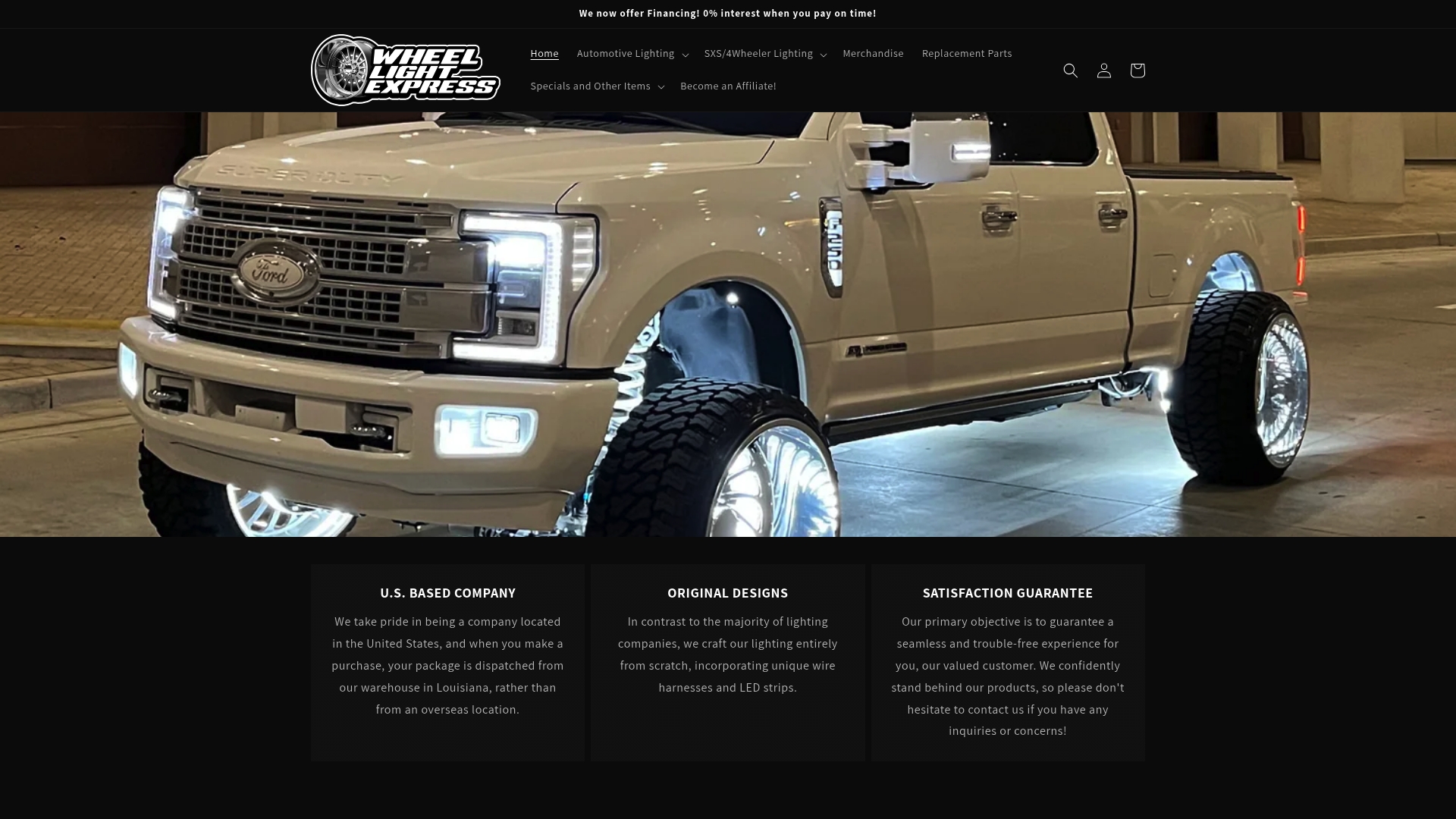
The automotive lighting collection includes high-density LED wheel rings, replacement strips, and complete wire harnesses designed to work together. You can also find the wheel light ring and strip and matching wire harness leads for a clean, complete installation. Financing options are available, so you do not need to delay your build waiting for the full budget. Wheellightexpress backs every product with a satisfaction guarantee.
FAQ
What is a high-density LED strip?
A high-density LED strip is an LED light strip with 120 or more LED chips per meter, producing brighter and more uniform light than standard strips. The higher chip count eliminates the visible dotting effect common in lower-density strips.
How many LEDs per meter is considered high-density?
High-density LED strips start at 120 LEDs per meter, with ultra high-density versions reaching 180 to 240 LEDs per meter. COB strips exceed 512 LEDs per meter for truly dotless illumination.
What IP rating do I need for exterior automotive LED strips?
IP65 or higher is required for any LED strip installed outside the vehicle cabin. This rating protects the strip from road moisture, debris, and the vibration common in wheel well and undercar applications.
Can I use high-density LED strips on wheel rings?
Yes. High-density strips with 120 to 144 LEDs per meter are well suited for wheel ring applications, delivering smooth, gap-free light around the full circumference. Pair them with an IP67 rating and mechanical mounting for long-term durability.
Do high-density LED strips need a special power supply?
High-density strips consume more power than standard strips and require a power supply sized at least 20% above the calculated wattage load. Running a supply at full capacity continuously reduces its lifespan and risks failure in automotive environments.