
For truck meets, underbody rock lights, synchronized wheel and grille accents, and app- or DMX-driven multi-zone control create the biggest visual impact. Pair those three categories with a fused, switchable wiring setup so show colors shut off on public roads, and you have a display that photographs well and holds up meet after meet. Start with wheel rings and rock lights, since they carry the most visual weight for the least wiring complexity.
TL;DR:
- Prioritize wheel rings, rock lights, and grille illumination, as they offer the most visual impact with the least wiring complexity for truck meets.
- Use waterproof, marine-grade fixtures with proper thermal design and fuse each zone independently to ensure reliability and durability through multiple shows.
- Control options ranging from app-based systems for small setups to DMX for large, synchronized displays, with safety measures like dimming strobes in spectator zones.
- Test the entire lighting rig at idle before shows to detect wiring issues or weak grounds that could cause flicker or failure during the event.
- Choose a balanced layout—either lifted, slammed, or moderate—that emphasizes reliability and ease of removal between meets for ongoing street legality.
Table of Contents
- Truck Meet Lighting Ideas Worth Building Around
- Planning Your Truck-Meet Lighting Display
- Choosing a Controller: App, Dedicated Remote, or DMX
- Installation and Reliability Checklist
- Three Show-Ready Layout Combinations
- Why Reliability Beats Wow Factor Every Time
- Wheel Light Express Kits Built for Meet Season
- Sources
Truck Meet Lighting Ideas Worth Building Around
A truck meet display works best when every zone supports the next, not competes with it. Here are the setups that consistently draw a crowd at shows, ranked roughly by visual payoff versus install effort.
- Underglow and rock lights. Mount RGB pods at the frame rails and axles for even ground wash. Using waterproof-rated pods keeps them alive through wet grass and dust; combo-beam pods do double duty as functional ground lighting and show underglow, since beam pattern determines whether a light works better for distance, area coverage, or both.
- Wheel ring or wheel-well lighting. Ring kits mounted behind the rotor face create a halo effect that reads well in low light. Route wiring through the control arm boot rather than across moving suspension parts to avoid chafing.
- Grille and emblem illumination. Subtle backlighting on the emblem or grille slats gives photographers a clean focal point without overpowering the shot. Keep it dim relative to the wheels; a blown-out grille washes out in camera flash.
- Running board and bed strip lighting. Strips along the boards and bed rails add a horizontal light line that reads well from a distance in a packed lot. Check placement options in a guide to LED strip applications across custom trucks if you’re running strips in multiple zones.
- Cab roof and marker accents. Amber or white marker lights along the roofline add height to the silhouette, especially on lifted trucks parked under event lighting.
- Interior footwell and dash accents. For open-door displays, footwell and dash strips give judges something to see when they lean in. Low-draw strips here rarely need their own fuse.
- Tailgate light bars. These do double duty: white or amber for show, red for brake function. Wire them so the show pattern only activates in park.
- Pod lights and ditch lights. Ground-wash pods near the front bumper highlight the wheels from a different angle than underglow alone, adding depth to night photos.
- Strobe or chase accents. Use sparingly. A short strobe burst draws attention when a crowd walks by, but running it continuously reads as gimmicky and tires out onlookers fast.
- Synchronized zone patterns. Tying grille, wheels, and underglow to one color or chase pattern is what separates a coordinated show truck from a truck with lights bolted on randomly.
Plug-and-play kits, like the Glass Is Class watermelon light kit, show how a switched harness and stainless brackets can simplify one of these zones without custom fabrication.
Planning Your Truck-Meet Lighting Display
Sketch your zones before you buy anything. Prioritize wheels, underbody, and grille first since those draw the eye in photos and under event lighting.
- Add up amp draw across every zone before wiring, then size your fuse to that total plus headroom.
- Run show-only zones off an ignition-switched fuse tap so they can’t drain the battery overnight, a step underglow installation guides consistently recommend.
- Use premade harnesses instead of splicing raw wire wherever possible. A factory-built harness reduces the failure points that cause flicker or dead zones mid-show.
- Wire non-DOT show colors through a relay or three-way switch so they physically cannot activate while the truck is in drive.
Pro Tip: Test your full lighting rig at idle in your driveway before the meet. A weak ground or an undersized fuse almost always shows up as flicker within the first five minutes, not the first five hours.
Choosing a Controller: App, Dedicated Remote, or DMX
Your control method should match the size of your build, not the size of your ambition. Smartphone and Bluetooth kits handle most single-truck displays well.
- App or Bluetooth controllers: affordable, easy to pair, and fine for a handful of zones running synced colors.
- Dedicated multi-zone remotes: more reliable at longer range across a big truck with several zones, and they don’t rely on a phone staying connected all night.
- DMX or PLC-driven rigs: necessary once you’re coordinating hundreds of individual outputs into a true synchronized sequence, the same approach custom shops use industrial PLCs and HMIs for.
Event lighting crews at large-scale shows lean on adjustable intensity controls to avoid blinding people standing close to the rig, a principle worth borrowing even at a small local meet. Whatever controller you pick, keep your brightest strobe effects dimmed when spectators are within a few feet of the truck.
Installation and Reliability Checklist
Lights that look great at one show and die at the next usually failed on the basics, not the design.
- Use IP67 or IP68 rated fixtures for anything mounted under the frame or in the wheel well, and favor marine-grade seals on connectors.
- Check thermal design before buying: die-cast aluminum housings shed heat better than plastic, and a fixture too hot to touch after 30 minutes at full power will lose brightness faster over time.
- Add a load resistor or CAN-bus compatible driver on modern trucks, since skipping this step can trigger dash error codes or flicker.
- Secure every run with strain relief at connection points and vibration-rated connectors, and fuse each zone independently so one short doesn’t kill the whole display.
Three Show-Ready Layout Combinations
Lifted show truck. Lean into height and shadow. Underbody rock lights, wheel rings, grille accents, and roofline markers together create a layered silhouette that looks tall from every angle, an approach detailed further in this lifted truck underglow inspiration guide.
Slammed or street build. Keep it low and clean. Ground-hugging underglow, a subtly lit grille, and interior accents for open-door judging carry more visual weight than height ever could on this style.
Balanced daily-driver show truck. Prioritize the grille and wheel accents, add modest underglow, and keep the wiring removable so the truck stays fully street-legal between meets. A best-setup guide for show trucks covers a few variations on this exact balance.
Why Reliability Beats Wow Factor Every Time
The best truck meet displays aren’t the brightest ones. They’re the ones still running clean by the third show of the season. Wheel Light Express designs every kit and harness in Louisiana specifically because generic overseas parts fail at connection points nobody bothers to test twice. Every kit ships with a satisfaction guarantee, and financing options exist for builders who want the full multi-zone setup without paying it all upfront.
— Christopher
Wheel Light Express Kits Built for Meet Season
You don’t need a fabrication shop to get a coordinated meet display. Wheel Light Express is the direct route to a synchronized, reliable setup: kits designed in-house in Louisiana, harnesses built to match the exact lights they power, and a satisfaction guarantee behind every order.
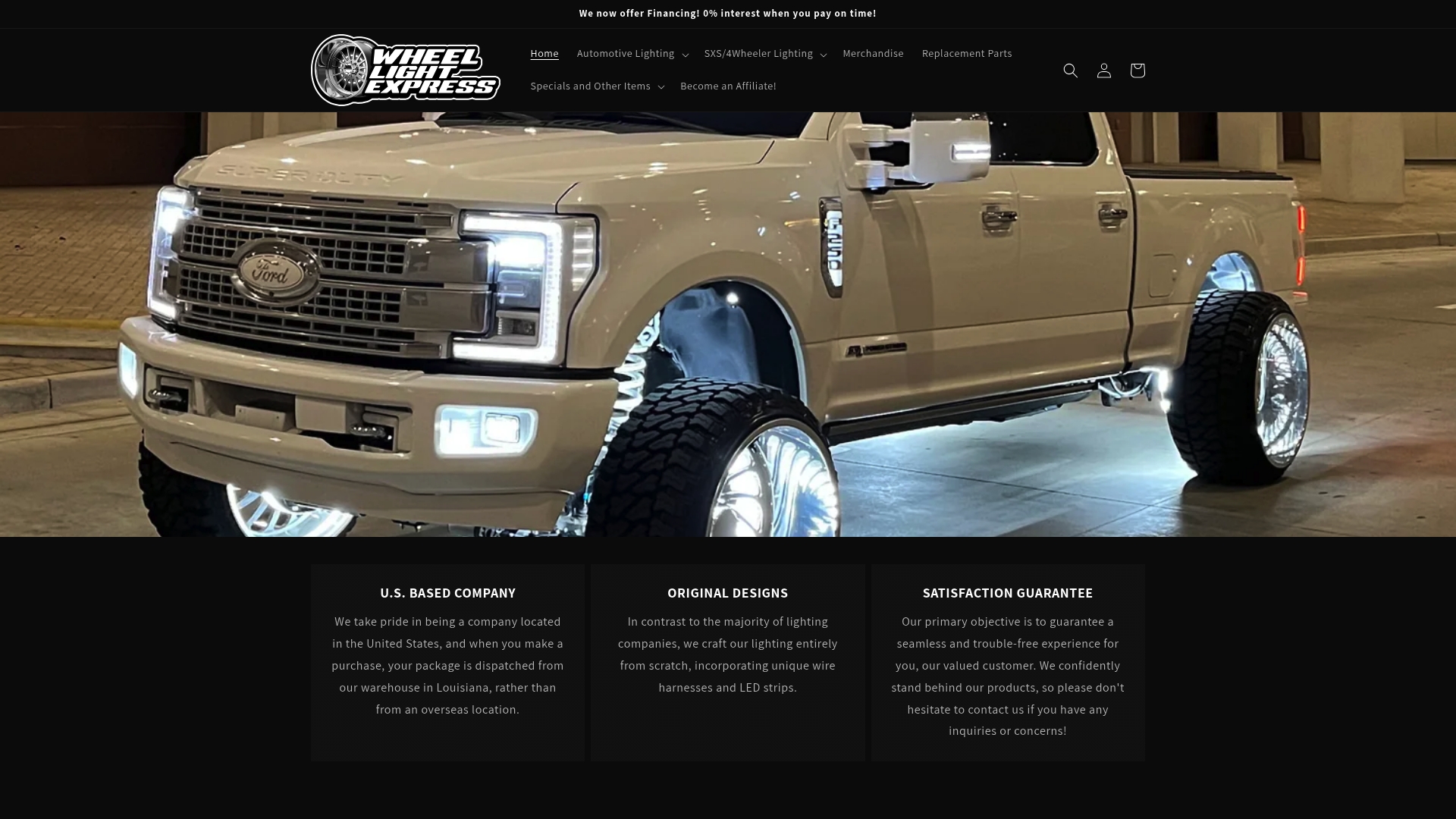
The Wheel Light Ring and Strip kit is the natural starting point for the wheel accents covered above, and it pairs directly with the Wire Harness Leads / Wires for a clean, fused install instead of a splice job. Planning a multi-zone build with wheels, underglow, and grille running off one system? The Replacement Wire Harness for all lighting covers the more complex wiring without forcing you to design your own harness from scratch. Financing is available for builders who want to do it all in one order rather than piecing it together over several shows. Browse the full kit lineup at Wheel Light Express and get your wheels lit before the next meet.
Sources
- Visual Productions CueCore3 and Kiosc App Power Lighting Control for Feld Entertainment’s Monster Jam – rAVe PUBS
- Big rig custom shop accelerates automation into the passing lane
- How to Install Underglow Lights on a Truck | 8 Simple Steps
- Jacked up trucks with lights: A comprehensive guide to lifted lifestyles and luminous landscapes
- Truck LED Lights Buyer’s Guide 2026 – What the spec sheets don’t tell you