

Wheel light compatibility is defined as the match between a wheel light’s physical size, mounting style, and electrical requirements and the specific wheel dimensions and electrical system of your vehicle. Get this wrong and you end up with lights that don’t fit, flicker constantly, or trigger dashboard warning codes. Get it right and you add real visibility, safety, and visual impact to your car or truck. This guide covers the most practical wheel light compatibility examples by vehicle type, from compact trucks like the Toyota Tacoma to dually workhorses like the Ford F350, with sizing standards, installation notes, and brand options that actually deliver results.
1. Wheel light compatibility examples: sizing by vehicle class
The single most important compatibility variable is wheel diameter. Wheel light rings are sized to fit inside the wheel rim, so the ring diameter must match the wheel’s inner barrel measurement, not the tire size printed on the sidewall.
BlackFlagLighting’s sizing guide identifies three primary sizes that cover the majority of cars and trucks on the road today:
| Wheel Light Size | Typical Vehicle Class | Common Examples |
|---|---|---|
| 15.5" | Compact trucks and cars | Toyota Tacoma, Chevy Colorado, Ford Ranger |
| 17" | Full-size trucks and diesel pickups | 2008+ Ford F-150, Ram 1500, GMC Sierra |
| 20" | Dually trucks (DRW) | Ford F350 DRW, Ram 3500 DRW |
These three sizes cover roughly 90% of the consumer truck and car market, but overlap exists. A 17" wheel on a Tacoma, for example, requires a 17" ring even though the Tacoma is a compact truck. Always measure the inner barrel of your specific wheel before ordering.
Pro Tip: Use the Wheellightexpress sizing guide to confirm your exact ring size by year, make, and model before you buy. Measuring the inner barrel yourself with a tape measure is a reliable backup check.
2. Vehicle-specific fitment scenarios
Real-world fitment goes beyond ring diameter. The following examples show how physical size, wheel design, and electronics all factor into compatibility decisions.
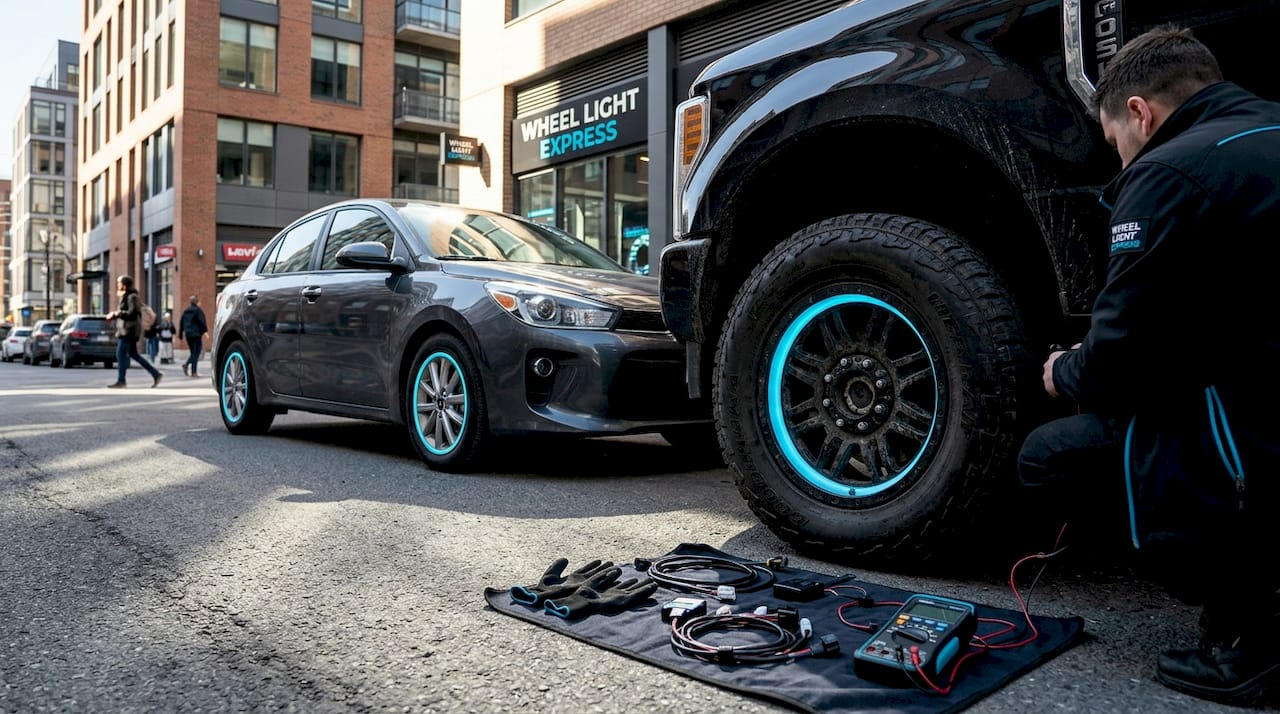
2020+ Ford F-150: The F-150 runs 17" wheel lights on its standard wheel package. Most trims use aluminum alloy wheels with enough inner barrel clearance for a standard LED ring. Some owners report that the F-150’s CAN-bus electrical system triggers dashboard errors with basic LED installs, making a decoder or load resistor necessary for clean operation.
Toyota Tacoma and Chevy Colorado: Both models fit 15.5" wheel lights on their stock wheel packages. These compact trucks have shallower wheel barrels than full-size trucks, so ring depth matters as much as diameter. Plug-and-play installs are common on these platforms, but some model years still benefit from a wire harness to prevent flickering.
Ford F350 DRW: The dually configuration requires 20" wheel light rings to span the wider inner barrel of dual rear wheels. Some owners fit custom 17" rings on the front axle while using 20" rings on the rear duals, creating a mixed-size setup that requires careful planning and matching wire harnesses.
Electronics compatibility note: Sealight’s vehicle fitment tool demonstrates that even plug-and-play installs can behave differently across model years of the same vehicle. The same LED ring that runs clean on a 2019 F-150 may flicker on a 2022 model due to updated CAN-bus sensitivity. This is why checking electrical compatibility is as critical as checking physical size.
3. Types of compatible wheel lights and where each fits
Wheel light kits come in three primary forms: LED rings, LED strips, and pod lights. Each suits a different application and vehicle type.
LED rings mount inside the wheel rim and rotate with the wheel. They produce the most dramatic visual effect and are the most common choice for trucks and cars. Ring compatibility depends on inner barrel diameter and depth clearance.
LED strips attach to the wheel well liner rather than the wheel itself. They illuminate the tire and wheel area from a fixed position. Strips work on virtually any vehicle with a wheel well liner, making them the most universally compatible wheel lighting option. They are especially popular on lifted trucks where the wheel well is highly visible.
Pod lights are compact units that mount in specific points around the wheel well or bumper. They suit off-road builds and vehicles with custom suspension setups where a ring or strip would interfere with moving parts.
Key installation considerations apply across all three types:
- Mounting location: Avoid suspension interference by drilling mounting points at positions that clear all suspension travel. Test the full range of suspension movement before finalizing any mount.
- Wiring routing: Route all wiring away from moving components, heat sources, and sharp edges. Secure wires with zip ties at regular intervals.
- Electrical load: LED wheel lights draw minimal current, but adding wire harnesses and decoders prevents flickering and dashboard warning codes on modern vehicles with sensitive electrical systems.
- Sealing: Apply dielectric grease to all connectors before closing them. Road debris, water, and salt are the primary causes of premature LED failure in wheel well installations.
- DIY vs. professional install: Professional installation is recommended when syncing wheel lights with vehicle turn signals, brake lights, or factory lighting control modules. Amateur wiring into these circuits risks electrical faults and voided warranties.
Pro Tip: Before drilling any mounting holes, use painter’s tape to mock up the strip or pod position and drive the vehicle over a speed bump. Watch for contact points. This five-minute test prevents permanent mounting mistakes.
4. Best wheel light brands for trucks and cars
Choosing a brand with broad compatibility coverage saves time and reduces the risk of returns. The following brands are recognized for offering multiple sizing options, quality construction, and accessories that resolve common fitment issues.
- Wheellightexpress: A U.S.-based brand that designs all products in Louisiana. Their catalog covers rings and strips in multiple sizes and includes proprietary wire harnesses built specifically for their LED systems. Their satisfaction guarantee and financing options make them a strong choice for owners who want quality without paying everything upfront.
- Sealight: Known for a precise vehicle fitment tool that matches products to year, make, model, and trim. Sealight products often require external decoders on CAN-bus vehicles, which the brand sells as add-ons.
- Stinger: Offers a range of off-road and vehicle lighting including pod lights and strips suited to lifted trucks and custom builds. Their catalog covers vehicles where standard ring fitment is not practical.
When comparing budget and premium options, the key difference is not brightness but durability and electrical compatibility. Budget LED rings often lack proper sealing ratings and ship without wire harnesses, leading to flickering and early failure. Premium kits from brands like Wheellightexpress include harnesses, mounting hardware, and technical support, which reduces total installation time and troubleshooting.
For trucks with complex electrical systems, the replacement wire harness from Wheellightexpress is a practical accessory that resolves the majority of flickering and error code complaints reported by truck owners after LED wheel light installs.
Key takeaways
Correct wheel light compatibility requires matching ring diameter to your wheel’s inner barrel, confirming electrical compatibility with your vehicle’s system, and selecting the right light type for your specific application.
| Point | Details |
|---|---|
| Size determines fitment | Match ring diameter to inner barrel: 15.5" for compact trucks, 17" for full-size, 20" for dually DRW. |
| Electrical system matters | CAN-bus vehicles often need decoders or wire harnesses to prevent flickering and dashboard errors. |
| Light type affects application | LED rings rotate with the wheel; strips mount in the wheel well; pods suit off-road and custom builds. |
| Brand quality affects longevity | Premium kits include harnesses and sealing; budget kits often skip these, causing early failure. |
| Verify before buying | Use a manufacturer sizing guide or fitment tool to confirm compatibility by year, make, and model. |
Why I always check electrical compatibility before physical size
Most buyers focus entirely on ring diameter, and that makes sense. It’s the most obvious variable. But after working through dozens of wheel light installs across different truck platforms, I’ve found that electrical compatibility causes more failed installs than sizing errors do.
A 17" ring that fits perfectly inside a 2021 Ram 1500’s wheel barrel can still flicker every time the truck’s CAN-bus system runs a diagnostic cycle. The physical fit is correct. The electrical fit is not. This is the part of the wheel light fitment guide that most articles skip over, and it’s the part that generates the most frustration for truck owners who installed everything correctly and still have a problem.
My recommendation is to check your vehicle’s electrical architecture before you order anything. If your truck was built after 2015 and uses a CAN-bus system, budget for a decoder or a quality wire harness from the start. Don’t treat it as an optional add-on. Treat it as part of the base cost of the install.
The other thing I’d push back on is the idea that professional installation is only for complex builds. Even a straightforward LED ring install benefits from a shop’s experience with your specific vehicle platform. Shops that work with aftermarket lighting regularly know which model years have quirks and which connectors need dielectric grease. That knowledge is worth the labor cost on a truck you plan to keep for years.
The LED vs. bulb comparison is settled. LED wins on every metric. The real decision is which LED system is built for your vehicle’s electrical demands, not just your wheel size.
— Christopher
Find compatible wheel lights at Wheellightexpress
Wheellightexpress designs every product in Louisiana with one goal: lights that fit your vehicle correctly and look great from the first install. Their catalog covers wheel light rings and strips in 15.5", 17", and 20" sizes, with accessories including wire harnesses and decoders that handle the electrical compatibility issues that trip up most DIY installs.
Browse the full aftermarket lighting catalog to find rings, strips, and harnesses sized for your specific truck or car. Every purchase comes with a satisfaction guarantee, and financing options are available so you can get the right setup without waiting. If you are not sure which size fits your vehicle, the Wheellightexpress sizing guide walks you through the selection by year, make, and model in minutes.
FAQ
What size wheel light fits a Ford F-150?
Most 2008 and newer Ford F-150 models require 17" wheel lights, as confirmed by BlackFlagLighting’s sizing guide. Always verify your specific trim’s inner barrel measurement before ordering.
Do wheel lights cause dashboard warning lights?
Yes, on CAN-bus vehicles, LED wheel lights can trigger dashboard errors without a decoder or load resistor. Adding a wire harness or decoder resolves this issue in most cases.
Can I install wheel lights myself?
Basic ring and strip installs are DIY-friendly, but professional installation is recommended when wiring into vehicle signal systems or working with complex electrical architectures. Improper wiring risks electrical faults.
What wheel light size fits a dually Ford F350?
The Ford F350 DRW requires 20" wheel light rings to fit the wider inner barrel of its dual rear wheels. Some owners use 17" rings on the front axle and 20" rings on the rear.
How do I find the right wheel light for my vehicle?
Use a manufacturer sizing guide such as the one offered by Wheellightexpress, which matches wheel lights to your vehicle by year, make, and model. Measuring your wheel’s inner barrel diameter directly is a reliable backup method.