

US-designed automotive lighting is defined by its compliance with overlapping federal and state electrical codes, superior material engineering, and a design philosophy that treats lighting as a core vehicle system rather than an afterthought. These factors explain why us-designed lighting differs so fundamentally from imported alternatives flooding the market. Polycarbonate diffusers, IEEE 1789 flicker standards, and collaborative design processes are not optional extras in American-made products. They are built-in requirements that directly affect your safety, your vehicle’s durability, and your ability to customize with confidence.
What regulatory and safety standards govern US-designed automotive lighting?
US automotive lighting must satisfy a layered stack of electrical and safety codes that most imported products simply do not meet. The National Electrical Code Article 725 governs low-voltage circuit safety, while IEEE 1789 sets strict flicker control guidelines to reduce visual and neurological stress on drivers. These two standards alone disqualify a large share of budget imports before any aesthetic consideration enters the picture.
The regulatory framework goes deeper than federal codes. California Title 24 and its JA8 addendum require specific dimming compatibility and energy efficiency thresholds that affect every lighting product sold or installed in the state. ASHRAE 90.1 adds another layer of energy performance requirements. Many imported LEDs use incompatible dimmers and poor power regulation, causing flicker levels that fall well outside recommended ranges. That flicker is not just annoying. It creates measurable neurological stress during extended driving.
Class 2 circuit requirements under the NEC are particularly relevant for automotive applications. Class 2 limits power output to reduce fire risk and protect both the vehicle and its occupants. US-designed products are engineered around these limits from the start. Imported alternatives are often designed for different regulatory environments and retrofitted for the US market, which creates gaps in compliance.
Here is what the key standards cover:
- NEC Article 725: Low-voltage safety for Class 2 circuits, limiting power to reduce fire and shock risk
- IEEE 1789: Flicker control guidelines to protect driver vision and reduce neurological fatigue
- California Title 24/JA8: Dimming compatibility and energy efficiency requirements for installed lighting
- ASHRAE 90.1: Energy performance standards affecting product design and power consumption
- UL Certification: Material and component safety verification required for US market compliance
Pro Tip: When evaluating any automotive lighting product, ask the seller for its UL certification number and confirm IEEE 1789 flicker compliance. A legitimate US-designed product will have both on record.
How do material choices and optical engineering affect durability?
The material gap between US-designed lighting and typical imports is measurable and consequential. Polycarbonate diffusers are the standard in North American lighting because they meet UL compliance requirements and resist cracking under impact. Polystyrene, the cheaper alternative common in imported fixtures, yellows under heat exposure and shatters on impact. For a vehicle that vibrates, heats up, and faces road debris, that difference is critical.
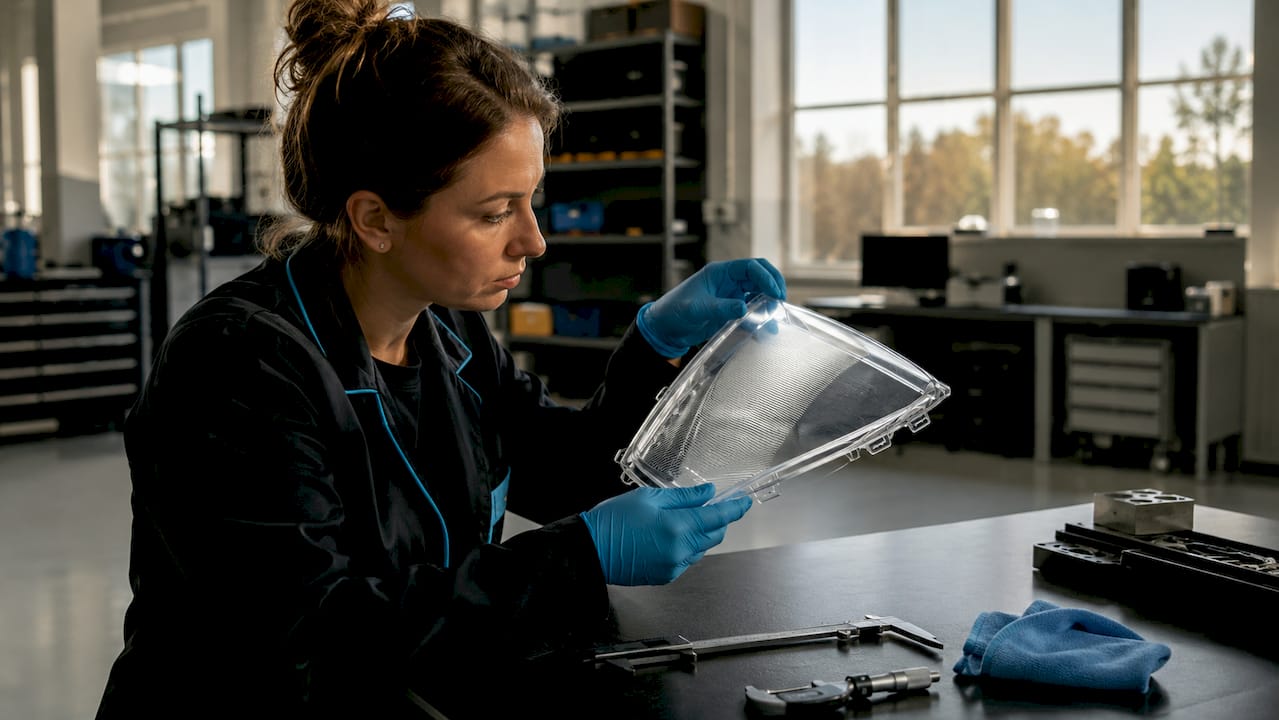
Polycarbonate also meets 94 V-0 flame retardance standards, meaning it resists ignition and self-extinguishes. That rating matters in an automotive environment where electrical components sit near fuel systems and heat sources. Polystyrene carries no equivalent rating.
| Feature | US-Designed (Polycarbonate) | Typical Import (Polystyrene) |
|---|---|---|
| Impact resistance | High, resists cracking | Low, shatters under stress |
| Heat tolerance | Stable under automotive heat | Yellows and warps over time |
| Flame retardance | UL 94 V-0 rated | No equivalent rating |
| UL compliance | Standard requirement | Rarely certified |
| Repairability | Modular, component-level | Sealed, disposable |
Optical engineering is the other major differentiator. US-designed fixtures increasingly use microprismatic lenses and honeycomb louvers to control glare at the source. The dark light and dark optics design principle takes this further by concealing the LED source entirely behind matte black interiors and deep recessed geometry. The result is a quieter, more controlled light output that reduces harsh reflection inside the cabin and on surrounding surfaces.
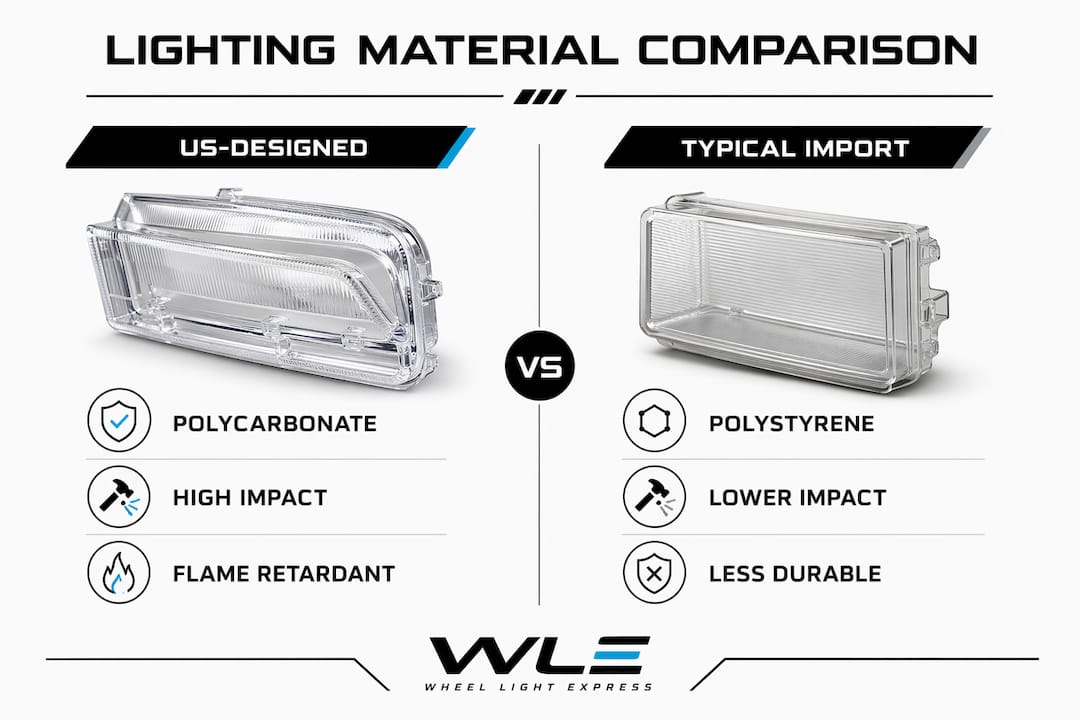
Modular component design is another practical advantage of US-made products. When a component fails, you replace that component. Sealed imported units require full fixture replacement, which costs more and generates more waste. For enthusiasts who invest in their builds, repairability is a real long-term value.
Pro Tip: Check whether a lighting product lists its diffuser material in the spec sheet. If it says polystyrene or omits the material entirely, that is a strong signal the product was not designed to US durability standards.
Why is the collaborative design approach important in US automotive lighting?
US lighting design uniqueness comes partly from how products are developed. American manufacturers work with engineers and designers together from the earliest project stages, rather than handing off a finished electrical component to a stylist at the end. This integrated approach treats lighting as a foundational system, not a decorative add-on. The difference in outcome is visible in the final product.
Collaborative development allows lighting to support circadian rhythm considerations, material character, and the specific ambiance a vehicle owner wants to create. A designer working alongside an electrical engineer can specify the exact color temperature, diffusion quality, and mounting geometry that serves both function and aesthetics. That conversation does not happen when a product is mass-produced overseas and imported without context.
The influence of this approach shows up in the broader American design culture. Designers like Lindsey Adelman and Gabriel Hendifar have built careers around the idea that lighting integrates electrical engineering with sculptural artistry to amplify human experience. That philosophy filters into automotive lighting through the same collaborative process. The result is products that feel considered rather than generic.
For vehicle owners, this matters in three specific ways:
- Aesthetic integration: Lighting designed alongside the vehicle’s visual identity fits more naturally than a product designed for a generic market
- Functional precision: Engineers and designers agreeing on output levels and color temperatures produces better driver comfort and visibility
- Custom solutions: Bespoke design processes allow for wire harnesses, LED strip configurations, and mounting systems tailored to specific vehicle models rather than one-size-fits-all kits
How does US lighting design philosophy improve automotive customization?
The practical benefits of American lighting design show up directly in your customization options and daily driving experience. US-designed automotive lighting combines durability, aesthetics, and function in ways that affect both how your vehicle looks and how comfortable it is to drive.
Here is how the design philosophy translates into real-world advantages for enthusiasts:
-
Flicker-free output for driver comfort. IEEE 1789 compliance means the light you see inside your vehicle does not cycle at frequencies that cause eye strain or fatigue. On long drives, that matters more than most owners realize until they switch from a non-compliant product.
-
Modular upgrades without full replacement. US-designed systems are built to be serviced at the component level. You can upgrade an LED strip, replace a wire harness, or swap a diffuser without pulling the entire fixture. That flexibility is central to how enthusiasts build and refine their vehicles over time.
-
Material durability under real automotive conditions. Polycarbonate diffusers and properly rated wire harnesses hold up to vibration, temperature swings, and moisture exposure. Imported alternatives often degrade within one to two seasons of use in demanding conditions.
-
Low-glare optics for interior and exterior applications. Dark optics principles use deep recess, matte finishes, and geometric textures to conceal the LED source and reduce reflectance. Inside a vehicle cabin, this creates a calmer visual environment. On the exterior, it produces a cleaner, more intentional aesthetic.
-
Stylistic identity through lighting. Lighting is one of the most visible customization choices on any vehicle. Products designed with US standards and collaborative design processes give you more control over color, intensity, and placement than generic imports allow.
Key Takeaways
US-designed automotive lighting stands apart because it is built to meet layered American safety standards, uses superior materials, and is developed through collaborative design processes that prioritize both function and aesthetics.
| Point | Details |
|---|---|
| Regulatory compliance | US lighting meets NEC Article 725, IEEE 1789, and Title 24 standards that most imports do not satisfy. |
| Material superiority | Polycarbonate diffusers offer UL-rated flame retardance and impact resistance that polystyrene cannot match. |
| Low-glare optical design | Dark optics principles conceal LED sources and reduce reflectance for better driver comfort and cleaner aesthetics. |
| Collaborative development | US manufacturers integrate engineers and designers early, producing lighting that fits vehicle identity rather than generic specs. |
| Modular repairability | Component-level design extends product life and supports ongoing customization without full fixture replacement. |
What I have learned from working with US versus imported lighting
The single biggest mistake I see enthusiasts make is treating lighting as a commodity purchase. They compare lumen counts and prices, pick the cheaper option, and then wonder why the product looks off, flickers under certain conditions, or fails within a year. The differences in American lighting are not marketing language. They are engineering decisions with real consequences.
Working with both US-designed and imported products over the years, the gap in wire harness quality alone is striking. Imported harnesses often use undersized conductors and connectors that corrode quickly in the presence of road moisture. A properly spec’d US harness uses rated connectors and conductor gauges matched to the actual load. That is not visible in a product photo, but you feel it in reliability over time.
The collaborative design approach is also something most buyers never think about until they try to integrate a lighting product into a specific build and find it simply does not fit the way they expected. Products designed with vehicle integration in mind have mounting geometry, connector placement, and output profiles that work with your build rather than against it.
My advice: ask where the product was designed, not just where it was made. Design origin tells you which standards shaped the product from the start. That question alone will filter out most of the low-quality options on the market.
— Christopher
Explore Wheellightexpress automotive lighting built to US standards
Wheellightexpress designs every product in Louisiana, which means the standards, materials, and design philosophy described in this article are built into what you receive. The wire harnesses are spec’d for real automotive loads. The LED strips are designed for the vehicle conditions you actually drive in. If you are ready to upgrade with products that reflect the benefits of American lighting design, the aftermarket lighting collection covers everything from wheel light rings and strips to replacement harnesses and interior lighting. Financing options are available, so you can build the way you want without waiting. Every purchase comes with a satisfaction guarantee.
FAQ
What makes US-designed automotive lighting safer than imports?
US-designed lighting complies with NEC Article 725, IEEE 1789 flicker standards, and UL material certifications that most imported products do not meet. These standards reduce fire risk, electrical failure, and driver fatigue caused by flicker.
Why do polycarbonate diffusers matter in automotive lighting?
Polycarbonate meets UL 94 V-0 flame retardance and resists cracking, shattering, and yellowing under heat and impact. Polystyrene, the common import alternative, degrades quickly under automotive conditions.
What is dark optics design in automotive lighting?
Dark optics uses deep recessed geometry, matte black interiors, and engineered louvers to conceal the LED source and reduce glare. The result is a calmer visual environment inside the cabin and a cleaner exterior appearance.
How does modular design benefit vehicle owners long term?
Modular US-designed lighting allows component-level repairs and upgrades, meaning you replace only what fails rather than the entire fixture. This extends product life and supports ongoing customization as your build evolves.
Where does Wheellightexpress design its automotive lighting products?
Wheellightexpress designs all products in Louisiana, ensuring they are built to US electrical and material standards from the start. The wheel light ring and strip and wire harness components reflect that domestic design commitment.