
If you’re replacing a burned-out factory bulb, keep the factory wiring intact. If you’re installing high-power LEDs, rock lights, or other accessories, use a dedicated aftermarket harness with its own fuse and relay. Tapping into factory circuits for anything beyond stock output risks tripping CANbus warnings and, per NHTSA’s interpretation letters, running afoul of FMVSS No. 108 impairment rules.
TL;DR:
- Use a dedicated aftermarket harness with a fuse and relay for high-power LED and accessory lights to prevent voltage issues and diagnostic warnings.
- Opt for heavy-gauge, pure copper wiring and sealed connectors to ensure reliability, resist corrosion, and avoid overheating or flickering problems.
- Always verify your vehicle’s connector type, pin count, and whether it has CANbus monitoring before selecting or installing a wiring harness.
- Keep factory wiring intact when restoring original functions or fixing stock components, reserving upgraded harnesses for high-current, off-road, or auxiliary lighting setups.
- Check that the harness gauge is specified on packaging; if not, consider that a warning sign before proceeding with a purchase.
Table of Contents
- Factory Wiring vs a Dedicated Aftermarket Harness: A Quick Comparison
- Why Wire Gauge, Materials, and Connectors Actually Matter
- Picking and Installing the Right Harness Without Guesswork
- What NHTSA Rules Mean for Owners Adding Lights
- How U.S.-Designed Harnesses Address These Problems in Practice
- Balancing Originality, Reliability, and Your Upgrade Goals
- Ready for a Harness Built to Handle the Upgrade?
- Sources
- FAQ
Factory Wiring vs a Dedicated Aftermarket Harness: A Quick Comparison
Your factory harness was built to do one job well: run the lights your vehicle shipped with, at the loads the manufacturer designed for. It uses connectors molded to match your specific modules, sealed at the factory, and tested against a spec sheet before your vehicle ever left the plant. That precision is exactly why OEM harnesses hold up so well for simple repairs: if you’re swapping a headlamp bulb or fixing a broken clip, the factory harness is already correct.
The problem shows up when you ask factory wiring to do more than it was built for. Stock circuits are sized for stock bulbs, not a bank of high-output LEDs pulling several times the current. Push past that limit and you get voltage drop, overheating connectors, or a dash full of warning lights you didn’t expect.
A dedicated aftermarket harness solves that by giving your new lights their own circuit entirely, fed straight from the battery through a fuse and relay, rather than borrowing power from a factory line that was never sized for the extra draw.
Factory wiring gives you:
- Exact-fit connectors that match your vehicle’s modules without adapters.
- Factory sealing and weatherproofing already validated for your vehicle.
- Guaranteed compatibility with onboard diagnostics and warning systems.
A dedicated aftermarket harness gives you:
- Heavier gauge wiring sized for the actual current your new lights draw.
- Relay and fuse isolation, so accessory loads never touch sensitive factory circuits.
- Simpler splicing and routing for multiple lights run off one power source.
The decision rule is straightforward. If you’re restoring a vehicle, preserving resale value, or just fixing what broke, stay factory. If you’re adding auxiliary lighting, running off-road, or installing anything with real current draw, a dedicated wire harness built for the job protects both your new lights and everything else on the vehicle’s electrical system.
Why Wire Gauge, Materials, and Connectors Actually Matter
The gauge of a wire determines how much current it can carry without overheating, and that number matters more with LEDs than most people expect. A single stock bulb might draw under 2 amps. A full set of high-density LED wheel lights or rock lights can pull several times that, especially when you’re running multiple zones off one line. Undersized wire under that load heats up, and heat is the enemy of every connector and splice in the circuit.

Voltage drop compounds the problem. The longer and thinner the wire run, the more voltage gets lost before it reaches the light, which shows up as dimmer output, flickering, or LEDs that never hit their rated brightness. This is why choosing the correct AWG for accessory lighting is a real engineering decision, not a detail to skip.
Material matters just as much as size. Pure copper conducts better and resists corrosion far more effectively than copper-clad aluminum, often shortened to CCA. CCA wire looks similar on the spool but carries less current for the same gauge and corrodes faster at connection points, which is a common reason cheap aftermarket harnesses fail years before the vehicle does.
Connectors tell a similar story. Factory connectors use gaskets and precise pinouts to keep moisture and vibration from creating intermittent faults. Generic aftermarket plugs without proper sealing are a frequent source of the flicker, dropout, and corrosion issues that get blamed on the LEDs themselves when the real fault is the connector.
- Undersized wire and CCA construction both raise resistance, which shows up as heat, voltage drop, and dimmer lights.
- Sealed, gasketed connectors resist the corrosion and vibration faults that plague generic plugs.
- A relay-switched, fused harness keeps the full accessory load off the factory circuit and off the factory switch entirely.
Pro Tip: Check the gauge stamped on any harness you’re considering. If it isn’t listed anywhere on the packaging or product page, treat that as a warning sign, not an oversight.
Picking and Installing the Right Harness Without Guesswork
Getting the fitment right before you cut a single wire saves hours of troubleshooting later. Start by identifying your vehicle’s connector type and pin count, since that determines whether you need a direct-fit harness or an adapter to bridge the gap.
- Confirm your vehicle’s factory connector type and pin count before ordering any harness or adapter.
- Check whether your vehicle uses CANbus monitoring on the circuit you’re tapping. If it does, plan for a decoder or load resistor to prevent bulb-out warnings.
- Watch for flicker, dash warning lights, or bulb-out messages during a test run before finishing the installation.
- Route the new harness away from heat sources and moving parts, mount the relay close to the power source, and size the fuse to the harness rating rather than guessing.
- Ground the new circuit to clean, bare metal rather than daisy-chaining off an existing ground point that may already be near capacity.
Modern trucks and SUVs often treat a burned-out or mismatched bulb as a fault, throwing a warning light even when the new LED is working fine. Diagnosing CANbus behavior before you buy tells you upfront whether your vehicle needs a decoder, which saves a return trip to the parts counter.
Pro Tip: Always disconnect the battery before major wiring work, and test a new harness with a bench power supply or a fused jumper first. That way, if something is wired wrong, you find out before your vehicle’s modules do.
What NHTSA Rules Mean for Owners Adding Lights
Federal rules on vehicle lighting exist to keep required lamps, headlights, taillights, turn signals, working the way drivers around you expect them to. NHTSA’s interpretation letters explain that the “make inoperative” prohibition in FMVSS No. 108 applies directly to manufacturers, dealers, and repair businesses. Individual owners aren’t covered by that specific federal prohibition, but state laws can still restrict what you’re allowed to install, so the practical bar for owners is higher than “not federally regulated” might suggest.
The test that shows up again and again in NHTSA’s interpretations is whether supplemental lighting impairs the effectiveness of your required lamps. That’s a broader question than legality alone. If your accessory lights are bright enough, positioned wrong, or flashing in a way that could be confused with an emergency vehicle or a turn signal, you’re on the wrong side of that test regardless of what your state’s exact statute says.
A recurring theme across NHTSA’s letters is the “impair effectiveness” test rather than a fixed list of banned products. That means the safest approach is functional, not just legal: keep auxiliary lights steady-burning rather than flashing, avoid amber or red hues near required lamps, and confirm your new lights don’t outshine or visually compete with the lamps drivers rely on to read your intentions.
- Stick to steady-burning auxiliary lights rather than flashing or strobing functions.
- Avoid colors and positions that could be mistaken for required lamps like brake lights or turn signals.
- Test your installation at night, from behind and from the side, before considering the job finished.
How U.S.-Designed Harnesses Address These Problems in Practice
Everything covered so far, gauge, materials, sealing, relay isolation, is exactly what separates a harness that lasts from one that doesn’t. Wheel Light Express designs its lighting solutions in Louisiana rather than sourcing overseas, which keeps quality control close to the product rather than several supply-chain steps removed.
That shows up in the details that matter for the electrical concerns above:
- Over-spec wiring harnesses sized above the minimum current draw, leaving headroom rather than running at the edge of the wire’s rating.
- Heavy-duty 2mm brackets and sealed connectors built to resist the vibration and moisture that cause intermittent faults on lesser hardware.
- Many customers appreciate a guarantee backing every kit to help with fitment or performance issues.
- Options to finance your purchase can make installing a properly built harness easier without upfront payment.
None of that replaces good installation practice. It does mean you’re starting from a harness built to the same principles covered in the sections above, rather than one you have to inspect and second-guess before trusting it on your vehicle.
Balancing Originality, Reliability, and Your Upgrade Goals
Keep the factory harness when you’re preserving resale value, matching a restoration to original spec, or dealing with a simple repair where the factory part is guaranteed to fit. There’s no upgrade path that beats leaving well-built OEM wiring alone.
A dedicated harness earns its place the moment your lighting draws real current: high-density LED sets, off-road accessory lights, or any setup where a clean, isolated install matters more than saving a few dollars on wire. That’s where I see the most preventable failures, not from bad LEDs, but from wiring that was never sized for them.
If your vehicle leans heavily on CANbus monitoring or you’re not confident reading a wiring diagram, budget for a professional install. The cost of a shop visit is small next to the cost of chasing an intermittent fault for months.
— Christopher
Ready for a Harness Built to Handle the Upgrade?
If you’ve decided your build needs more than factory wiring can safely handle, Wheel Light Express designs its kits around the exact issues covered above: over-spec wiring, sealed connectors, and hardware built to handle sustained current draw rather than just surviving it.
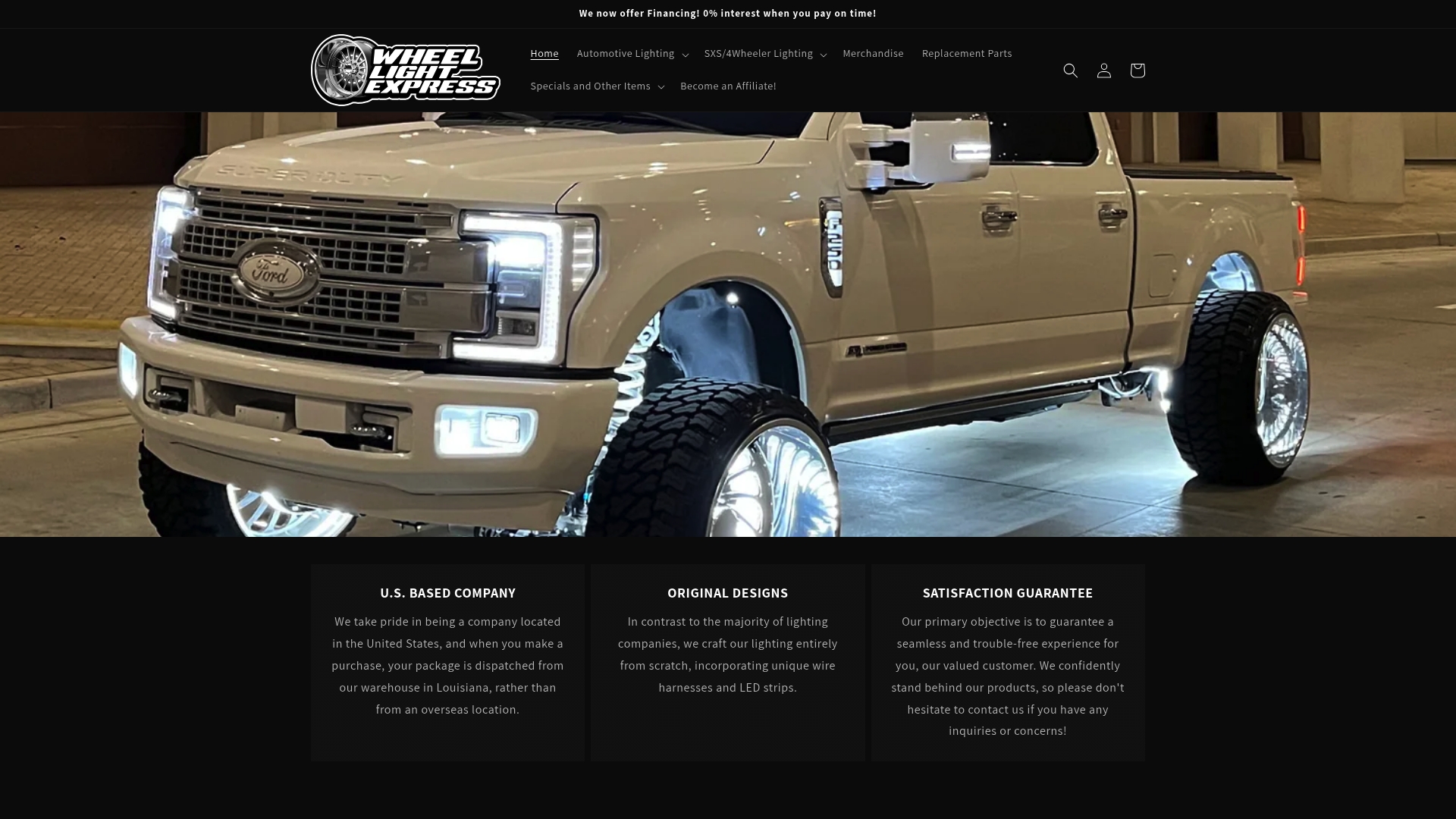
Our Wheel Lights and High Density Wheel Lights collections are built around dedicated harnesses rather than a tap-in wire and a prayer, and our Rock Lights line follows the same approach for off-road accessory circuits. If you’re not sure which fits your rig, our sizing guide walks through fitment before you order.
| Product line | Best suited for |
|---|---|
| Wheel Lights / High Density Wheel Lights | Wheel-well lighting kits needing a dedicated, over-spec harness |
| Rock Lights / High Density Rock Lights | Off-road accessory lighting with high current draw |
| Portal Lights | Portal-equipped trucks needing sealed, vibration-resistant wiring |
| Solar Powered Cab Lights | Cab lighting without tapping into factory circuits, $399 |
- Every kit ships with a harness engineered above minimum spec, not at the edge of it.
- Financing options are available if you’d rather spread the cost than skip the upgrade.
- A satisfaction guarantee backs the fit and performance of every product line above.
Browse the wheel light collection to find the setup that matches your build, or start with the sizing guide if you’re still confirming fitment.
Sources
This guide draws on NHTSA’s interpretation letters on supplemental lighting and FMVSS No. 108, along with a technical harness comparison on OEM versus aftermarket wiring quality.
- NHTSA interpretation: front color-changing light (make inoperative guidance)
FAQ
What is the best aftermarket wiring harness for LED lighting?
The best option is a dedicated harness with its own fuse and relay, sized above the current draw of your lights rather than at the edge of it. Look for pure copper conductors and sealed connectors rather than copper-clad aluminum and generic plugs, since those material differences directly affect resistance and long-term reliability.
Are all aftermarket radio and lighting harnesses the same?
No, aftermarket harnesses vary widely in wire gauge, connector sealing, and whether they include relay and fuse protection. Fitment also differs by vehicle, so a harness built for one make and model often won’t plug directly into another without an adapter.
Are wiring harnesses universal across vehicles?
Wiring harnesses are not universal. Connector pin counts, plug shapes, and CANbus requirements vary by manufacturer and model year, which is why checking your vehicle’s specific connector type before ordering a harness avoids a mismatched purchase.
How do I know what wiring harness I need?
Start by identifying your vehicle’s factory connector type, pin count, and whether the circuit you’re using is monitored by CANbus. From there, match the harness gauge to your lights’ current draw and confirm whether you need a decoder or load resistor to prevent false warning messages.
Do aftermarket lighting harnesses affect vehicle warranty coverage?
Adding aftermarket wiring can affect warranty coverage if the installation damages a factory circuit or module, though this depends on your manufacturer’s specific terms. Using an isolated, relay-switched harness that never taps into factory wiring is the safest way to avoid that risk.