
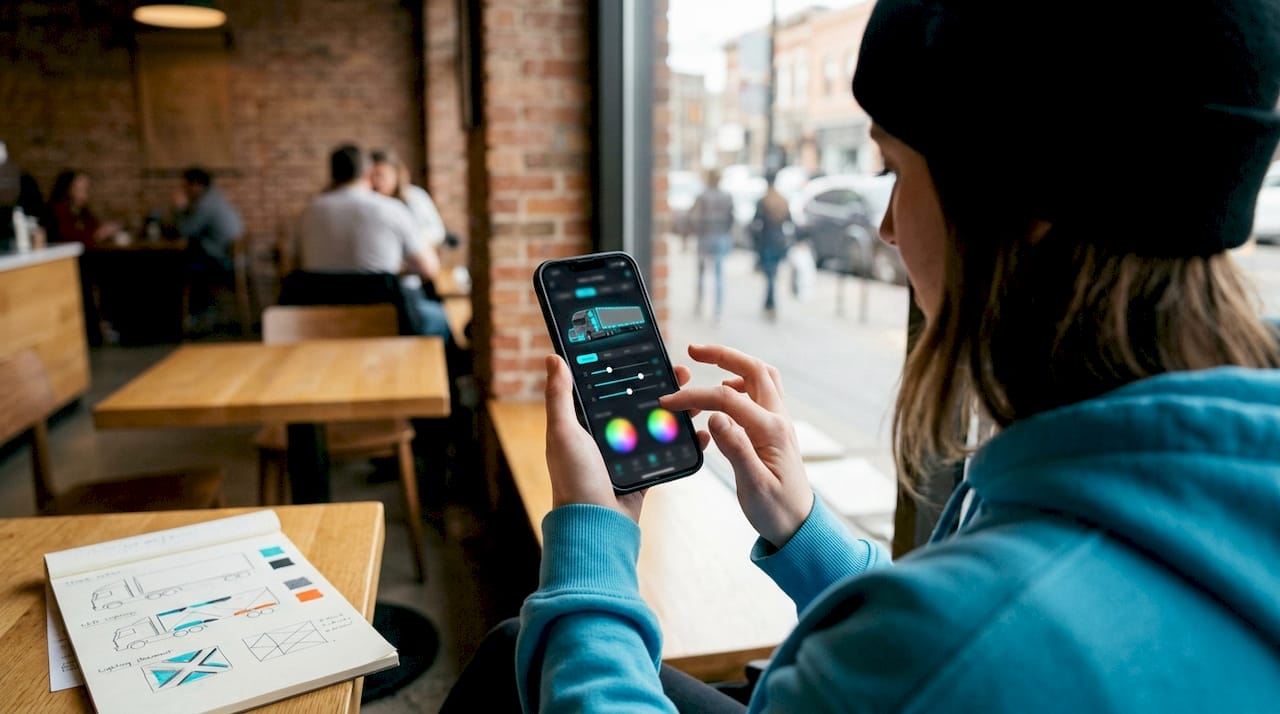
App-controlled truck LEDs are lighting systems that let you change colors, patterns, and brightness on your truck directly from a smartphone app. The role of app-controlled truck LEDs goes well beyond looks. These systems combine remote lighting control with real safety benefits, giving truck owners a single interface to manage everything from underbody glow to wheel well lighting. Modern kits connect via Bluetooth 4.0 or Wi-Fi and support voice assistants like Google Assistant, Alexa, and Siri. Wheellightexpress designs its LED strips and wire harnesses in Louisiana specifically for truck owners who want original, reliable results.
What features do app-controlled truck LED systems typically offer?
App-controlled LED systems give truck owners access to a feature set that basic wired setups simply cannot match. The core appeal is color range and control depth. Up to 16 million colors, preset options, and music synchronization are standard on advanced kits. That color range means you can match your truck’s paint, your team colors, or a job site’s safety requirements without swapping hardware.
Here is what a well-specified app-controlled LED kit typically delivers:
- Color selection: Access to 16 million colors with a photo match tool that lets you pull a color directly from an image on your phone.
- Music sync: Microphone integration lets the lights pulse and shift in real time with audio, whether you are playing music through your cab speakers or at an outdoor event.
- Preset storage: Save up to 10 custom lighting presets for different contexts. You can store a bright white work mode for job sites and a deep red show mode for weekend events, then switch between them in seconds.
- Voice control: Voice assistant compatibility with Google Assistant, Alexa, and Siri means you can change your lighting without touching your phone while driving.
- Connectivity: Bluetooth 4.0 and Wi-Fi connections keep the app responsive and reduce lag when switching effects.
Pro Tip: Set up your job site preset before you leave home. A bright, neutral white across all zones gives you maximum visibility without fumbling with the app on location.
The app interface itself matters as much as the hardware. User-friendly controls including brightness sliders, effect speed dials, and color wheels make customization fast. The best apps also let you name and organize presets so you are not scrolling through a generic list at 6 a.m.
How do app-controlled truck LEDs improve safety and efficiency?
App-controlled LEDs are not just a styling upgrade. They deliver measurable functional benefits that matter on the road and at work sites.
-
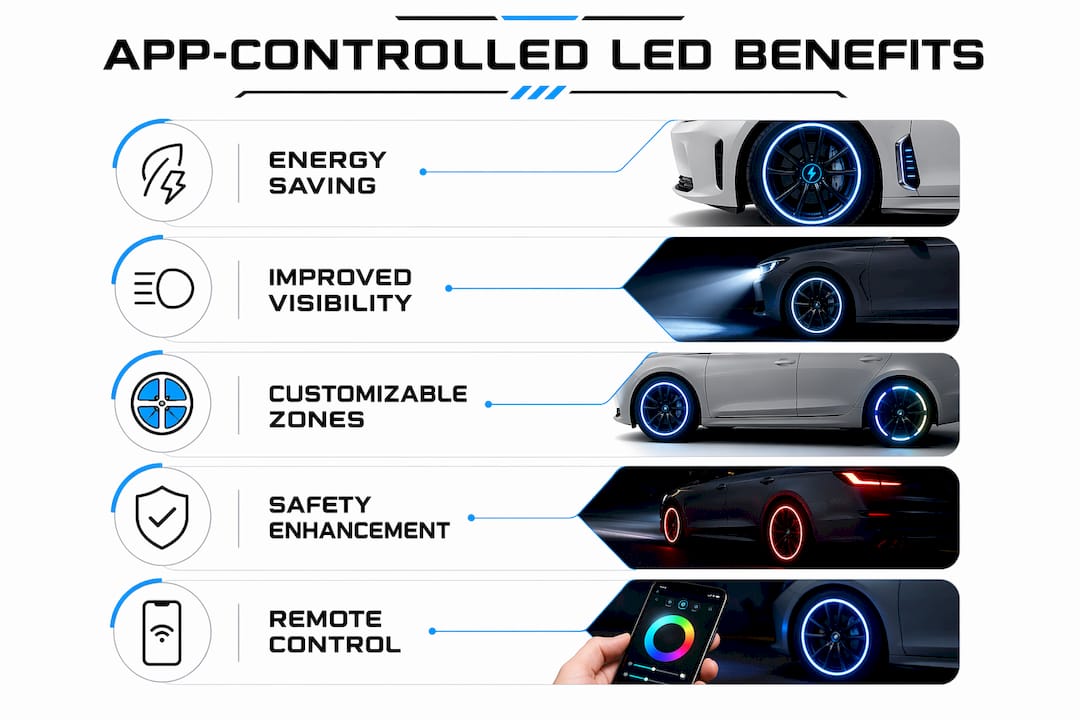
Improved visibility in high-risk zones. LED technology improves vehicle visibility in low-light and high-traffic environments. Brighter, more consistent light output makes your truck more conspicuous to other drivers, which matters most on highways and construction sites at night.
-
Lower power draw. LED systems reduce power consumption compared to incandescent lights. Less draw on your alternator means longer battery life and less strain on your truck’s electrical system over time.
-
Context-aware lighting modes. Industry experts note that demand for lighting that switches between functional road illumination and visual branding is growing in commercial trucking. A single app-controlled system can serve both purposes without any hardware changes.
-
Driver welfare. Consistent, well-placed lighting reduces eye strain during long night shifts. Wheel well and underbody lighting also helps when you are checking tires or loading cargo in the dark.
-
Workplace compliance. Bright, reliable lighting on work trucks signals professionalism and can support safety compliance on regulated job sites where vehicle visibility standards apply.
The combination of energy savings and visibility gains makes app-controlled LEDs one of the few truck accessories that pays back in both safety and operating costs. Truck owners who treat lighting as a functional tool, not just a cosmetic add-on, get the most value from these systems.
What are the technical and reliability considerations?
Reliability separates a satisfying LED setup from a frustrating one. Understanding the key technical factors before you buy saves time and money.
| Factor | What to look for | Why it matters |
|---|---|---|
| Bluetooth version | 4.0 or higher | Stable connection, lower latency |
| Interference risk | External antenna option | Reduces signal drops in metal-heavy cab environments |
| Wiring architecture | Master-slave controller | Syncs all zones under one app |
| Hardware durability | Vibration and moisture resistance | Prevents failure on rough terrain |
| Fail-safe design | Distributed diode output | Maintains brightness if one diode fails |
Bluetooth connections can suffer interference from high-powered wireless devices inside a truck cab. The fix is straightforward: position the controller with a clear line of sight to your phone, or use a kit that supports an external antenna.
Master-slave wiring architectures let multiple lighting zones sync under one app. Budget setups often force you to toggle between separate controllers and apps for each zone. That friction kills the experience fast.
Fail-safe LED architectures distribute output among remaining diodes when one fails. This keeps brightness consistent and avoids the partial failures that can cause issues during roadside inspections.
Pro Tip: Ask specifically about master-slave controller support before purchasing any multi-zone kit. If the answer is vague, the system likely requires multiple apps. That is a setup worth avoiding.
The lighting industry now treats app-controlled LEDs as digital ecosystems, where wiring quality and connectivity are just as important as the LED strips themselves. Wheellightexpress builds its wire harnesses with this in mind, designing each component to work as part of a complete, integrated system rather than a collection of separate parts.
How can truck owners integrate and customize app-controlled LEDs effectively?
Getting the most from app-controlled vehicle lights comes down to planning your zones, understanding your app, and avoiding the most common setup mistakes.
Setting up lighting zones
Start by mapping out the zones you want to cover. The most common setups for trucks include:
- Underbody strips running along the frame rails for ground-level glow
- Wheel well lighting that highlights the tires and rims from inside the arch
- Interior accent strips along door panels, footwells, and the dash
- Bed lighting for work visibility and show aesthetics
Each zone serves a different purpose. Underbody lights on lifted trucks add visual presence and help with low-light maneuvering. Bed lighting is genuinely useful for loading and unloading after dark. Plan your zones before you buy so you purchase the right strip lengths and enough wire harness leads to reach each location cleanly.
Using the app for maximum customization
The photo match color selector is one of the most underused features in most LED apps. You can photograph your truck’s paint, a logo, or any object and pull an exact color match directly into your lighting preset. That level of precision is what separates a polished build from a generic one.
Saving multiple presets for quick access is the single habit that makes app-controlled lighting practical rather than just impressive. Name each preset clearly: “Work White,” “Show Red,” “Night Blue.” You will switch between them without thinking.
Avoiding common pitfalls
The biggest mistake truck owners make is buying multiple single-zone kits and ending up with three separate apps and three separate controllers. A lighting controller designed for vehicles that supports master-slave syncing solves this from the start. One app, one interface, all zones moving together.
Synchronizing lights with music works best when the microphone sensitivity is calibrated to your cab’s volume level. Set it once at your typical listening volume and save that as a baseline. Recalibrate if you change your audio setup.
Key takeaways
App-controlled truck LED systems deliver the most value when you treat them as integrated digital lighting platforms, not just color-changing accessories.
| Point | Details |
|---|---|
| Core function | App-controlled LEDs let you manage color, brightness, and effects from one smartphone interface. |
| Safety benefit | LED systems improve vehicle visibility and reduce power draw compared to incandescent alternatives. |
| Reliability factor | Master-slave wiring and fail-safe diode architecture prevent the most common performance failures. |
| Customization depth | Photo match selectors and preset storage let you build precise, repeatable lighting setups for any context. |
| Installation priority | Plan your lighting zones and wire harness routing before purchasing to avoid multi-controller setups. |
My take on where app-controlled truck lighting is actually headed
The conversation around smart truck lighting tends to focus on color options and app features. That is the right starting point, but it misses the bigger shift happening in the industry.
The truck owners getting the most out of these systems are not the ones with the most colors. They are the ones who treat lighting as a functional layer of their build. A well-planned LED setup with clean wire harness routing, a single master controller, and three or four well-named presets is more useful every day than a system with 50 effects and no organization.
Connectivity is still the weak point across the category. Bluetooth interference in metal-heavy cab environments is a real problem that most product listings understate. I have seen setups where the controller was mounted behind a steel panel and the connection dropped every time the owner closed the door. Antenna placement and controller location deserve as much attention as strip quality.
The brands and builders who get this right are treating LED strip applications as an engineering problem, not just a styling one. That means thinking about thermal management, vibration resistance, and electrical integration from the start. Wheellightexpress’s approach of designing wire harnesses and strips together as a system reflects exactly that thinking.
The future of this category is tighter integration with vehicle electronics, not just more colors. Truck owners who invest in well-engineered, app-connected systems now will be better positioned as that integration deepens.
— Christopher
Wheellightexpress LED solutions for your truck build
Wheellightexpress designs every product in Louisiana for truck owners who want reliable, original lighting that performs as well as it looks.
The wheel light rings and strips are built for full app compatibility and come with the wire harness leads you need for a clean, integrated install. Every kit is backed by a satisfaction guarantee, so you are not taking a risk on quality. Wheellightexpress also offers financing options, which means you can build out your full lighting setup without paying everything upfront. If you need replacement components, the wire harness leads are available separately to keep your system running without a full kit replacement. Browse the full catalog at Wheellightexpress and find the right fit for your truck.
FAQ
What is the role of app-controlled truck LEDs?
App-controlled truck LEDs let owners remotely manage lighting color, brightness, and effects via smartphone, combining vehicle customization with practical benefits like improved visibility and energy efficiency.
How many colors do app-controlled LED kits support?
Most advanced kits support up to 16 million colors, along with preset storage, music sync, and photo match color selection for precise customization.
Do app-controlled LEDs work with voice assistants?
Yes. Many modern LED kits connect via Bluetooth 4.0 or Wi-Fi and support hands-free control through Google Assistant, Alexa, and Siri.
What causes Bluetooth connection drops in truck LED systems?
High-powered wireless devices and metal cab structures interfere with Bluetooth signals. Positioning the controller with a clear line of sight to your phone, or using an external antenna, resolves most connection issues.
What is a master-slave wiring setup for truck LEDs?
A master-slave architecture lets multiple lighting zones sync under one app and one controller, eliminating the need to manage separate apps for each zone in a multi-zone install.
Recommended
- Remote Control Lighting Trucks: What You Need to Know – Wheel Light Express
- Truck Lighting Kit Components Explained for Enthusiasts – Wheel Light Express
- LED Strip Applications for Custom Vehicles: 2026 Guide – Wheel Light Express
- Custom Lighting Integration Explained for Car Enthusiasts – Wheel Light Express