

Rock Lights for Trucks: What 4, 8, or 12–20+ Actually Cover
Most trucks land on one of three counts: 4 lights for the wheel wells, 8 for the wheel wells plus the rails or under-cab area, and 12 to 20+ for near-full underbody coverage. Vehicle size, LED intensity and density, and how you plan to use the lights decide which one fits. Keep them steady-burning and review NHTSA’s FMVSS No. 108 impairment rules before you drive on public roads.
TL;DR:
- A truck with a shorter bed can use two lights per wheel well plus four under the cab; lifted trucks need frame rows to fill gaps.
- When mounting spots are limited, choose higher density fixtures: one can replace two basic lights, reducing wiring, current draw, and heat sources.
- Add every fixture’s wattage or amp draw, then choose a fused feed and wire gauge rated above the total; large kits can drain parked batteries.
- Keep rock lights steady burning, avoid colors resembling emergency vehicles, and check state rules because NHTSA says flashing or extreme brightness can impair required lamps.
Table of Contents
- What 4, 8, and 12–20+ lights actually light up
- Five factors that decide your count
- Best mounting locations and recommended layouts
- How LED size, density, and beam pattern change the math
- Wiring, activation, and installation basics that affect kit choice
- Street use and legality: what NHTSA says and how to stay compliant
- Starter plans by goal
- Heat dissipation and power consumption as your count grows
- Integration tips with other aftermarket lighting systems
- Maintenance tips for longevity, whatever your count
- What we recommend and why
- How Wheel Light Express helps you pick and buy the right kit
- FAQ
- Sources
What 4, 8, and 12–20+ lights actually light up
Kits are sold in set sizes, but coverage depends on placement and the truck. Practitioner guidance reports that most people average eight rock lights, and that kits commonly come in multiples of four. A larger kit may be more than some owners need.
- A small setup: place lights around the wheel wells to accent the wheels and provide a basic ground wash, which can suit a compact truck where you mainly want the tires and fenders to glow.
- A mid-size setup: distribute lights around the wheel wells, with additional lights under the cab if desired. This can provide balanced coverage for a full-size short-bed truck, reaching the rocker area and the ground beside the doors.
- 12 to 20+ lights: spread rows along the frame rails and rocker panels for an even underbody wash. A lifted long-wheelbase rig has a lot of dark space between the axles, and this count fills it.
Think of it by truck. A compact or mid-size truck usually looks complete with 4. A full-size short-bed gets the most from 8. A lifted long-wheelbase truck is where 12 or more starts to make sense, because the extra length and ground clearance create gaps that fewer lights leave dim.
Five factors that decide your count
Skip the guessing and work through these in order. Each one moves your number up or down.
- Purpose. Show builds want a dense, even glow, so they run more fixtures. Utility use, such as lighting the ground around camp, needs brightness over quantity. Trail use sits in between and rewards lights aimed at the spots where you place tires.
- Vehicle size and spacing. A compact truck can be covered with fewer lights than a long-wheelbase crew cab. Plan on roughly even spacing, so a longer truck needs more fixtures to avoid dark stretches.
- LED intensity, density, and beam pattern. A few high-density fixtures can outperform many weak ones. Output depends on both how many LEDs a light carries and how the beam spreads, which we cover below.
- Mounting obstacles and aiming. Suspension arms, skid plates, and exhaust pieces cast shadows. Sometimes you add a light just to fill a shadow, and sometimes you move one to a cleaner spot.
- Budget and wiring complexity. Every light adds wire length and connectors. A bigger kit may need a bigger harness and more labor, so count the install time as part of the cost.
Pro Tip: Test-fit your lights with tape before you drill or stick anything down. Switch them on at night, step back, and look for dark gaps before you commit to a count.
Best mounting locations and recommended layouts
Where you place lights matters as much as how many you buy. Our guide to rock light placement for trucks and off-road rigs goes deeper, and the basics are below.
- Wheel wells: with one light per well, mount it high in the well and aim it down at the tire and ground. With two, put one toward the front of the well and one toward the rear for an even wash.
- Frame rails and rocker panels: space lights evenly along the rail and angle them slightly outward. Aimed straight down, the glow stays hidden; aimed slightly out, it reflects off the side panels and the ground.
- Full underbody layouts: run two rows, one down each side, and stagger the fixtures so one light’s gap lines up with the next light’s center. That stagger is what removes visible hotspots.
- Mounting method: brackets are the most durable choice for rough use, since they hold through vibration and mud. Magnetic mounts are fast to move but can shift on hard trails. Adhesive works on smooth, clean surfaces and gives up first when things get dirty or hot.
For lifted builds, our lifted truck underglow ideas show full-underbody layouts in practice.
How LED size, density, and beam pattern change the math
Density describes how many LEDs sit in a light, and rows describe how they are arranged. More rows put more light into the same footprint, so one high-density fixture can do the job of two basic ones. That is why a smaller kit of dense lights can beat a bigger kit of weak ones.
Beam pattern shapes the result too. A flood beam spreads wide and soft, which is what you want for an even wash. A spot beam throws a tight, bright circle, which is useful for lighting a specific obstacle but leaves darker edges around it.
Choose higher density when you are short on mounting spots or want brightness without adding wiring. Choose more fixtures when you want a smooth, even glow along a long truck. The tradeoff is simple: uniform wash looks cleaner, while hotspots add contrast and drama.
Wiring, activation, and installation basics that affect kit choice
A solid harness has a fused power feed, a relay, a switch, and weather-resistant connectors. Activation options include keyed power, a manual switch, motion or acceleration triggers, ambient sensors, and remotes. Harness quality matters because thin wire loses voltage over distance, which dims the last lights in the chain and wears out connectors faster.
Plug-and-play harnesses save time and suit most owners. A custom harness gives you control over routing, but it asks for more skill and more time under the truck.
Street use and legality: what NHTSA says and how to stay compliant
NHTSA treats accessory lighting through an impairment test. In its interpretations, aftermarket lights count as auxiliary lighting that FMVSS No. 108 does not directly regulate unless it impairs required lamps, and state laws vary. NHTSA also looks at where a lamp directs its light, how it is activated, and how bright it is. Its interpretations also warn that extreme intensity or flashing patterns can violate the impairment provision, and that flashing amber or strobing can distract other drivers.
- Run lights steady-burning, never flashing or strobing.
- Avoid front-facing colors that mimic emergency lights.
- Keep lights from being mistaken for required lamps.
- Save the full-brightness show for parked or off-road use when you are unsure.
For ticket risks and state-level detail, read our street-legal rock lights guide.
Starter plans by goal
For a minimal accent, choose a 4-pack with one light per wheel well. For a balanced underbody, run 8 lights: two per wheel well plus four under the cab. For full coverage, plan on 12 to 20+ depending on truck length and lift. If you are limited on mounting spots, step up to higher-density fixtures before you add more of them.

Heat dissipation and power consumption as your count grows
Every light you add draws more current and sheds more heat, so a larger setup is a different electrical job than a smaller one. Check the wattage or amp draw printed on your kit, add up the total for all fixtures, and make sure your fused feed and wire gauge are rated above that number with room to spare.
Heat is mostly a mounting problem. LEDs run cooler when they sit against metal that can pull heat away, and they run hotter when buried in dirt, mud, or tight pockets with no airflow. Avoid mounting lights directly beside exhaust components or heat shields.
Power draw matters when the engine is off. A large kit left on at a campsite can drain a battery faster than you expect, so use a switch or keyed circuit and turn the lights off when you are not using them.
Higher-density fixtures help here as well. Because one dense light can replace two basic ones, you often cut total draw, total connectors, and total heat sources. If your alternator and battery are stock, lean toward fewer, better lights rather than the biggest kit you can find.
Integration tips with other aftermarket lighting systems
Rock lights rarely work alone. Many trucks also run wheel lights, portal lights, cab lights, or puddle lights, and the goal is a total look that feels intentional instead of crowded.
Start with color. Pick one main color family and stick with it, because mixed colors across systems fight each other. White across everything is the cleanest and the easiest to keep legal.
Next, balance brightness. If your wheel lights are very bright, your rock lights can be modest and still look right, since the wheel lights already define the wheel wells. In that case you may need fewer rock lights than a stand-alone setup would call for. Browse our wheel lights to see how density options pair with a rock light kit.
Plan the wiring as one system. Give each lighting group its own switch or relay so you can run them separately, and avoid daisy-chaining everything onto one fused feed. Separate circuits let you shut off the underbody lights while keeping the wheel lights on, and they keep a single blown fuse from taking out the whole truck.
Finally, think about shadows. Lights from different systems can hide each other’s gaps. After installing, check the truck at night from several angles, then remove or move any fixture that adds glare without adding coverage.

Maintenance tips for longevity, whatever your count
More lights mean more connections, and connections are where most failures start. A quick routine keeps a large kit reliable.
- Inspect after every trail run. Look for loose brackets, cracked housings, and wires rubbed against the frame. A bigger kit gives you more places to check, so build the habit early.
- Rinse mud and salt off the lenses. Caked dirt traps heat and dims the output. A soft cloth and clean water do the job.
- Check connectors for corrosion. Unplug, look for green or white buildup, and reseat each one. Dielectric grease on the contacts helps keep moisture out.
- Re-secure wiring. Zip ties loosen and wires sag. Keep every run clear of moving suspension parts, the exhaust, and spinning components.
- Test each light. Switch the whole set on in a dark garage and walk around. A dead fixture in a larger setup is easy to miss in daylight.
Plan on a seasonal check even if the truck stays on pavement. Keeping a small kit of spare connectors, fuses, and zip ties in the truck makes quick fixes painless.
What we recommend and why
We favor fewer, better lights over a huge pile of weak ones. Durable mounts, a fused harness, and higher-density fixtures give you more value over the life of the truck than a bigger kit that fails at the first connector. Look for a kit backed by a satisfaction guarantee, since that tells you the seller expects the product to hold up.
— Christopher
How Wheel Light Express helps you pick and buy the right kit
We design our lighting in Louisiana, and we offer several density options and harnesses so you can match a kit to your truck. Ready to choose? Start here:
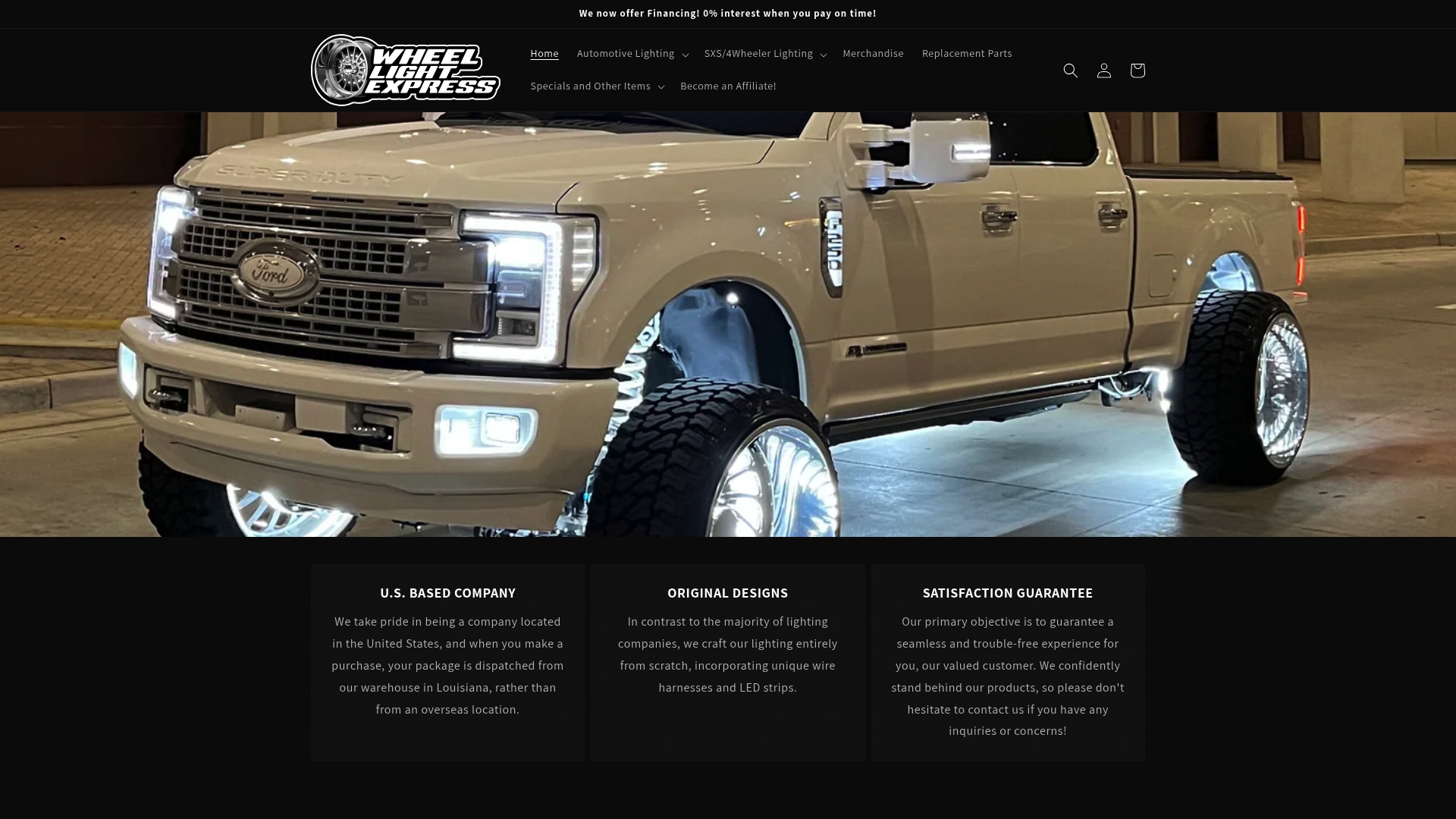
- Browse our Rock Lights collection for kits with harnesses and a satisfaction guarantee.
- Use our Wheel Light Sizing Guide to match lights to your setup.
FAQ
How many rock lights should I get?
Most trucks do well with 8, which is the common average, and many owners need fewer than the largest kits. Pick 4 for a simple accent, 8 for balanced coverage, and 12 or more for a long or lifted truck.
Is 12 rock lights enough?
For most full-size trucks, 12 is plenty and gives near-full underbody coverage. A very long or heavily lifted rig may want more, especially if you use basic-density lights.
Can cops pull you over for rock lights?
Yes, if the lights are flashing, mistaken for emergency lighting, or bright enough to impair other drivers. NHTSA’s interpretations focus on impairment of required lamps, and state laws vary, so check your local rules.
How long can I leave my rock lights on?
LEDs can run for long stretches, but a large kit can drain your battery with the engine off. Use a switch or keyed circuit and turn them off when you are parked and not using them.
Sources
- 571.108 – AMA – Schaye–front color changing light | NHTSA
- Here’s How Many Rock Lights You Need For Your Truck (And Where To Mount Them)