
Wheel well lighting is one of the fastest ways to change how a truck or off-road rig looks and reads on the road. It adds a distinctive glow around the rims, and at low speeds it makes your vehicle more visible to drivers and pedestrians nearby. We designed our wheel light rings and strips right here in the U.S. specifically for owners who want that look without gambling on an overseas kit that fails after one season.
Wheel Light Express builds kits in three formats: wheel light rings, flexible strips, and full remote-controlled harness systems that tie everything together. Before you buy, know your state’s rules on colored or flashing lights facing forward. Check our wheel light legality guide first.
- Rings and strips for rim-wash effects
- Prewired harnesses for clean installs
- Remote or app control depending on kit
Key Takeaways
Wheel well lighting works best when the kit’s IP rating, fused harness, and mounting method all match how hard you actually drive the vehicle.
| Point | Details |
|---|---|
| Choose the right format | Strips give a rim wash, pods handle off-road abuse, rings give the cleanest street look. |
| Plan coverage before buying | Use one 24-inch strip or two to four pods per wheel well, more for deep wells. |
| Protect the circuit | Confirm an inline fuse in the 10 to 15 amp range and a solid frame ground. |
| Match IP rating to use | IP67 covers rain and spray, IP68 suits stream crossings and heavy trail use. |
| Check state rules first | Avoid forward-facing colored or flashing lights on public roads in many states. |
| Buy from a trusted source | Wheel Light Express designs rings, strips, and harnesses in the U.S. with a satisfaction guarantee. |
Table of Contents
- What Types Of Wheel Well Lighting Kits Are Available?
- Where Should You Mount Wheel Well Lights For Full Coverage?
- How Does Wheel Well Light Wiring And Power Work?
- How Durable Are Wheel Well Lights In Wet And Muddy Conditions?
- What Legal And Safety Rules Apply To Wheel Well Lights?
- What Should You Check Before Buying A Wheel Well Lighting Kit?
- What Makes Wheel Light Express A Trustworthy Source For These Kits?
- How Do You Maintain A Wheel Well Lighting Kit And Fix Common Problems?
- Get Wheel Well Lighting Built In The U.S., Not Overseas
- Sources
What Types Of Wheel Well Lighting Kits Are Available?
Three formats dominate the market, and each one solves a different problem. Strip kits use flexible, adhesive-backed LED strips that wrap the inner wheel arch and throw a wash of color across the rim and tire. Pod or rock light kits use individually sealed LED pucks bolted into the well, favored by off-roaders who want rugged ground illumination that survives rocks and mud. Wheel rings mount around the wheel itself for a tighter, more uniform glow that reads clearly even at highway speed.
AURA-style kits, for example, commonly ship four 24-inch silicone-encased LED strips with an inline-fused harness and remote, which is a fairly standard configuration across the strip category. KC HiLiTES takes the rock light route instead, marketing its Cyclone V2 pods as accent lighting built for wheel and undercarriage placement on trucks and Jeeps.
A complete kit typically includes:
- LED strips, pods, or ring elements
- A control box or Bluetooth module
- Inline fuse harness
- Weatherproof connectors and mounting clips
- A remote or smartphone app controller
Pick strips for a rim-wash glow, pods for off-road ground lighting that takes a beating, and rings if you want the cleanest, most symmetrical look on a street truck.
Where Should You Mount Wheel Well Lights For Full Coverage?
Placement decides whether your kit looks intentional or scattered. Mount lights along the inner lip of the wheel well, angled outward so the beam washes across the tire and rim rather than straight down at the ground. Tucking the fixture just behind the wheel liner keeps it protected from direct road spray while still throwing visible light.
- Clean the mounting surface with alcohol before applying adhesive strips.
- Route wiring along the frame rail, away from moving suspension parts.
- Test fit and lighting angle before final adhesion or drilling.
- Zip-tie excess wire to prevent it from reaching the tire.
For most trucks, a 24-inch strip or two to four pods per wheel well gives full coverage. Deeper wells or dual-row effects call for an extra strip or two additional pods. Installation typically runs 45 minutes to two hours per wheel depending on whether you’re running new wire or tapping an existing harness, and our LED strip installation guide walks through the process start to finish.
Pro Tip: Mount lights facing the tire sidewall, not straight up into the wheel liner. Light bouncing off the tire spreads more evenly than light aimed at flat plastic.
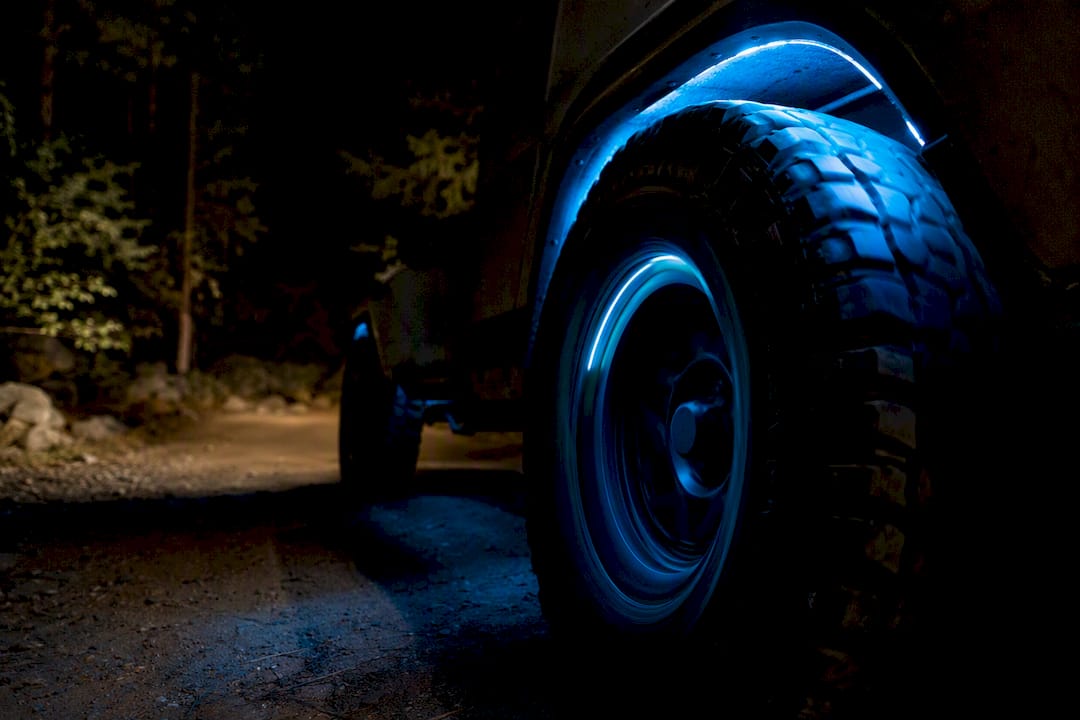
The most common mistake is mounting too close to the tire’s rotating edge, which leads to chafed wires within a few months. The second most common: skipping the test fit and discovering the beam angle is wrong after the adhesive has already cured.
How Does Wheel Well Light Wiring And Power Work?
Most kits run off a straightforward 12V feed pulled from the battery or a switched fuse box slot, and nearly every reputable kit includes an inline fuse to protect the circuit if a wire ever shorts against the frame. That fuse typically sits in the 10 to 15 amp range depending on strip count and LED density. Vendor documentation for AURA-style kits specifically flags the inline-fused harness as the safeguard against overloading the run, and that’s worth checking on any kit before you buy.
If you want the lights tied to your ignition switch instead of running independently, you’ll need a relay rather than routing switched power directly through a low-current remote control.
- Battery or switched 12V feed
- Inline fuse (10 to 15 amp typical)
- Relay for ignition-switched operation
- Solid ground point, preferably to bare metal on the frame
Controller choice affects your wiring plan. A basic RF remote needs minimal extra wire, while an app-based Bluetooth controller usually needs a dedicated control module mounted somewhere dry and accessible. Extension leads longer than 15 feet can introduce voltage drop, so upsize the gauge if you’re running power to a rear axle from a front battery. A dim or flickering strip is almost always a bad ground, not a bad LED.
How Durable Are Wheel Well Lights In Wet And Muddy Conditions?
Wheel wells take a beating from road spray, salt, mud, and gravel, so the IP rating on a kit tells you more than the brand name does. IP67 means the housing resists dust and can survive brief submersion, which covers most rain and puddle scenarios. IP68 goes further, tolerating sustained submersion, a meaningful upgrade if you’re fording streams on a trail rig rather than just driving through a rainstorm.
Housing material matters just as much as the rating. Diecast aluminum pods dissipate heat better and shrug off rock strikes, while silicone-wrapped strips flex around curved wheel arches but rely entirely on sealed end caps to keep water out. A manufacturer manual for a typical rock light kit shows exactly how those sealed connectors and mounting hardware go together, and it’s worth a look before your first install even if you’re not running that exact kit.
- Confirm IP67 minimum; IP68 for serious off-roaders
- Diecast housings survive rock strikes better than plastic
- Sealed connectors matter more than the LED chip itself
- Ask about warranty length before you buy, not after something fails
What Legal And Safety Rules Apply To Wheel Well Lights?
Rules vary significantly by state, and that’s the single biggest thing to check before you install anything. Many states restrict forward-facing colored lights and flashing or strobing modes on public roads, even when the kit itself ships with those modes built in.
- Avoid red or blue output visible from the front in most states
- Skip flashing or strobe modes on public roads
- Dim output at night so you’re not blinding oncoming drivers
- Confirm your local DMV code before your first drive
Our state-by-state legality guide breaks down the details, but this article doesn’t replace checking your own jurisdiction directly.
What Should You Check Before Buying A Wheel Well Lighting Kit?
Run through this list on any product page before you add a kit to your cart:
- Vehicle fitment — confirm the kit is sized for your wheel well depth and wheel diameter.
- Mounting method — adhesive strip, drilled pod, or ring clamp.
- LED brightness and color range — single color, RGB, or full spectrum.
- IP rating — IP67 minimum, IP68 for trail use.
- Controller type — remote, app, or vehicle-switched.
- Harness quality — inline fuse included, connector gauge, extension length.
- Warranty and return policy — length of coverage and who pays return shipping.
Universal kits work fine for most trucks and Jeeps, but a vehicle-specific prewired kit saves an afternoon of routing guesswork if one exists for your model. Before buying, ask the seller directly whether the harness is fused, what the IP rating actually covers, and how warranty claims get handled.
What Makes Wheel Light Express A Trustworthy Source For These Kits?
We design every wheel light ring, strip, and custom harness in Louisiana rather than sourcing a generic overseas kit and slapping a label on it. That means the fit, wiring, and connector quality get checked before a kit ever ships, not after customers start reporting problems.
- U.S.-designed wheel light rings and strips with matching harness options
- Satisfaction guarantee backing every order
- Financing available for buyers who want a complete setup without paying the full cost upfront
How Do You Maintain A Wheel Well Lighting Kit And Fix Common Problems?
Wheel wells are a harsh environment, so a little maintenance goes a long way toward keeping your kit looking sharp for years instead of months. Rinse the strips or pods during regular washes to clear built-up salt and brake dust, since corrosion at the connector is the number one cause of premature failure. Check exposed wiring every few months for chafing where it runs near suspension components or the tire itself.
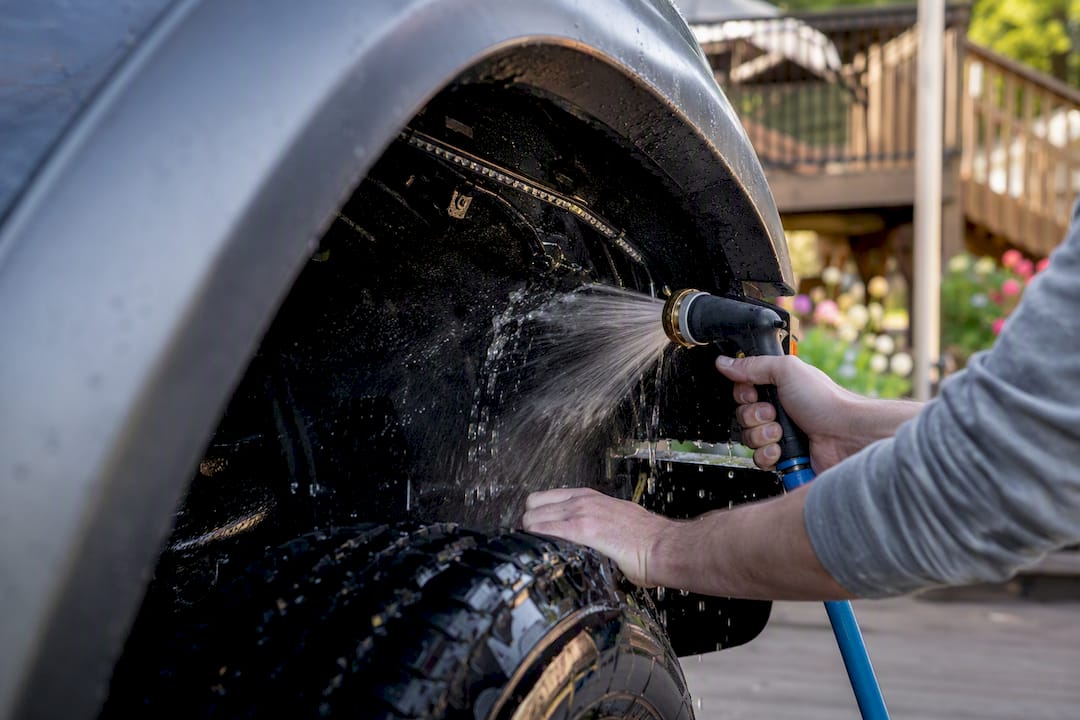
If a light won’t turn on at all, start with the fuse. It’s the single most common failure point, and it’s a five-minute check before you assume the LED itself is dead. Dim or flickering output almost always traces back to a loose or corroded ground connection rather than a failing strip. Disconnect the ground, clean the contact point to bare metal, and reattach it tightly.
Controllers occasionally lose their pairing after a battery disconnect. Most remote and Bluetooth controllers have a simple resync procedure listed in the product manual, and running through that resync should be your first move before assuming the control box itself has failed. If one segment of a strip goes dark while the rest stays lit, look for a nicked wire between segments rather than replacing the whole strip.
Keep connectors dry when disconnecting them for winter storage or vehicle work. Water sitting in an open connector is one of the fastest ways to turn a five-minute fix into a full harness replacement. A dab of dielectric grease on any connector you open goes a long way toward preventing that corrosion in the first place.
A quick note from Christopher
Wheel well lighting is one of those upgrades that looks simple until you’re the one holding a bad kit with a corroded connector six months in. I trust U.S.-designed hardware for exactly that reason: it’s easier to hold a company accountable when the design work happens down the road instead of overseas. Take a look at our sample kits and installation resources before you commit to a setup.
— Christopher
Get Wheel Well Lighting Built In The U.S., Not Overseas
Most wheel well kits on the market get sourced overseas and rebranded, which is exactly why so many owners end up chasing corroded connectors and dead strips within a year. Wheel Light Express designs every ring, strip, and harness in Louisiana, so the wiring quality and connector sealing get built in from the start rather than discovered the hard way.
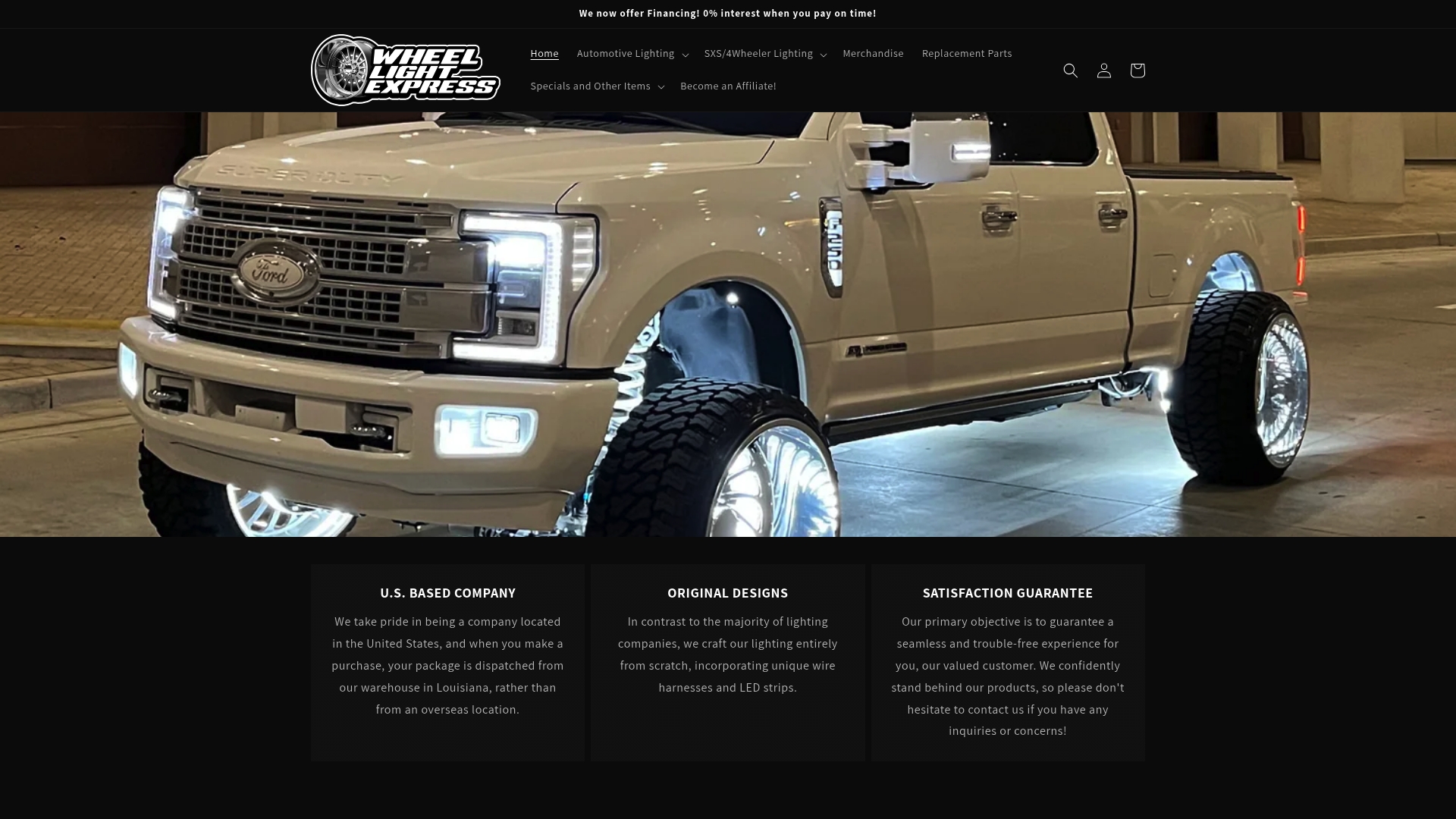
That approach fits truck and off-road owners who want a kit that survives real driving conditions and comes backed by an actual satisfaction guarantee, not a marketplace return policy. If the upfront cost is the holdup, financing options let you get a complete setup installed now and pay it down over time. Head to the wheel light ring and strip page to pick a kit sized for your vehicle and get it on order today.
Sources
- AURA Wheel Well LED Lighting Kit 24-Inch Multi-Color Strips x 4 - Remo – Milky Motorsports
- TYPE S wheel well rock lights user manual (PDF)