
Most portal light kits run $180 to $500 for the hardware alone, and a full installed project typically lands between $250 and $800 once labor, wiring, and controls are factored in. The spread depends on LED density, harness complexity, and whether a shop or a weekend afternoon handles the install. We break down each cost driver below, including how our own portal light lineup fits into these bands.
TL;DR:
- Kit prices rise with LED density and color capability; RGBW, app controls, sealed hardware, and separately priced controllers push costs toward premium tiers.
- Shops charge $60 to $120 per hour; basic installs take 1 to 3 hours, while custom RGBW work can require 4 to 6 hours.
- For CAN bus equipped trucks, verify compatibility before buying: mismatched kits can trigger dashboard errors or flickering, while custom harness work adds labor.
- Request itemized quotes showing kit density, harness type, labor hours and rate, warranty, shipping, and tax, then compare total cost per wheel.
- DIY suits straightforward wiring, but professional installation is more worthwhile for CAN bus trucks or dense RGBW kits, where mistakes are costly to undo.
Table of Contents
- Typical Price Ranges and What Drives Them
- Typical Kit Examples and Real Price Points
- Installation and Labor: How Shop Rates and Vehicle Complexity Change Cost
- How to Budget, Get Itemized Quotes, and Evaluate Offers
- A Straight Answer on Pricing and What We Stand Behind
- Wheel Light Express: Portal Lights Collection and Resources
- FAQ
- Sources
Typical Price Ranges and What Drives Them
Portal light pricing follows the same logic as other car ambient lighting projects: kit cost, installation labor, and wiring complexity each add their own line item. According to Cost Insider’s breakdown of car ambient lighting, kit costs generally range from $20 to $300, installation labor runs $75 to $600, and most complete projects total $150 to $450, with high-end integrated setups climbing past $700.

A basic single-color kit with simple wiring can land near the low end of that range, while a dense RGBW system with app controls and a custom harness pushes toward $700 or more once labor is included, according to Cost Insider.
A few factors consistently move the price:
- LED density per meter: a sparse 14 to 20 LED/m strip costs far less than a 60 LED/m dense strip.
- Color capability: single-color kits are cheaper than RGB, and RGBW adds another jump.
- Housing and waterproof rating: sealed, durable brackets and connectors cost more upfront but hold up better off-road.
- Controllers, remotes, and app modules: these are frequently priced as add-ons, not bundled into the base kit price.
- Shipping and sales tax: these can add a noticeable percentage to the sticker price shown on a product page.
Warranty coverage also factors into sticker price. A kit backed by a longer warranty or a satisfaction guarantee often costs more than a bare-bones import, but it shifts risk away from the buyer if a strip fails early.
Typical Kit Examples and Real Price Points
Shoppers browsing portal light listings will see a few recognizable tiers. An entry-level kit typically uses lower LED density, single-color output, and basic wiring, which keeps the price near the bottom of the kit-cost range. A mid-range RGB kit adds color-changing capability and a remote or basic app control, which pushes the price toward the middle of the band. A premium high-density RGBW kit combines dense LED strips, full color range, app-based control, and heavier-duty brackets, landing at the top of the kit-cost range.
For comparison, a product listing for a portal-branded helmet light shows a regular price of $185, which illustrates that even a single-purpose portal light can sit in the low-to-mid hundreds depending on design and intended use. Wheel-mounted portal kits for trucks and off-road rigs follow a similar logic, just scaled up for size and feature count.
- Entry-level: basic single-color LEDs, simple wiring, minimal hardware.
- Mid-range: RGB color-changing LEDs, remote control, moderate LED density.
- Premium: RGBW LEDs, app control, high LED density, heavy-duty mounting.
Financing is worth checking before you commit to a premium tier. Several lighting retailers offer financing options that spread the cost of a higher-end kit across payments instead of requiring the full amount upfront.
Installation and Labor: How Shop Rates and Vehicle Complexity Change Cost
Labor is often the swing factor between a $250 project and an $800 one. According to Cost Insider, typical labor rates for vehicle electrical work run $60 to $120 per hour, with basic installs taking 1 to 3 hours and full-feature installs requiring 4 to 6 hours.
- A basic single-color install with straightforward wiring often takes 1 to 3 hours, landing between $75 and $360 in labor alone.
- A mid-range RGB install with a controller and moderate routing complexity commonly takes 3 to 4 hours, putting labor around $180 to $480.
- A premium RGBW install with app integration, relays, and custom harness work can run 4 to 6 hours, pushing labor toward $240 to $600.
CAN-bus systems add another layer of cost. Modern trucks route lighting signals through the vehicle’s computer network rather than simple switched circuits, so a kit that isn’t built for CAN-bus can trigger dashboard errors or flickering if installed incorrectly. Our guide to CAN-bus and non-CAN-bus LEDs walks through how to tell which type your truck needs before you buy. When a harness needs relays, fuse taps, or custom splicing to work around CAN-bus quirks, expect labor time, and the bill, to climb.
Pro Tip: Ask any shop how they seal connections and route cable through the chassis. Sealed connectors and properly routed cable prevent the corrosion and chafing that cause most lighting failures after a season off-road.

How to Budget, Get Itemized Quotes, and Evaluate Offers
A clear quote protects you from paying for vague “labor” with no breakdown. Ask every shop for the same line items so you can compare offers apples to apples.
- Kit SKU and LED density, so you know exactly what hardware you’re paying for.
- Harness type (CAN-bus compatible or standard), which affects both parts cost and install time.
- Labor hours quoted and the shop’s hourly rate.
- Warranty length and what it covers.
- Shipping and tax, listed separately from the product price.
Once you have two or three quotes, divide the total by the number of wheels or lighting zones covered. That per-wheel figure makes it much easier to spot a shop padding labor hours or a kit priced high for its feature set.
Pro Tip: If you’re comfortable with basic wiring, our afternoon DIY install guide covers wire gauge and fuse sizing for a straightforward self-install. Professional installation tends to pay off most on CAN-bus-equipped trucks or dense RGBW setups where wiring mistakes are costly to undo.
A Straight Answer on Pricing and What We Stand Behind
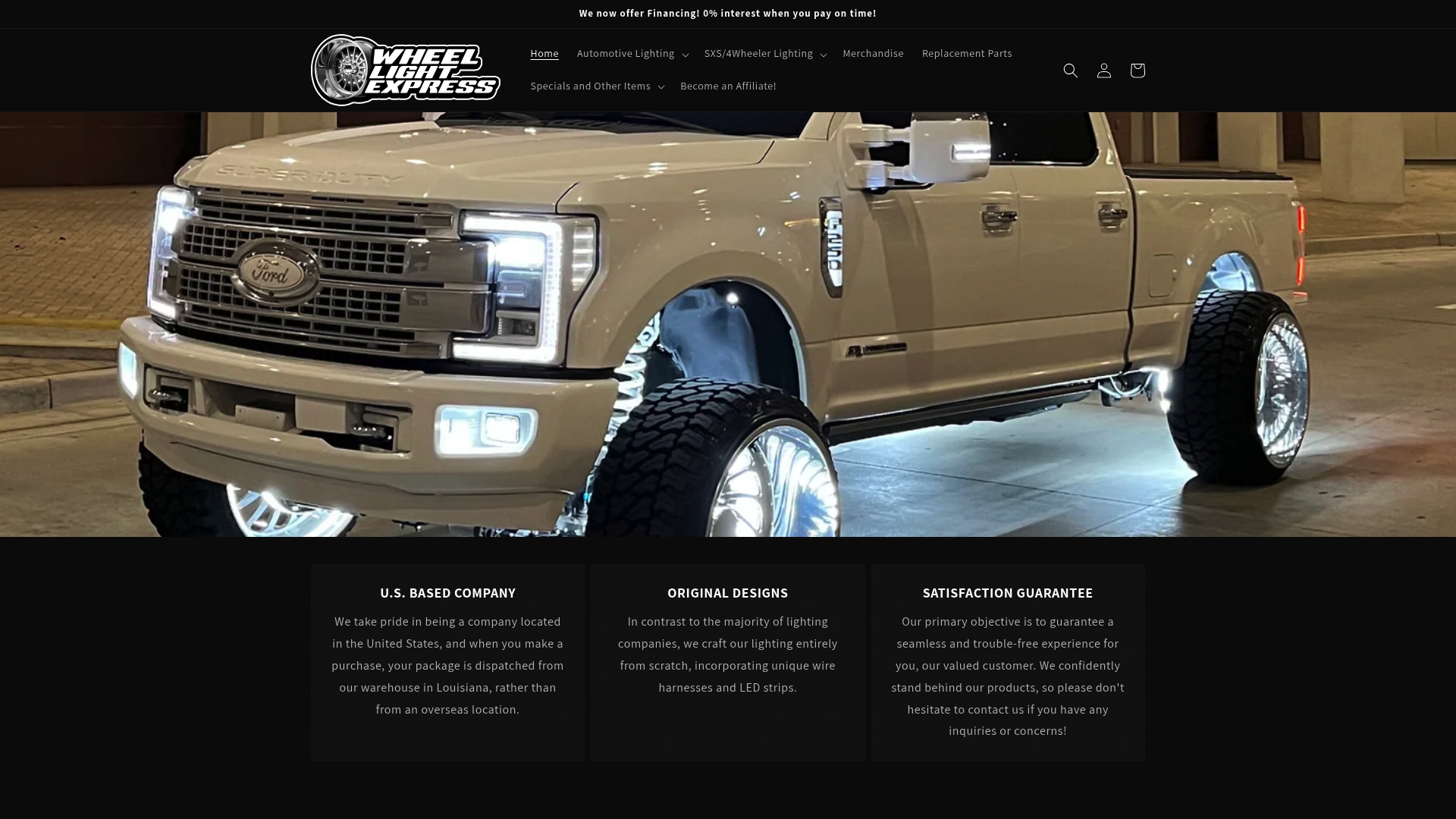
We built this guide the way we’d want it explained to us: kit price separate from labor, with every driver named instead of buried in a vague total. Our portal lights are designed and assembled in Louisiana, not sourced overseas, with wire harnesses built to handle the electrical demands modern trucks place on them.
Every product line we sell is backed by a satisfaction guarantee and financing options for buyers who want a premium setup without paying the full amount at checkout.
— Christopher
Wheel Light Express: Portal Lights Collection and Resources
Before you buy, a couple of resources help you avoid costly fitment mistakes:
- Check our wheel light sizing guide to confirm which kit size fits your wheel setup.
- Review our wire harness guide if you’re unsure how harness quality affects long-term reliability.
If labor rates in your area feel steep, it helps to know that specialized installs across the aftermarket, including coilover installation, commonly run $1,300 to $3,000 for far more involved suspension work, which puts portal light labor costs in perspective. Ready to compare a kit against your budget? Browse our portal lights and check financing at checkout.
FAQ
What is the price of a portal light?
Portal light kits typically cost between $180 and $500 for the hardware, with full installed projects running $250 to $800 depending on LED density and wiring complexity, according to cost data on car ambient lighting. Premium RGBW kits with app control sit at the higher end of that range.
What is a portal light?
A portal light is an LED lighting kit mounted around or near a vehicle’s wheel well or portal axle housing to add a visible lighting accent, often used on off-road trucks and SUVs. Kits range from single-color strips to RGBW setups with app-based color control.
How much does professional installation typically add to the cost?
Labor for installing lighting kits generally covers a wide cost range depending on vehicle complexity and wiring needs, according to Cost Insider. Basic installs are shorter and simpler, while CAN-bus or custom harness work can take significantly more time.
How much do LED lights usually cost?
LED lighting kits for vehicles generally range from $20 to $300 for the hardware alone, with price scaling based on LED density, color capability, and housing quality, according to Cost Insider. Add-ons like controllers or app modules are often priced separately from the base kit.
Does Wheel Light Express offer financing on portal lights?
Yes, financing options are available on our lighting kits, including portal lights, letting buyers spread the cost of a premium setup across payments instead of paying the full amount upfront. Check available plans at checkout on our portal lights collection.
Sources
- Car Ambient Lighting Installation Cost 2026 – Cost Insider
- Portal Bike Helmet Light | Outbound Lighting