

A dust-proof LED strip is defined as an LED lighting strip with an IP rating of 6 for solid particle protection, meaning zero dust ingress is permitted into the strip’s components. That single digit separates a strip that survives an engine bay from one that fails within months. For automotive enthusiasts, understanding what a dust-proof LED strip actually means, not just what a marketing label claims, is the difference between a lasting build and a costly replacement.
What is a dust-proof LED strip and how do IP ratings work?
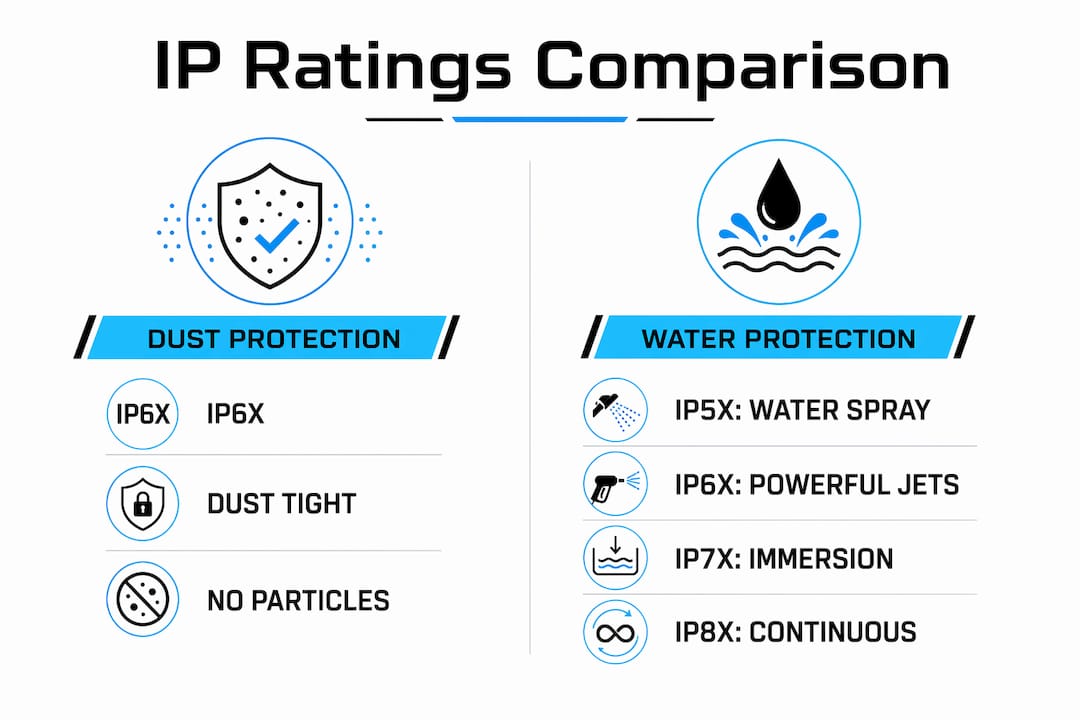
IP stands for Ingress Protection, and the IP code uses two digits to define how well a product resists solids and liquids. The first digit covers solid particles on a scale of 0 to 6. The second digit covers liquids on a scale of 0 to 9. A first digit of 6 means the strip is completely dust-tight, with no dust allowed to enter under any condition.
Every strip rated IP65, IP66, IP67, or IP68 shares that dust-tight first digit. What separates them is the second digit, which tells you how much water the strip can handle. The table below breaks down the most common ratings you will encounter in automotive lighting.
| IP Rating | Dust Protection | Water Protection | Typical Automotive Use |
|---|---|---|---|
| IP65 | Dust-tight | Low-pressure water jets | Engine bay, covered underbody |
| IP66 | Dust-tight | High-pressure water jets | Wheel wells, exposed underbody |
| IP67 | Dust-tight | Temporary immersion up to 1 meter | Permanent exterior mounts |
| IP68 | Dust-tight | Continuous immersion beyond 1 meter | Submerged or fully exposed builds |
The practical takeaway: all four ratings block dust completely. Your choice of second digit depends on how much water exposure your specific vehicle location receives. A strip tucked inside a fender liner faces different conditions than one mounted flush on a rocker panel.
Pro Tip: Always check both digits on the IP label before purchasing. A strip marked “IP6X” without a second digit has no rated water protection at all, even though it is fully dust-tight.
How encapsulation affects heat and why that matters for your build
Dust-proof encapsulation creates a real thermal challenge. Silicone and epoxy coatings trap heat because they act as insulators around the LED diodes. That trapped heat raises the operating temperature of each diode, which shortens its lifespan and can cause color shift over time.
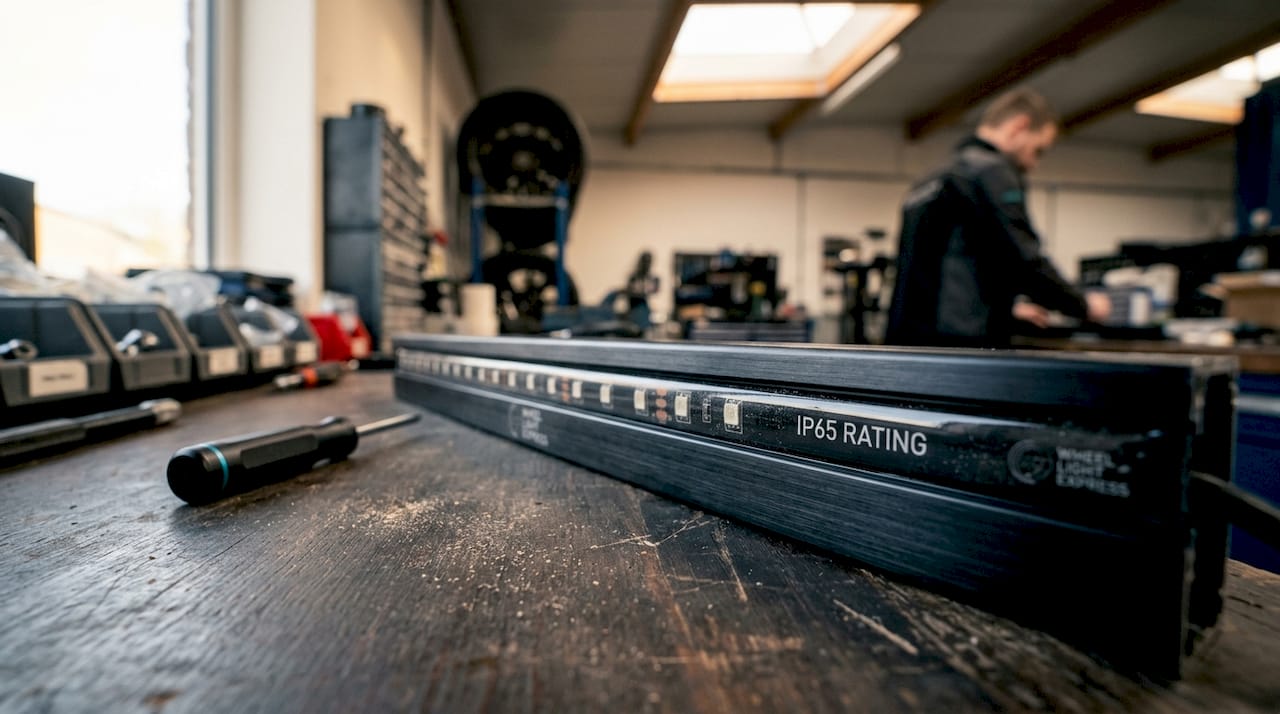
Aluminum channels solve this problem directly. Mounting an encapsulated strip inside an aluminum channel gives the heat a path to escape through the metal body. Without that channel, the strip runs hotter than its rated temperature, and you will notice the light output dimming or the color turning slightly yellow within a year of installation.
Automotive environments make thermal stress worse than most indoor applications. Engine bays routinely reach high ambient temperatures, and vibration compounds the stress on encapsulation materials. Here are the installation practices that protect against early failure:
- Mount dust-proof strips inside aluminum channels wherever space allows, especially in engine bays and along the undercarriage.
- Leave a small gap between the strip and any surrounding bodywork to allow airflow around the channel.
- Avoid running strips at full brightness continuously in high-heat zones. Dimming to 80% reduces heat output significantly.
- Use thermal adhesive tape rated for automotive temperatures when bonding the strip to the channel.
- Check the strip’s rated operating temperature before installation. Most quality automotive strips handle up to 140°F (60°C), but verify this against your specific location.
For detailed guidance on placement and routing, the LED strip applications guide from Wheellightexpress covers vehicle-specific mounting strategies that account for heat zones.
Pro Tip: Run your strips for 30 minutes after installation and feel the aluminum channel. If it is too hot to hold your hand on for 3 seconds, you need better ventilation or a lower drive current.
Why “waterproof” labels are not the same as IP ratings
“Waterproof” is a marketing term, not a technical standard. Vague waterproof claims carry no standardized meaning and tell you nothing about actual protection levels. A strip labeled “waterproof” could be anything from splash-resistant to fully submersible, and you have no way to know without an IP code.
The weakest points on any dust-resistant LED strip are the connectors and cut ends. The factory encapsulation protects the strip body, but the moment you cut a strip or add a connector, you expose unprotected copper and diodes. Cut ends default to IP20 protection, which means no dust or water protection at all.
Watch for these red flags when evaluating LED strip claims:
- No IP code listed anywhere on the product page or packaging.
- Claims like “100% waterproof” or “fully sealed” without a specific IP number.
- IP ratings listed only for the strip body, with no mention of connectors or end caps.
- Products that use heat-shrink tubing alone on cut ends without silicone sealing.
The automotive lighting industry has a specific guide on selecting IP-rated LED lights for vehicle applications that reinforces why standardized ratings matter far more than marketing language. Rely on the IP code. Ignore everything else.
How to choose and install dust-proof LED strips for vehicles
The right IP rating depends on where the strip lives on your vehicle. IP65 is the minimum for covered outdoor and engine bay use, while IP67 is the standard recommendation for permanent exterior mounts exposed to road spray and rain. Anything below IP65 will fail from moisture and debris in an automotive environment.
Matching the IP rating across every component is just as critical as the strip rating itself. Mismatched sealing between the strip, connectors, and power supply is the most common cause of system failure, not the strip itself. A perfectly rated IP67 strip connected to an unsealed IP20 connector is effectively an unprotected installation.
Follow these steps for a reliable dust-proof vehicle LED installation:
- Select the correct IP rating. Use IP65 minimum for covered areas and IP67 for any location exposed directly to road spray, rain, or wheel wash.
- Seal every cut end immediately. Apply neutral-cure silicone to the cut end, then cap it with a rated end cap. Neutral-cure silicone and end caps are mandatory in automotive environments where vibration can pull standard adhesives loose.
- Use IP-rated connectors throughout. Match the connector’s IP rating to the strip. Never use open-wire connectors in exposed locations.
- Mount in aluminum channels. Channels protect the strip from physical impact and manage heat simultaneously.
- Route wiring away from heat sources. Keep wiring looms away from exhaust components and use split loom conduit for protection.
- Test before final mounting. Power the strip and check for full illumination before sealing it into position. Fixing a dead section after final mounting wastes hours.
- Inspect seals after the first wash. Road vibration can shift connectors in the first few weeks. A quick inspection after the first high-pressure wash confirms your seals held.
Pro Tip: Use a dedicated wire harness designed for automotive LED strips. Wheellightexpress builds wire harness leads specifically for vehicle lighting, which eliminates the guesswork of matching connectors and power ratings.
For a full walkthrough of the physical installation process, the under-car LED strip guide from Wheellightexpress covers routing, mounting, and sealing in practical detail.
Key Takeaways
A dust-proof LED strip requires an IP rating with a first digit of 6, and reliable automotive installation demands sealed connectors, aluminum channels, and matched IP ratings across every component.
| Point | Details |
|---|---|
| IP first digit defines dust protection | A first digit of 6 means completely dust-tight; all IP65 through IP68 strips share this rating. |
| Second digit determines water resistance | Choose IP65 for covered areas, IP67 for permanent exterior mounts exposed to road spray. |
| Encapsulation traps heat | Mount strips in aluminum channels to prevent diode degradation and color shift. |
| Cut ends lose their IP rating | Seal every cut end with neutral-cure silicone and a rated end cap immediately after cutting. |
| Match IP ratings across all components | Connectors, end caps, and power supplies must match the strip’s IP rating to prevent system failure. |
What I have learned from watching builds fail at the connectors
After seeing a lot of vehicle lighting builds, the pattern that stands out most is this: the strip almost never fails first. The connector does. Builders spend real money on a quality IP67 strip, then connect it with an open-wire barrel connector from a hardware store, and wonder why the strip goes dark after one rainy season.
The thermal side surprises people too. Strips mounted directly to painted metal in an engine bay, without a channel, run noticeably hotter than the same strip in a channel. You can feel the difference with your hand. That heat does not just shorten the strip’s life. It shifts the color temperature, so your cool white starts looking warm yellow within a year, and the whole aesthetic you built falls apart.
My honest advice: treat the IP rating as the floor, not the ceiling. If IP67 is recommended for your location, use it. Do not downgrade to IP65 because it is cheaper or easier to find. The cost difference between IP65 and IP67 strips is small. The cost of pulling apart a finished build to replace failed strips is not.
One more thing worth saying directly: the lighting best practices guide from Wheellightexpress addresses the full system view, not just the strip. That holistic approach is what separates builds that look great for years from ones that need constant maintenance.
— Christopher
Wheellightexpress has the dust-proof strips your build needs
Wheellightexpress designs all of its automotive LED lighting products in Louisiana, which means every product is built with real vehicle environments in mind, not generic indoor use cases.
The wheel light rings and strips from Wheellightexpress carry dust and water protection ratings suited for exterior automotive use, and they pair directly with the brand’s own wire harness system. That means your connectors, wiring, and strips are matched from the start, which eliminates the most common failure point in aftermarket LED builds. Wheellightexpress also offers financing options, so you can complete your build without paying everything upfront. Visit the product pages to find the right strip, harness, and remote for your vehicle.
FAQ
What does “dust-proof” mean on an LED strip?
A dust-proof LED strip carries a first IP digit of 6, meaning no dust particles can enter the strip’s housing under any condition. This rating applies to all strips from IP65 through IP68.
What IP rating do I need for under-car LED strips?
IP67 is the recommended minimum for permanent exterior mounts like underbody strips. IP65 works for covered or semi-protected locations, but direct road spray exposure requires IP67 or higher.
Do I need to seal LED strip cut ends even if the strip is IP67?
Yes. Cut ends default to IP20 after cutting, regardless of the strip’s original IP rating. Seal every cut end with neutral-cure silicone and a rated end cap before installation.
Why do dust-proof LED strips sometimes fail early in vehicles?
The most common cause is a mismatch between the strip’s IP rating and the connectors or end caps used. A high-rated strip connected with unrated hardware loses its protection at every junction point.
Can I use a non-waterproof LED strip inside my vehicle cabin?
Non-waterproof strips work for fully enclosed interior locations with no moisture exposure. For any location near doors, footwells, or trunk areas, use at minimum IP65 to protect against condensation and spills.