

Quality wheel lights last longer because they are engineered with superior thermal management, industrial-grade driver electronics, and tight environmental sealing. These three factors determine whether your lights run for 15 to 20 years or fail within a few seasons. Cheap alternatives cut corners on all three. This guide breaks down the engineering behind wheel light longevity, explains what the industry standards actually measure, and gives you practical steps to protect your investment. Whether you’re building a show vehicle or just want reliable color on your daily driver, understanding why quality wheel lights last longer will save you money and frustration.
Why quality wheel lights last longer: the role of thermal management
Heat is the primary killer of LED wheel lights. The Arrhenius principle states that every 10°C rise in operating temperature roughly halves the lifespan of electronic components. That means a driver running at 85°C instead of 75°C does not just run a little hotter. It ages twice as fast.
Inside an LED driver, the main heat sources are the MOSFET switching transistors, the transformer core, and the ripple current flowing through electrolytic capacitors. Each of these generates heat during normal operation. In a quality driver, that heat is managed through dedicated heat sinks, copper-poured PCB layers that conduct heat away from critical components, and thermal interface materials between the driver IC and the housing. In a cheap driver, those features are absent or minimal.
The practical result is measurable. A well-designed thermal path keeps capacitors and switching components within their rated temperature range, which directly extends the hours they can operate before degradation. Quality wheel lights designed for automotive use account for the fact that wheel wells and undercarriage areas trap heat from both the engine and road friction. That environment demands real thermal engineering, not a generic driver board sourced without specification review.
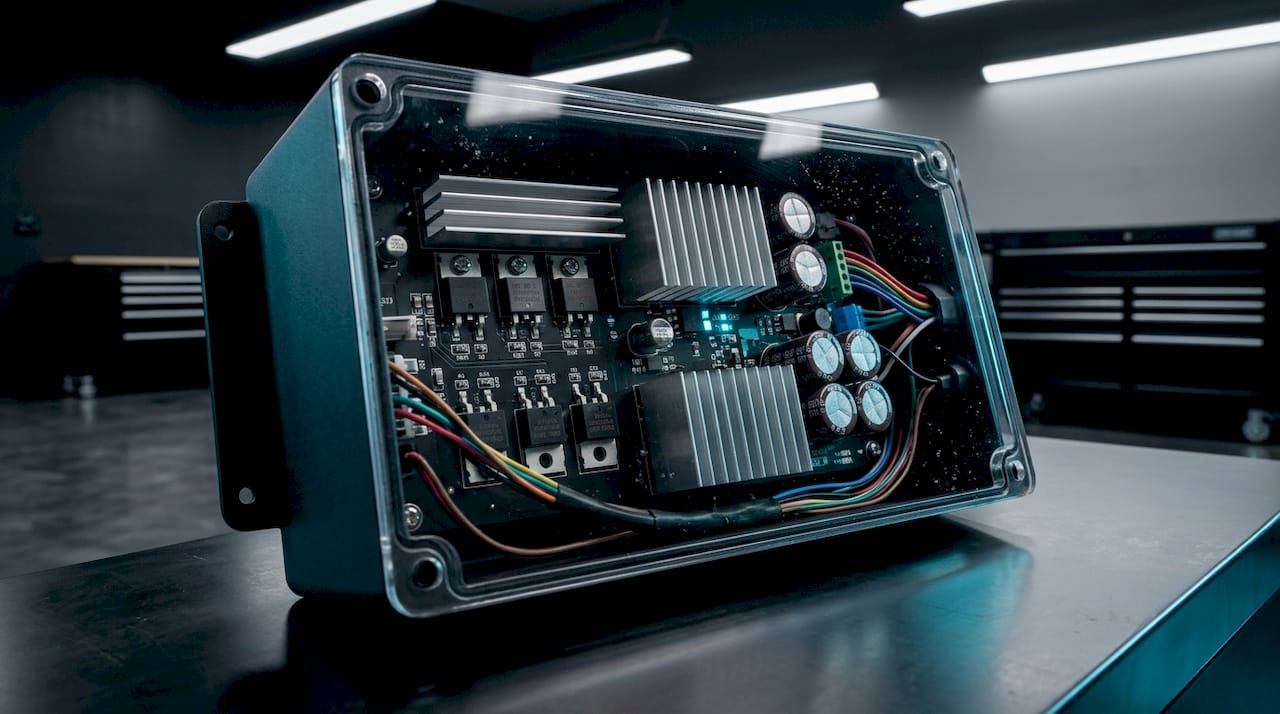
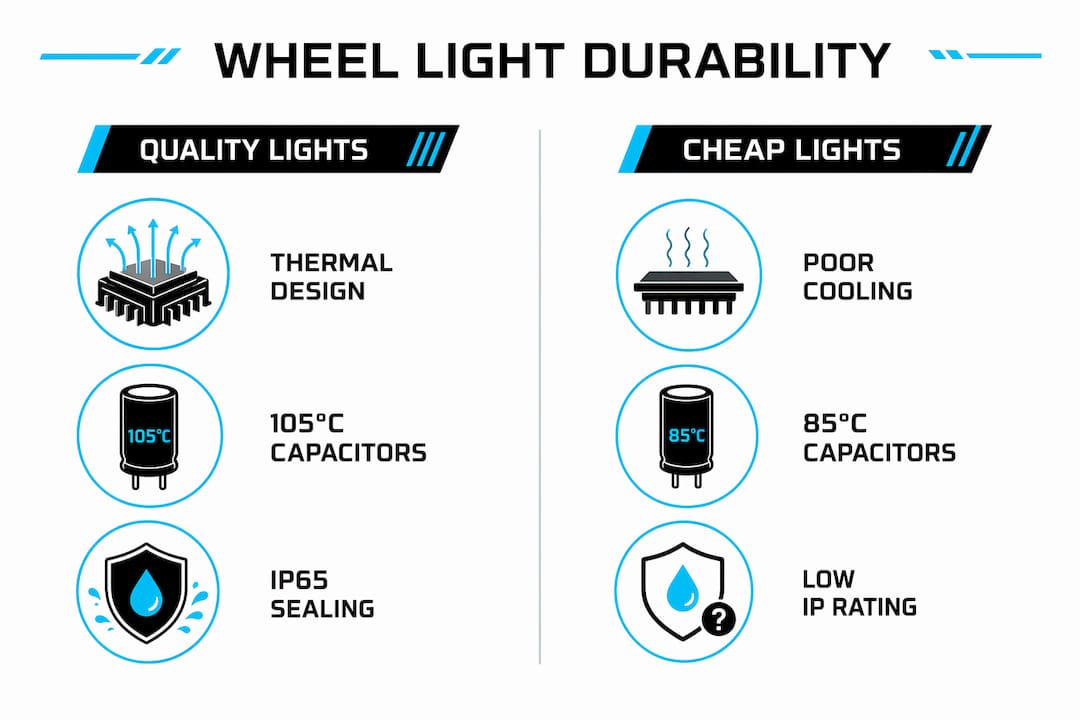
Pro Tip: When evaluating wheel lights, ask for the driver’s rated operating temperature range. Any product rated only to 85°C ambient is not built for the thermal reality of a wheel well in summer driving conditions. Look for ratings of 105°C or higher on the capacitors inside.
How driver electronics determine wheel light lifespan
The LED chip itself is rarely what fails first. Driver electronics cause the majority of early wheel light failures, not the light-emitting diodes themselves. This distinction matters because marketing materials almost always highlight LED chip ratings while saying little about the driver.
The weakest component in any LED driver is the electrolytic capacitor. Here is why capacitor quality is a direct predictor of how long your wheel lights will last:
- Temperature rating: Capacitors rated at 85°C typically last 2,000 to 3,000 hours under real operating conditions. Capacitors rated at 105°C can reach approximately 10,000 hours under the same conditions. That difference alone represents years of additional service life.
- Capacitance loss over time: As a capacitor ages, its capacitance drops. When it falls too low, the driver can no longer regulate current properly. The result is flicker, color shift, or total failure, even though the LED chip is still functional.
- Surge protection: Quality drivers include surge suppression rated at 6kV to 10kV or higher. Voltage transients from vehicle electrical systems, especially during engine starts or alternator load changes, can destroy unprotected drivers instantly.
- Brand-grade components: Drivers using capacitors from manufacturers like Rubycon or Nichicon carry tighter tolerances and longer rated lifespans than generic equivalents. The difference is visible on the component itself if you know what to look for.
Certificate marks like UL and ETL confirm safety compliance but do not guarantee longevity or performance under real outdoor conditions. A UL-listed driver can still use 85°C capacitors and fail within two years. Safety certification and durability are separate questions.
Pro Tip: If a wheel light product lists a warranty of less than two years, the manufacturer is signaling the expected lifespan of the driver components. Quality products typically carry three to five year warranties because the engineering supports it.
How environmental sealing and installation affect wheel light longevity
Even a well-engineered driver fails early if moisture, dust, or vibration reach the electronics. Environmental protection is the third pillar of wheel light durability, and it is the one most often compromised by poor installation rather than poor manufacturing.
IP ratings define how well a fixture resists ingress. IP65 means the unit is fully dust-tight and protected against water jets from any direction. For wheel lights mounted in wheel wells, IP65 is the minimum acceptable rating. Lower-rated products will allow moisture to reach the driver board over time, causing corrosion on solder joints and component leads.
Key environmental and installation factors that determine how long your lights last include:
- Moisture ingress: Water entering through unsealed connectors or housing gaps corrodes internal components. Even small amounts of condensation cycling through heat and cool cycles accelerate corrosion significantly.
- Vibration stress: Wheel lights experience constant road vibration. Without proper strain relief on wiring, the repeated flexing of conductors at connection points causes wire fatigue and eventual breakage.
- Connector sealing: Open butt connectors or unprotected wire nuts are common failure points. Heat-shrink sealant connectors or weatherproof automotive connectors rated for outdoor use are the correct choice.
- UV degradation: Plastic housings without UV stabilizers become brittle within one to two seasons of sun exposure. Brittle housings crack, which breaks the environmental seal entirely.
- Wiring routing: Wires routed near exhaust components or sharp metal edges wear through insulation. Proper installation practices including grommets at penetration points and secure mounting clips prevent abrasion failures.
Regular inspection every six months catches early signs of seal failure, connector corrosion, or housing cracks before they cause a complete failure. A quick visual check and a gentle tug test on each connector takes less than five minutes and can add years to your system’s life.
Comparing lifespan claims and real-world durability
Industry testing standards for LED lights are more limited than most buyers realize. LM-80 tests LED chips at fixed temperatures for a minimum of 6,000 hours and measures lumen maintenance. TM-21 uses that data to extrapolate expected lifespan, but caps projections at six times the test duration. That means a 6,000-hour LM-80 test supports a TM-21 projection of only 36,000 hours, regardless of what the chip might actually deliver.
More importantly, neither LM-80 nor TM-21 tests the driver, the housing, or the full system. They measure only the LED chip’s lumen output over time. A well-installed LED system can last 15 to 20 years before replacements are practically needed, but that outcome depends entirely on driver quality and environmental protection, not just the chip rating. Supporting electronics like controllers and transformers typically need replacement after 10 to 15 years even when the LED chips are still functional.
The LM-84 standard tests the entire luminaire including the driver, which gives a far more accurate picture of real-world longevity. Products verified against LM-84 standards are rare but represent the most credible longevity claims available.
| Factor | Quality wheel lights | Cheap wheel lights |
|---|---|---|
| LED chip lifespan | 50,000+ hours rated | 20,000–30,000 hours typical |
| Driver lifespan | 10,000+ hours with 105°C capacitors | 2,000–3,000 hours with 85°C capacitors |
| Environmental sealing | IP65 or higher, UV-stable housing | IP44 or lower, basic plastic housing |
| Surge protection | 6kV–10kV rated suppression | Minimal or absent |
| Expected system life | 15–20 years with proper installation | 2–5 years under real conditions |
| Common failure mode | Gradual lumen depreciation | Sudden driver failure or flicker |
The L70 metric defines end-of-life as the point when light output drops to 70% of original. L80 uses 80% as the threshold. Quality products reach L70 after tens of thousands of hours. Cheap products often reach L70 within the first few years due to driver-induced current instability, not chip degradation. Understanding LED lumen output comparisons helps you evaluate these claims before you buy.
Practical steps to maximize the lifespan of your wheel lights
Getting the most out of your wheel lights requires the right product choice and the right installation. Both matter equally. Here is a straightforward approach to protecting your investment:
- Verify specifications before buying. Look for products that list capacitor temperature ratings, IP ratings, and surge protection specs. If a product page does not include these details, the manufacturer is not confident in them.
- Route wiring away from heat and sharp edges. Use split loom conduit in high-abrasion areas and secure wiring every six to eight inches with automotive-grade clips. Unsecured wiring vibrates against surfaces and fails at the insulation level long before the connector does.
- Use sealed connectors throughout. Heat-shrink sealant connectors are inexpensive and eliminate the most common moisture ingress point in any wheel light installation. Standard connectors are not acceptable for outdoor automotive use.
- Clean the housing and connectors every season. Road grime, brake dust, and road salt accelerate UV degradation and corrosion. A rinse with low-pressure water and a wipe-down of connector faces takes minutes and prevents long-term damage.
- Inspect for housing cracks after winter. Thermal cycling from cold nights to warm days stresses plastic housings. Cracks in the housing break the IP seal and allow moisture to reach the driver board.
- Replace components proactively. If your wire harness shows signs of insulation wear or connector corrosion after several years, replace it before it causes a driver failure. The harness is far cheaper than the full lighting system.
Pro Tip: When installing wheel lights on a vehicle that sees winter road salt, apply a thin coat of dielectric grease to every connector before sealing. It prevents corrosion from forming on the contact surfaces even if small amounts of moisture get past the outer seal.
Key takeaways
Quality wheel lights last longer because superior thermal design, 105°C-rated capacitors, IP65 sealing, and proper installation work together to prevent the three main failure modes: heat degradation, driver failure, and moisture ingress.
| Point | Details |
|---|---|
| Thermal management is critical | Every 10°C temperature rise halves component lifespan, making heat control the top durability factor. |
| Capacitor rating predicts lifespan | 105°C capacitors last up to 10,000 hours; 85°C units fail at 2,000 to 3,000 hours under real conditions. |
| LM-80 does not cover the full system | LED chip ratings do not reflect driver or housing lifespan; look for LM-84 verified products when possible. |
| Installation quality is non-negotiable | Sealed connectors, strain relief, and proper wiring routing prevent the majority of premature field failures. |
| Expected lifespan gap is significant | Quality systems last 15 to 20 years; cheap alternatives typically fail within 2 to 5 years under the same conditions. |
What I’ve learned from watching wheel lights fail in the field
I’ve seen the same pattern repeat itself more times than I can count. An enthusiast spends real money on a vehicle build, installs a set of wheel lights from an unknown brand because the price looked reasonable, and within 18 months one corner is flickering and another is dead. When we pull the driver apart, it’s always the same story: a bulging 85°C capacitor that never had a chance in a wheel well that regularly sees 90°C ambient temperatures.
The part that frustrates me is that the LED chips are usually fine. They could run for another decade. The driver failed, and because the driver and the strip are sold as a unit, the whole thing gets thrown away. That’s not a lighting problem. That’s an engineering and sourcing problem that gets passed to the customer.
My honest recommendation is to treat the driver specification as the primary purchase criterion, not the color options or the brightness claim. A product that lists its capacitor rating, its IP rating, and its surge suppression spec is a product built by people who understand what actually causes failures. A product that only tells you it’s “ultra-bright” and comes with a one-year warranty is telling you everything you need to know about how long it will last.
The other thing I’d push back on is the idea that installation is secondary. I’ve seen quality products fail early because someone used standard butt connectors in a wheel well. And I’ve seen budget products outlast their expected life because the installer took the time to seal every connection and route the wiring properly. The product matters, but so does the person putting it in.
— Christopher
Upgrade your vehicle with wheel lights built to last
At Wheellightexpress, we design every lighting solution in Louisiana with real durability in mind. Our products are built for vehicle owners who want aesthetics that hold up through seasons, road conditions, and daily driving, not just for the first weekend after installation.
Our aftermarket wheel lights are engineered with quality driver components, proper environmental sealing, and original wire harness designs that eliminate the wiring shortcuts that cause early failures. We back our products with a satisfaction guarantee because we know the engineering supports it. If you’re maintaining an existing system, our replacement wire harnesses are built to the same standard and available without the full kit cost. Browse our full catalog and find the right fit for your build.
FAQ
Why do cheap wheel lights fail so quickly?
Cheap wheel lights use 85°C-rated electrolytic capacitors that degrade rapidly under real operating temperatures, typically failing within 2,000 to 3,000 hours. Driver failure, not LED chip failure, causes the vast majority of early wheel light deaths.
How long do quality wheel lights last in real-world use?
A well-installed quality LED wheel light system can last 15 to 20 years before replacements are practically needed. Supporting electronics like controllers may need replacement after 10 to 15 years even when the LED strips remain functional.
What IP rating do wheel lights need for outdoor automotive use?
Wheel lights mounted in wheel wells require a minimum IP65 rating, which provides full dust protection and resistance to water jets from any direction. Lower-rated products allow moisture ingress that corrodes driver components over time.
Do LM-80 certifications guarantee wheel light longevity?
No. LM-80 tests only the LED chip’s lumen maintenance and does not cover the driver, housing, or full system. Real-world longevity depends on driver quality and environmental sealing, which LM-80 does not measure.
What is the single most important factor in wheel light durability?
Driver electronics, specifically capacitor temperature rating and surge protection, determine actual system lifespan more than any other factor. LED chips rated at 50,000 hours are meaningless if the driver fails at 3,000 hours.